EN
EN

Backlit “Butterfly” Wall Panel in Patagonia Quartzite: A Full Project Fabrication Solution
2026/04/24
2025/12/12
Inside YUSHI STONE’s Processing Factory: How We Support Construction Projects Around the World
For years, YUSHI STONE has been supplying natural stone for hotels, apartments, commercial buildings, and residential projects in many countries. Our advantage doesn’t come from simply having materials—it comes from having a complete, well-organized processing factory that allows us to control every step, from raw slab selection to the final dry-lay inspection before packing. This is the part that matters most to contractors: consistent quality, stable capacity, and reliable delivery.
Below is an overview of how our factory operates and how each production area works together to support project needs.
1.Stone Scanning Area
Every batch of material begins here. Slabs are checked one by one, comparing color tone, vein direction, and natural variations. For projects that require large areas or continuous vein patterns, this first step helps us group suitable slabs together and avoid unexpected color jumps later during installation.
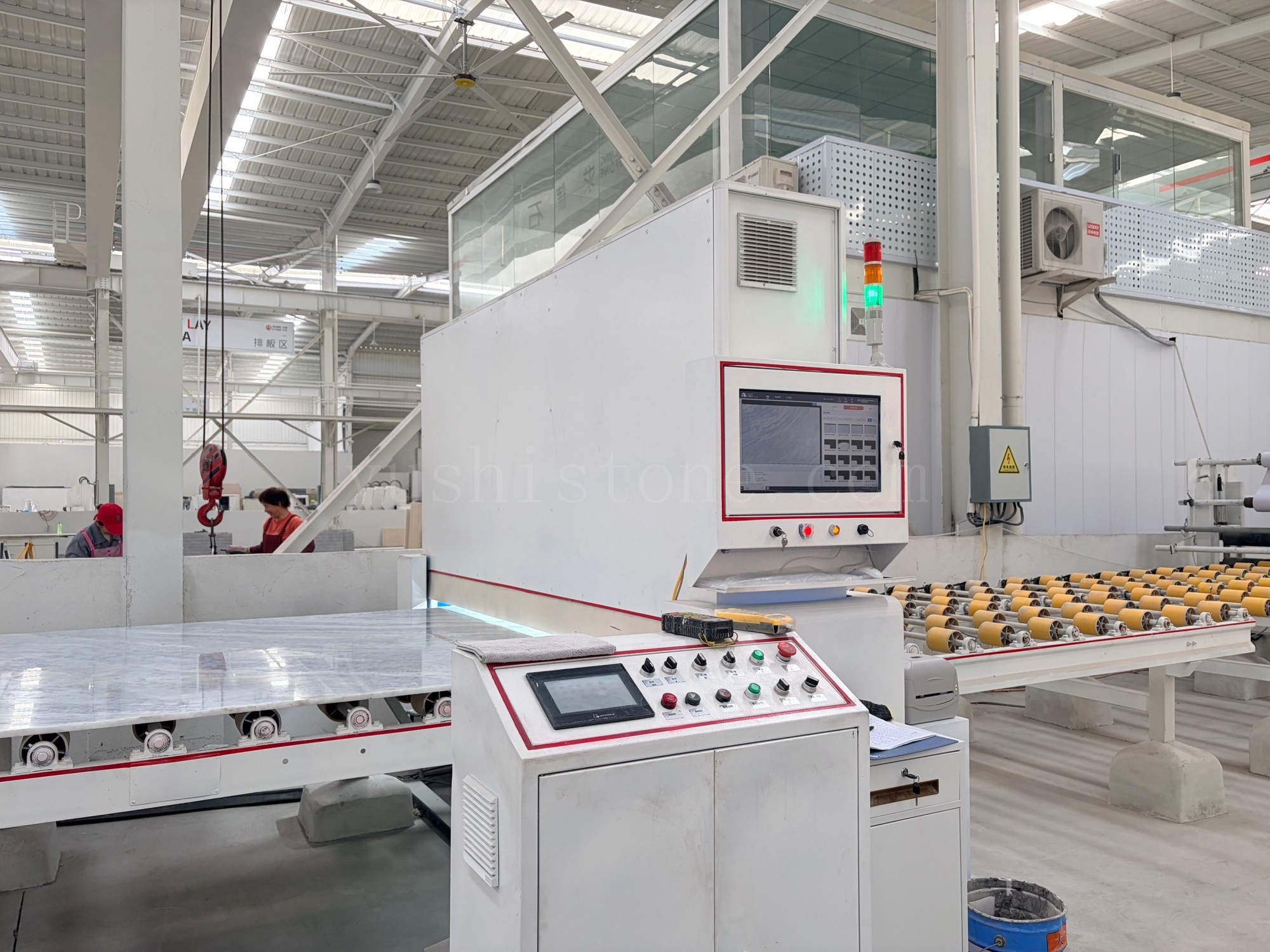
2.Stone Bridge-Cutting Area
After selection, slabs move to the bridge saws. These infrared machines handle most of the primary cutting work: tiles, wall panels, steps, risers, countertops, windowsills—anything that needs clean, accurate cuts. The stability of these machines is important, especially for engineered sizes where even a few millimeters of deviation can affect installation on site.
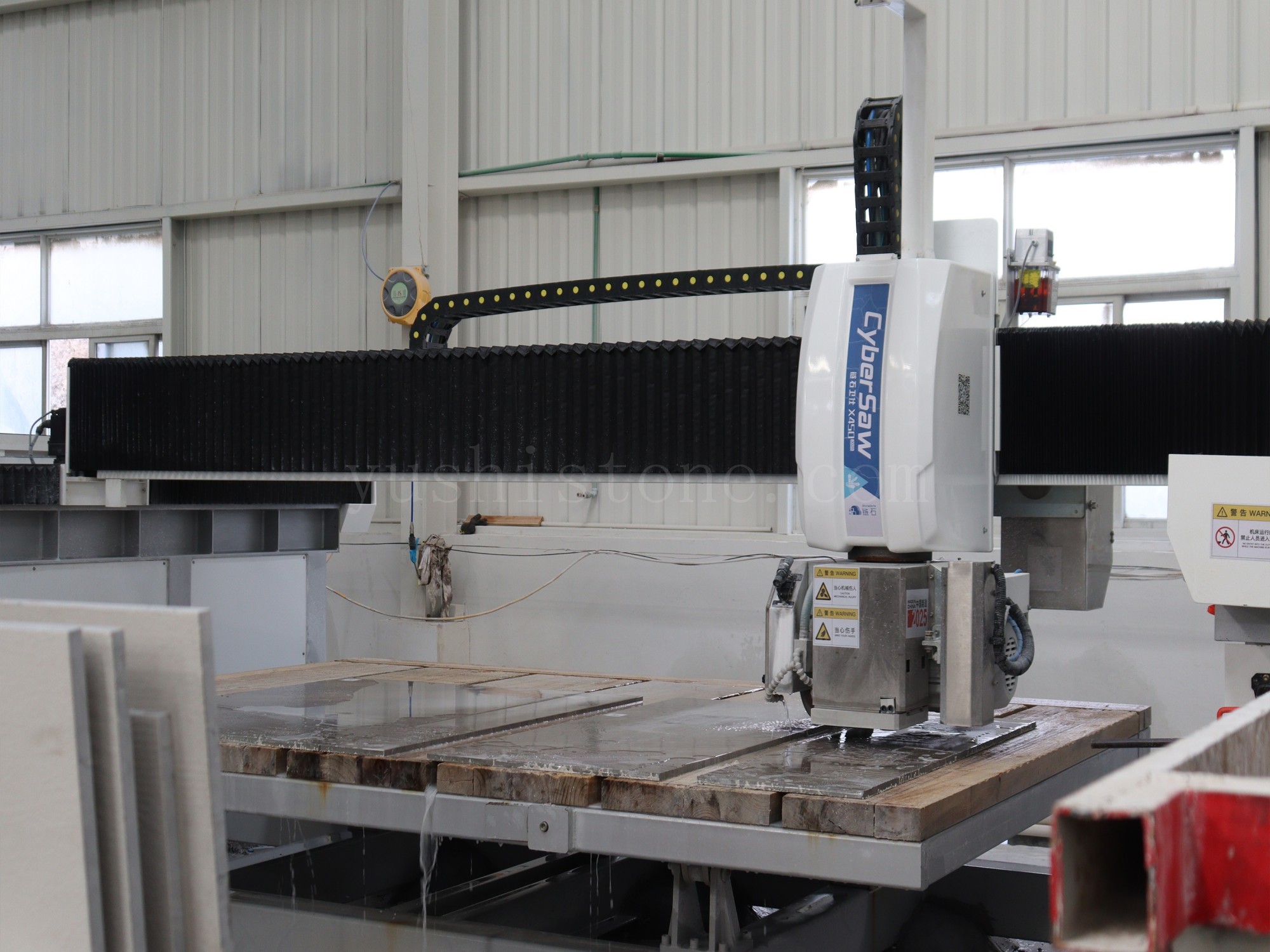
3.Stone Machining Area
Once the pieces are cut, they go through edge-polishing machines, beveling machines, and grooving equipment. This area handles work such as staircase anti-slip grooves, edge finishing, sink cutouts, and other functional details required by project drawings. Most contractors consider this the “accuracy zone” because these small details determine whether the product can be installed smoothly.
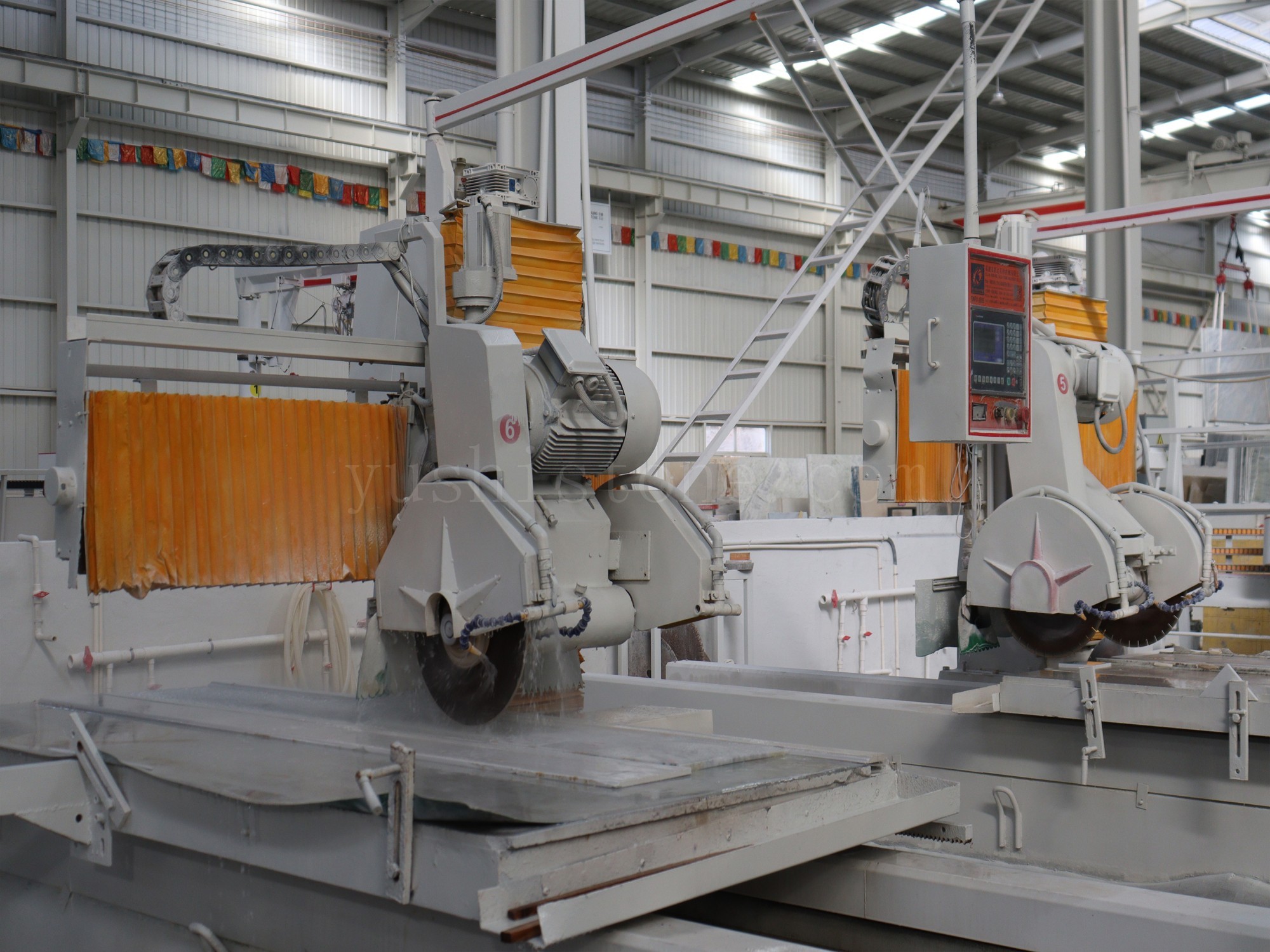
4.Stone CNC and Carving Area
For projects requiring curved pieces, 3D panels, moldings, or other non-standard shapes, we rely on CNC equipment. These machines allow us to reproduce the same shape repeatedly with very small tolerances. Hotels, villas, and commercial interiors often use this part of our production for feature walls, custom furniture tops, or decorative stone elements.
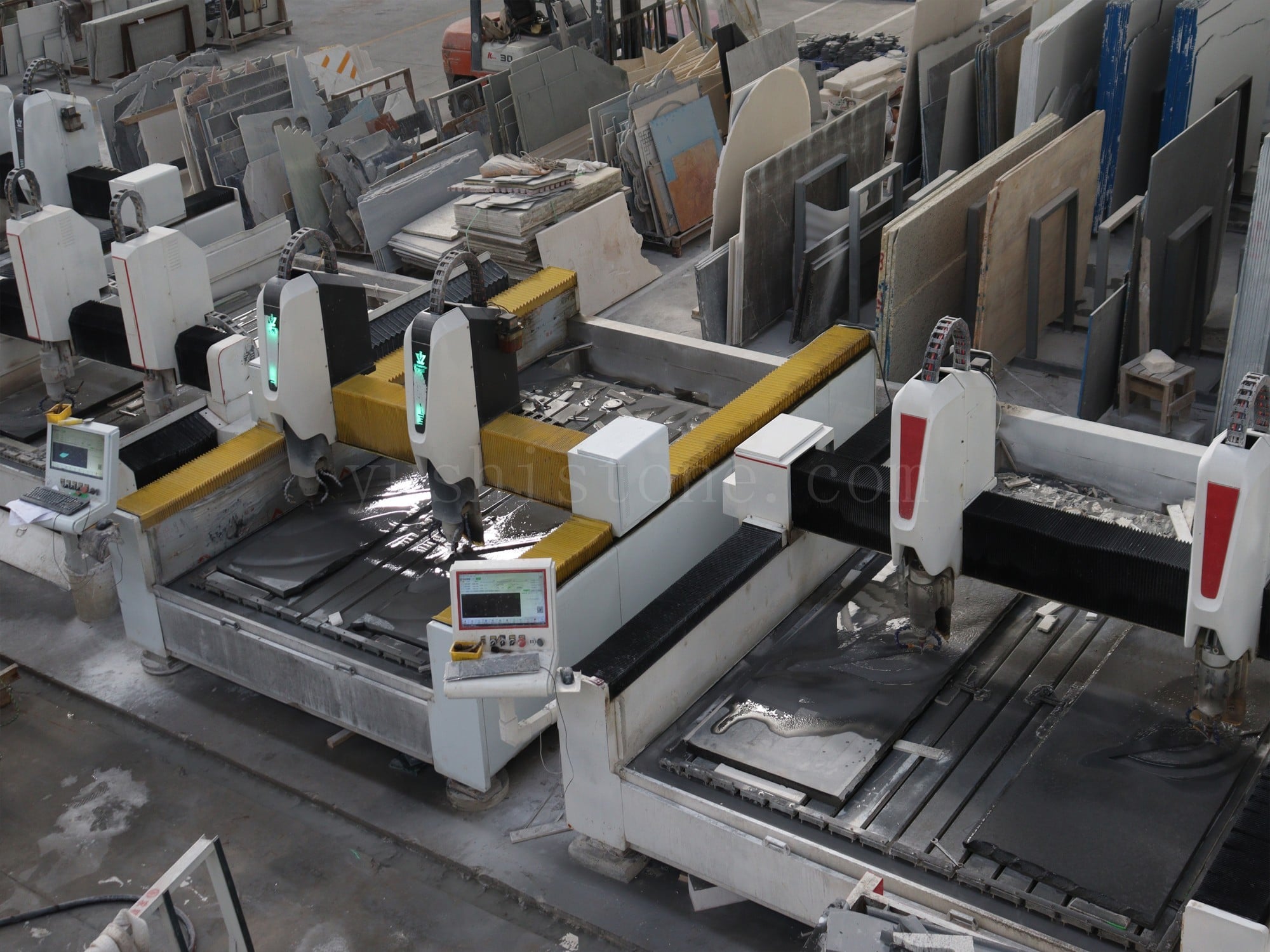
5.Stone Hand-Finishing Area
Even with advanced machines, some finishing work still needs the hands of experienced workers. They check edges, smooth corners, repair small natural pits, and correct pieces that need fine adjustments. This stage often determines whether the final look feels high-end or average, which is why we keep a dedicated team just for this part of the process.
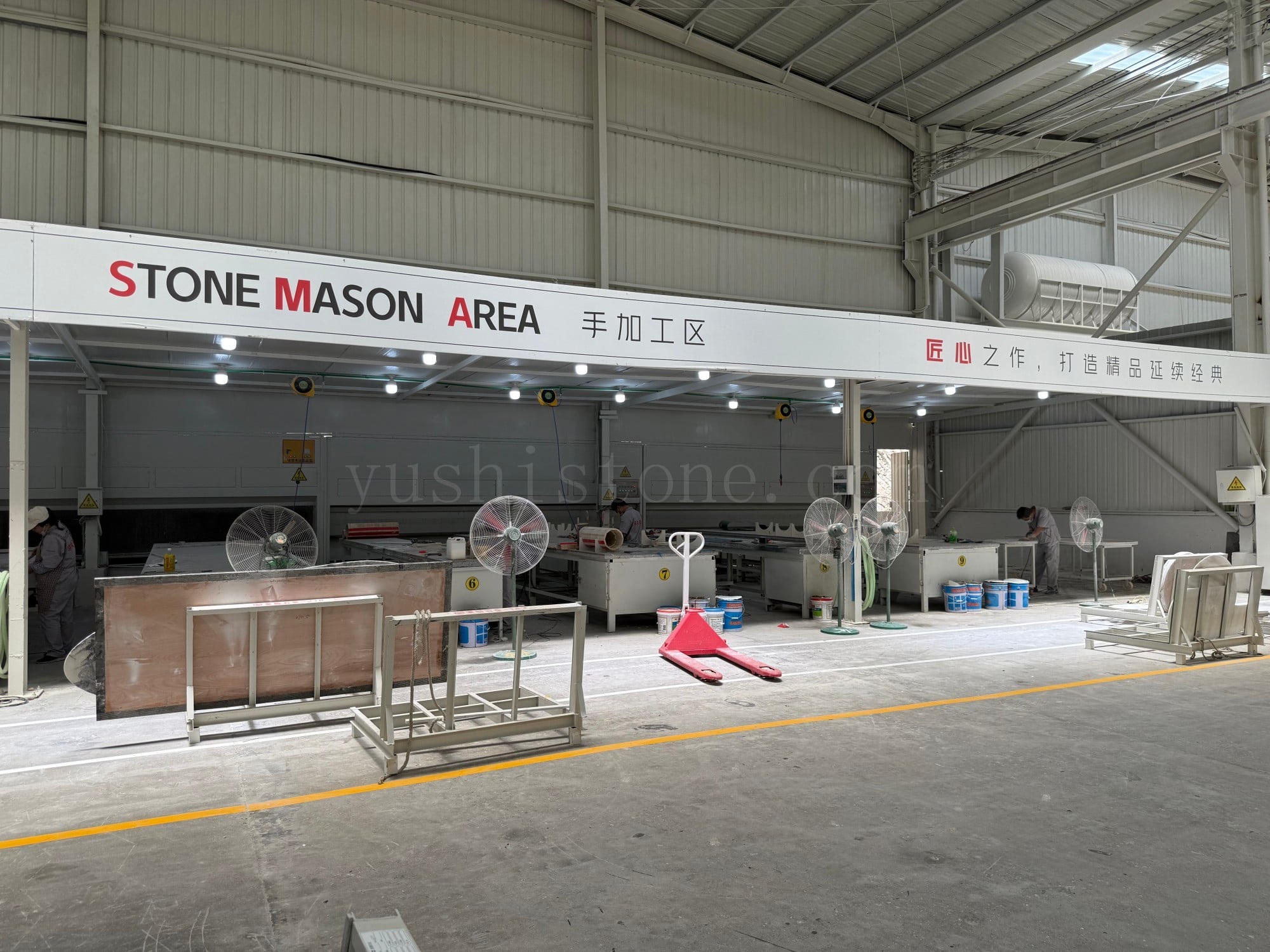
6.Stone Polishing or Honing Area
Different projects require different surface textures—polished, honed, brushed, leathered, etc. This part of the factory includes automatic polishing lines and manual polishing stations. Large flat panels go through machines, while detailed or irregular pieces are finished by hand to keep the texture consistent.
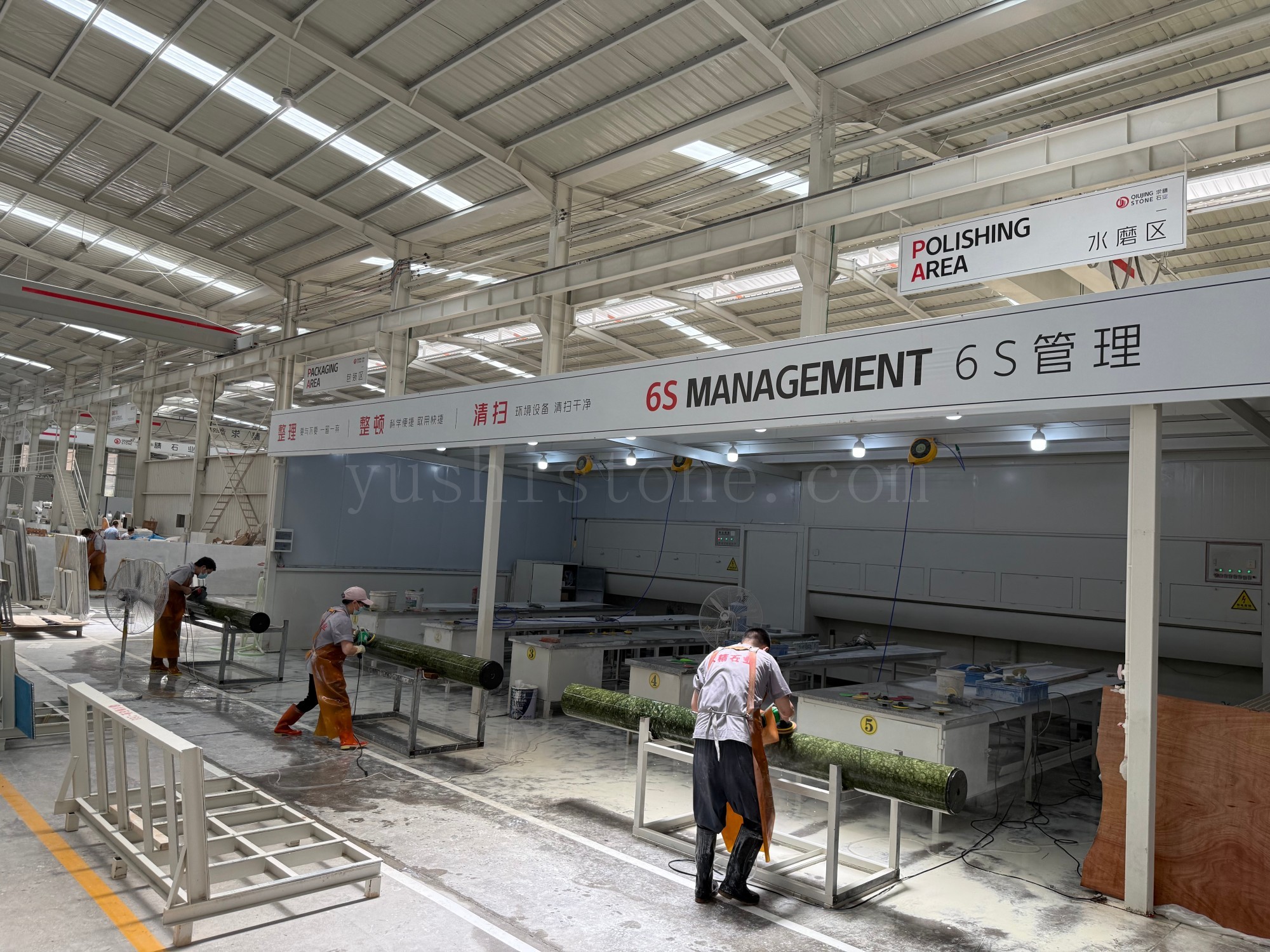
7.Stone Waterjet Area
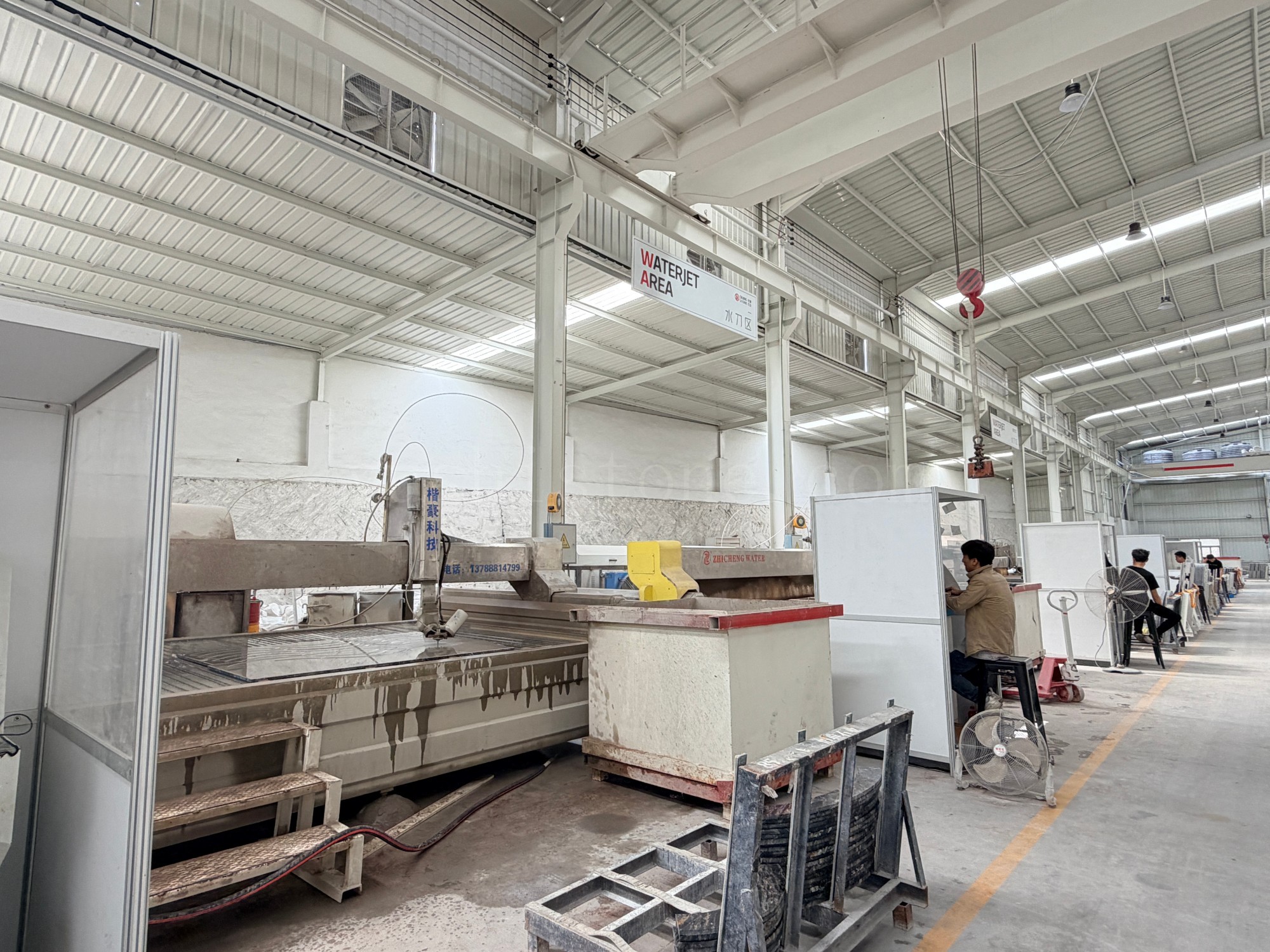
The waterjet machines handle curved cuts, medallions, mosaics, and mixed-material designs. Many hotel lobbies and residential entryways involve waterjet layouts, so precision is important. The clean edges created here reduce the time installers need on site for adjustment and alignment.
8.Stone Layout and Inspection Area
Before we pack, all project pieces are laid out on the ground or on racks, following the drawing layout.
Here we inspect:color consistency,grain direction,book-matched patterns,dimensions and edges,quantity and labeling
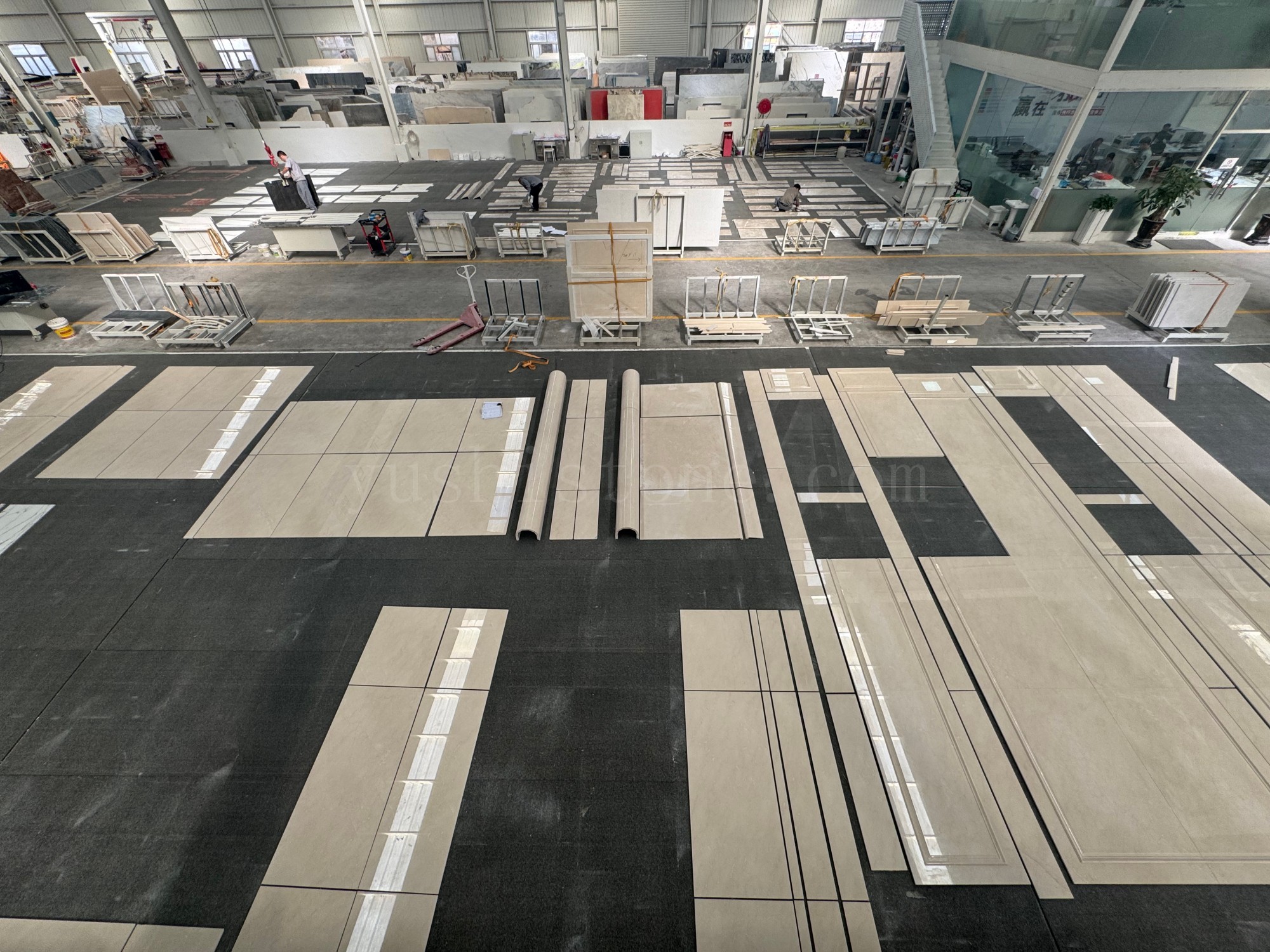
This process helps customers avoid surprises upon delivery. Everything is photographed, confirmed, and labeled before being packed into wooden crates.
What This Means for Contractors and Project Teams
Because we manage all production steps inside our own facility, we can:
keep quality consistent across large quantities
follow project drawings more accurately
control delivery times more strictly
provide clear production updates
reduce mistakes that often occur with outsourced processing
For contractors, this translates into fewer installation issues and a smoother project timeline.

2025/07/09
This is a title description that can briefly introduce the module.