EN
EN
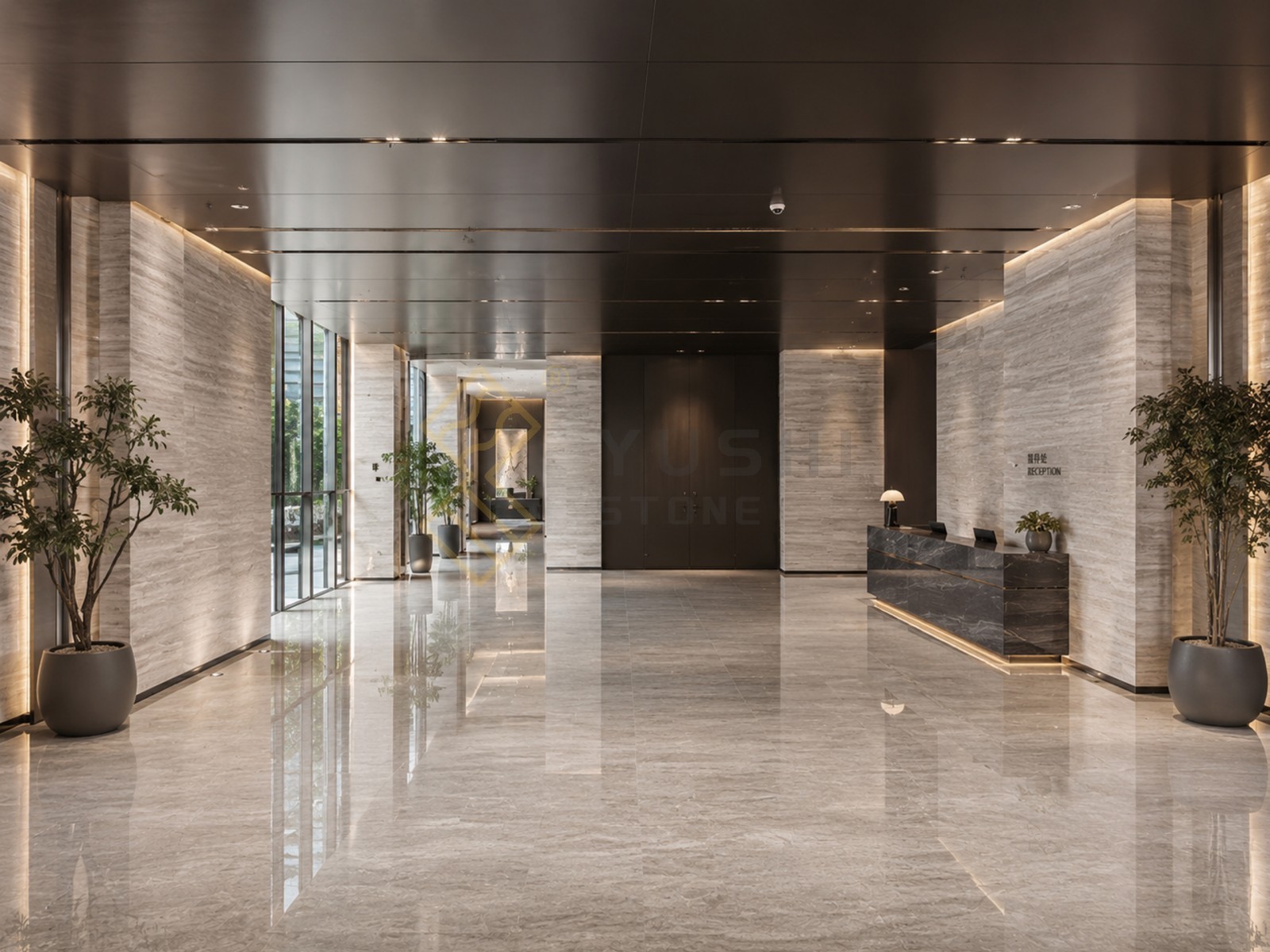
Travertine has been used in architecture for centuries, but it has become increasingly popular in contemporary interiors because of its warm colors, natural texture, and timeless appearance.
Unlike highly uniform engineered surfaces, travertine slabs have a naturally porous structure and distinctive movement. Depending on the quarry and processing method, a slab can range from creamy ivory to beige, walnut, silver, or deeper brown tones.
For architects, designers, contractors, and stone buyers, choosing travertine is not simply about selecting a color. The stone's formation, porosity, surface finish, slab quality, thickness, and intended application all affect the final result.
This guide explains what travertine slabs are, the main types and finishes, their advantages and limitations, and what to consider when selecting travertine for an architectural project.
What Are Travertine Slabs?
Travertine is a natural sedimentary stone formed when mineral-rich water deposits calcium carbonate over long periods of time.
This geological process creates one of travertine's most recognizable characteristics: its natural pores, cavities, layered structure, and directional movement.
Travertine slabs are large-format pieces of natural travertine that are cut from quarry blocks and processed into panels for architectural and interior applications.
Compared with travertine tiles, slabs provide larger continuous surfaces with fewer joints.
They are commonly used for:
Kitchen islands
Bathroom vanities
Countertops
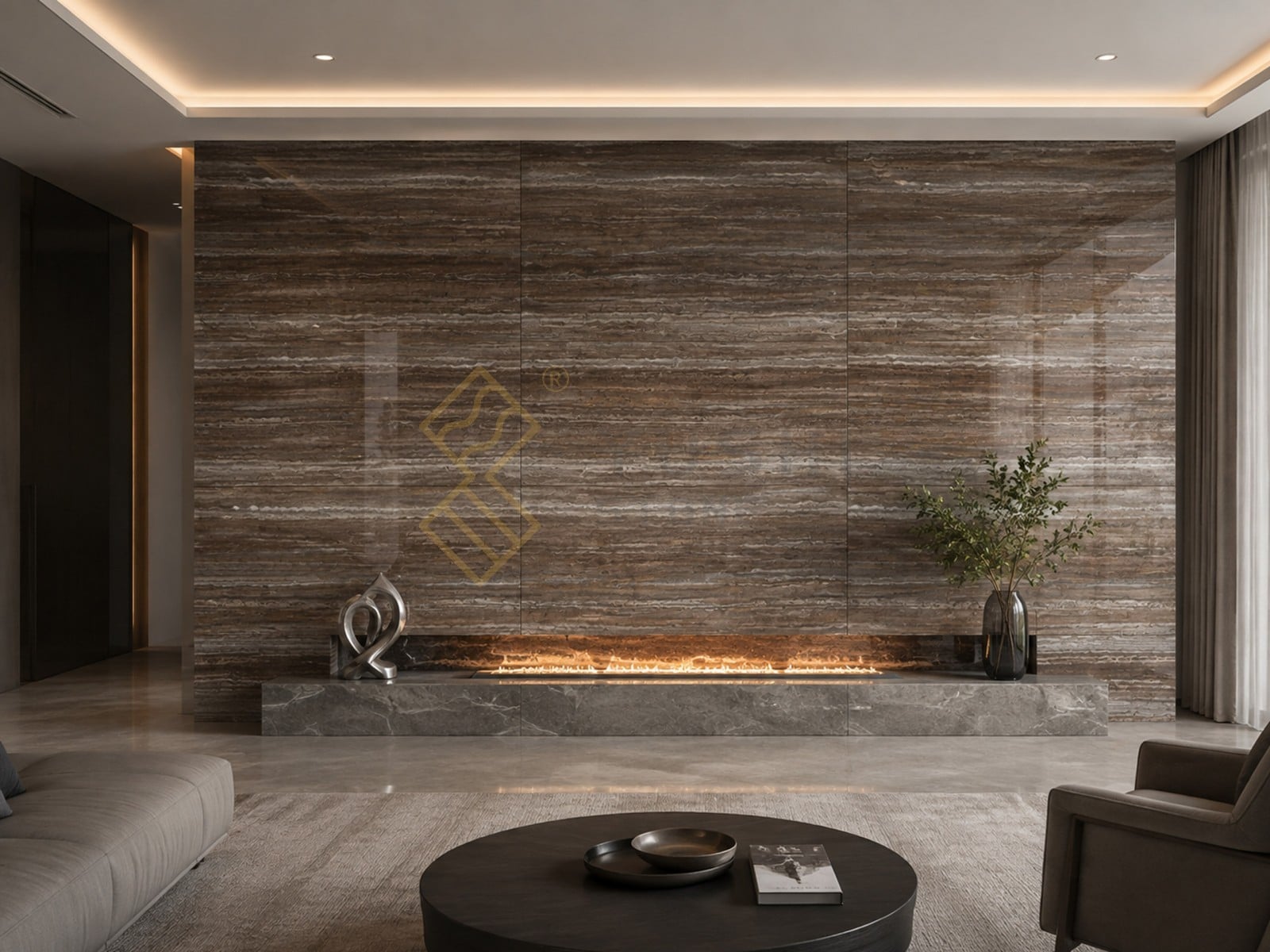
Wall cladding
Fireplace surrounds
Feature walls
Furniture
Commercial interiors
The appearance of each slab can vary because travertine is a natural material rather than a manufactured surface.
What Makes Travertine Slabs Different?
1. Naturally Warm Color Tones
Travertine is best known for its warm and earthy color palette.
Common colors include:
Ivory
Cream
Beige
Walnut
Silver
Brown
These colors work particularly well with wood, metal, plaster, and other natural materials.
This makes travertine suitable for both traditional architecture and modern minimalist interiors.
2. Distinctive Natural Porosity
The pores and cavities within travertine are part of its natural formation.
Depending on the processing method, these openings may remain visible or be filled with a resin or cement-based material.
This creates different visual effects.
Unfilled Travertine
The natural pores remain visible, creating a more rustic and textured appearance.
Filled Travertine
The pores are filled before or during finishing, producing a smoother and more uniform surface.
Neither option is automatically better.
The choice depends on the design concept and intended application.
3. Natural Veining and Movement
Although travertine is generally less dramatically veined than some marble varieties, it can contain directional lines, layers, and tonal movement.
Cross-cut and vein-cut processing can produce significantly different appearances.
Vein Cut
The block is cut along the natural layering direction.
This can reveal linear patterns and elongated bands.
Cross Cut
The block is cut across the natural layers.
This usually creates a more cloud-like or irregular appearance.
The choice between vein cut and cross cut can have a major influence on the overall design.
Popular Types of Travertine Slabs
Travertine is not one uniform material. Different quarries produce stones with different colors, pore structures, densities, and patterns.
Classic Beige Travertine
Beige travertine is one of the most widely used options.
Its warm neutral color works well in:
Hotels
Villas
Bathrooms
Living spaces
Wall applications
It is particularly suitable for projects seeking a soft and natural architectural atmosphere.
Ivory Travertine
Ivory travertine has a lighter base color and can create a cleaner contemporary appearance.
It can be used for large wall surfaces, flooring, vanities, and furniture.
Silver Travertine
Silver or grey-toned travertine offers a cooler interpretation of the traditional material.
It is often selected for contemporary interiors where designers want natural stone texture without strong warm tones.
Travertine Slab Finishes
The surface finish can completely change the appearance of a travertine slab.
Polished Travertine
Polishing creates a smoother and more reflective surface.
It can emphasize:
Color
Veining
Mineral variation
Natural movement
Polished travertine is often selected for decorative interior applications.
Honed Travertine
Honed travertine has a smooth, matte appearance without the strong reflection of polished stone.
It is one of the most versatile finishes for contemporary interiors.
Brushed Travertine
Brushing creates a textured surface that emphasizes the natural character of the stone.
It can be suitable for projects seeking a more tactile and aged appearance.
Tumbled Travertine
Tumbled surfaces create a more weathered appearance with softened edges and a naturally aged character.
This finish is more commonly associated with decorative and traditional design styles.
Advantages of Travertine Slabs
Natural and Timeless Appearance
Travertine has a warm appearance that can complement a wide range of architectural styles.
Unlike highly trend-driven materials, its natural color and texture can remain relevant for many years.
Large-Format Design
Travertine slabs allow designers to create larger continuous surfaces compared with small-format tiles.
This can reduce visual interruptions and make natural movement more visible.
Large slabs are particularly useful for:
Kitchen islands
Vanity tops
Feature walls
Fireplace surrounds
Reception counters
Good Workability
Travertine is relatively workable compared with harder stones such as many granite and quartzite varieties.
It can be processed into different shapes and profiles using appropriate stone fabrication equipment.
Possible fabrication includes:
Cutting
Edge profiling
CNC machining
Sink cutouts
Waterjet cutting
Custom shapes
Natural Thermal Characteristics
Natural stone generally provides a different thermal feel from many synthetic materials.
Travertine's natural composition and density make it suitable for architectural environments where designers want authentic stone surfaces and natural material character.
Limitations of Travertine Slabs
Travertine also has characteristics that need to be considered before specification.
Porosity
Travertine is naturally porous.
Liquids can penetrate the surface if the stone is not properly sealed and maintained.
For this reason, sealing is particularly important for applications exposed to water, oils, or staining substances.
Acid Sensitivity
Travertine is primarily composed of calcium carbonate.
Acidic substances can react with the surface and cause etching or dull spots.
Common household substances such as:
Lemon juice
Vinegar
Certain cleaning products
should therefore be used carefully around natural travertine surfaces.
Natural Variation
Two travertine slabs from the same quarry may not look identical.
Color, pores, veins, and mineral patterns can vary from slab to slab.
For large projects, designers should review the actual slabs rather than relying only on a small sample.
How to Choose Travertine Slabs for a Project
1. Start With the Application
The intended use should determine the stone selection.
For example:
Vanity: consider porosity, finish, sealing, and maintenance.
Feature wall: focus more on color, movement, slab size, and visual consistency.
Kitchen island: consider staining, sealing, edge fabrication, and daily maintenance.
Hotel project: consider batch consistency, quantity availability, fabrication requirements, and replacement material.
2. Choose the Right Cut
Decide whether the project requires:
Vein cut for linear movement.
or
Cross cut for a softer and more cloud-like appearance.
For large feature walls, this decision should be made before material procurement.
3. Review Actual Slabs
For high-end projects, slab selection should ideally happen before fabrication.
Review:
Background color
Veining
Pore distribution
Filled areas
Thickness
Surface quality
Slab dimensions
This is especially important when several slabs will be installed next to each other.
4. Consider Dry Layout
For projects requiring visual continuity, dry layout can help determine the final arrangement of slabs before installation.
This is particularly useful for:
Large feature walls
Bookmatched designs
Hotel interiors
Large countertops
Custom furniture
Travertine Slabs in Luxury Projects
Travertine has moved beyond traditional Mediterranean architecture.
Today, designers use it in contemporary:
Luxury villas
Hotels
Restaurants
Spa interiors
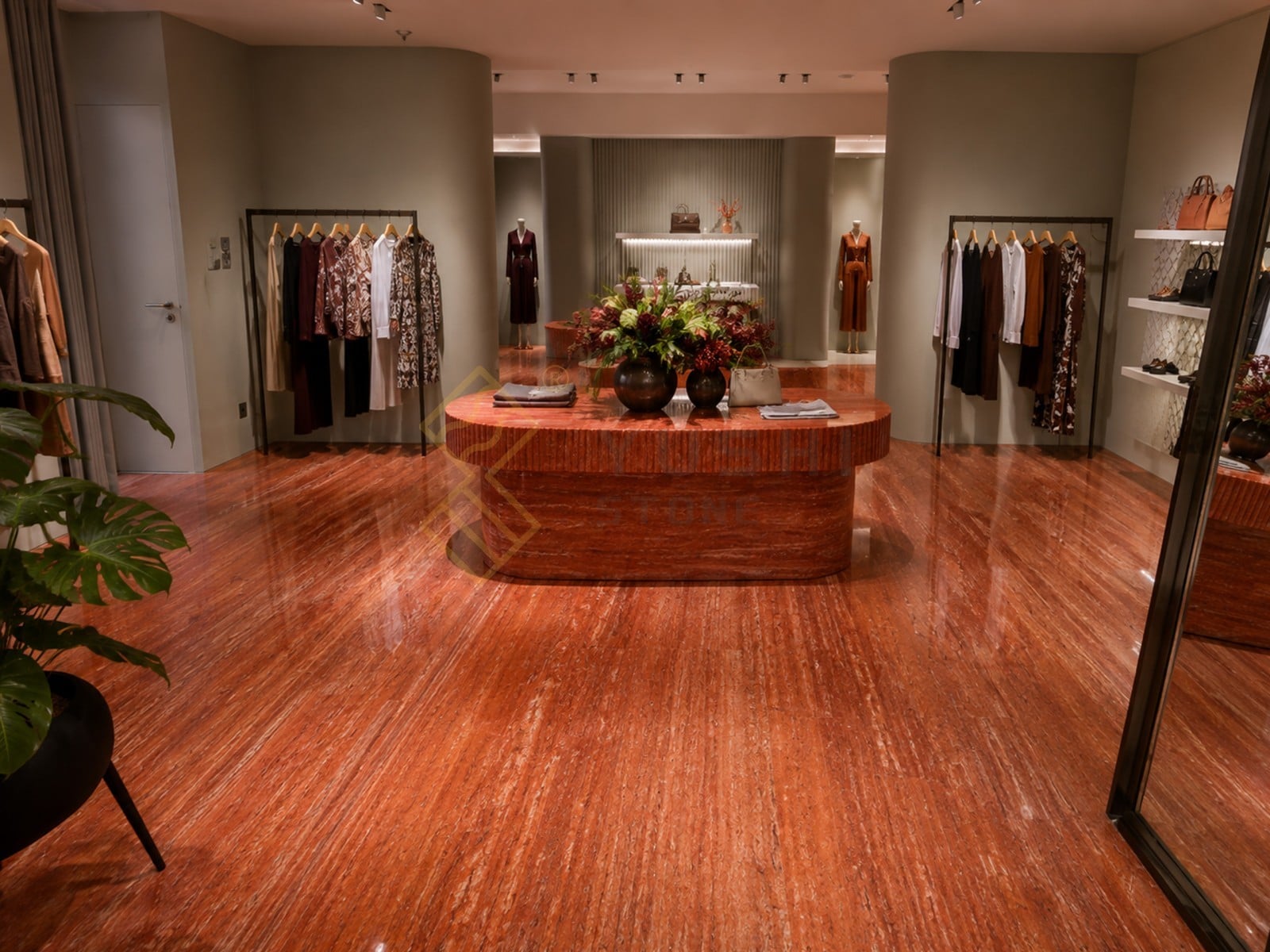
Retail spaces
Private residences
Commercial developments
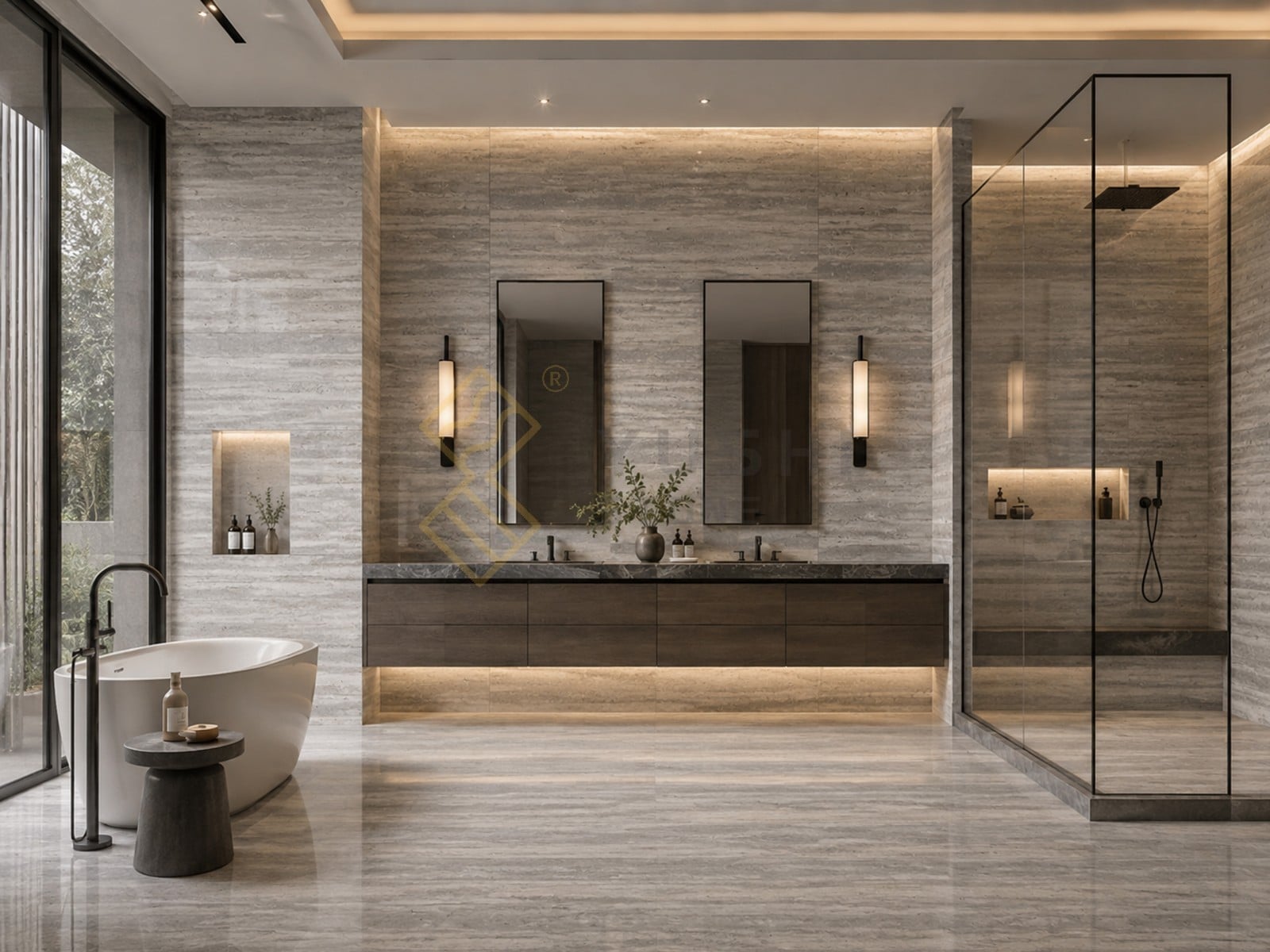
Its warm color and organic texture can soften minimalist spaces while maintaining a high-end natural material aesthetic.
For example, a large ivory travertine wall can create a calm background for modern furniture, while darker walnut travertine can become a strong focal element.
Travertine Slabs vs. Travertine Tiles
The choice between slabs and tiles depends largely on the project.
Feature |
Travertine Slabs |
Travertine Tiles |
Format |
Large |
Smaller |
Visual continuity |
Higher |
More joints |
Suitable for islands |
Excellent |
Limited |
Suitable for feature walls |
Excellent |
Good |
Custom fabrication |
High |
More limited |
Material planning |
More important |
Relatively simple |
Large project flexibility |
High |
Moderate |
For projects where the stone itself is intended to become a major visual element, slabs often provide greater design flexibility.
How YUSHI STONE Approaches Travertine Slab Supply
At YUSHI STONE, travertine selection starts with the intended application rather than simply choosing the lowest-cost material.
For project requirements, we consider:
Material Selection → Slab Inspection → Cutting → Surface Finishing → Fabrication → Quality Control → Packaging
For large projects, factors such as slab consistency, quantity availability, finish, dimensions, and fabrication requirements can be evaluated before production.
This is particularly important when travertine is being used across multiple areas of a hotel, villa, commercial development, or custom interior project.
Frequently Asked Questions
Are travertine slabs suitable for countertops?
They can be used for selected countertop applications, but their porosity and acid sensitivity mean that proper sealing and regular maintenance are important.
What is the difference between vein-cut and cross-cut travertine?
Vein-cut travertine generally reveals linear patterns following the stone's natural layers, while cross-cut travertine creates a more cloud-like and irregular appearance.
Are travertine slabs porous?
Yes. Natural travertine has a porous structure. Depending on the product, pores may be left open or filled during processing.
Does travertine need to be sealed?
Sealing is commonly recommended, particularly for areas exposed to moisture, oils, or staining substances. The appropriate sealing schedule depends on the application and product.
Is travertine suitable for modern interiors?
Yes. While historically associated with traditional architecture, contemporary finishes and large-format slabs have made travertine increasingly popular in modern interiors.
Final Thoughts
Travertine slabs combine the warmth of natural stone with a distinctive porous texture and broad range of earthy colors.
The right travertine is not simply the one with the most attractive color. Stone type, cut direction, pore structure, surface finish, slab consistency, application, and maintenance requirements all need to be considered together.
For architects, designers, contractors, and project buyers, understanding these characteristics before purchasing can help avoid material mismatches and achieve a more consistent final installation.
At YUSHI STONE, we can support travertine projects from material selection and slab processing to custom fabrication, quality inspection, and international delivery.