EN
EN
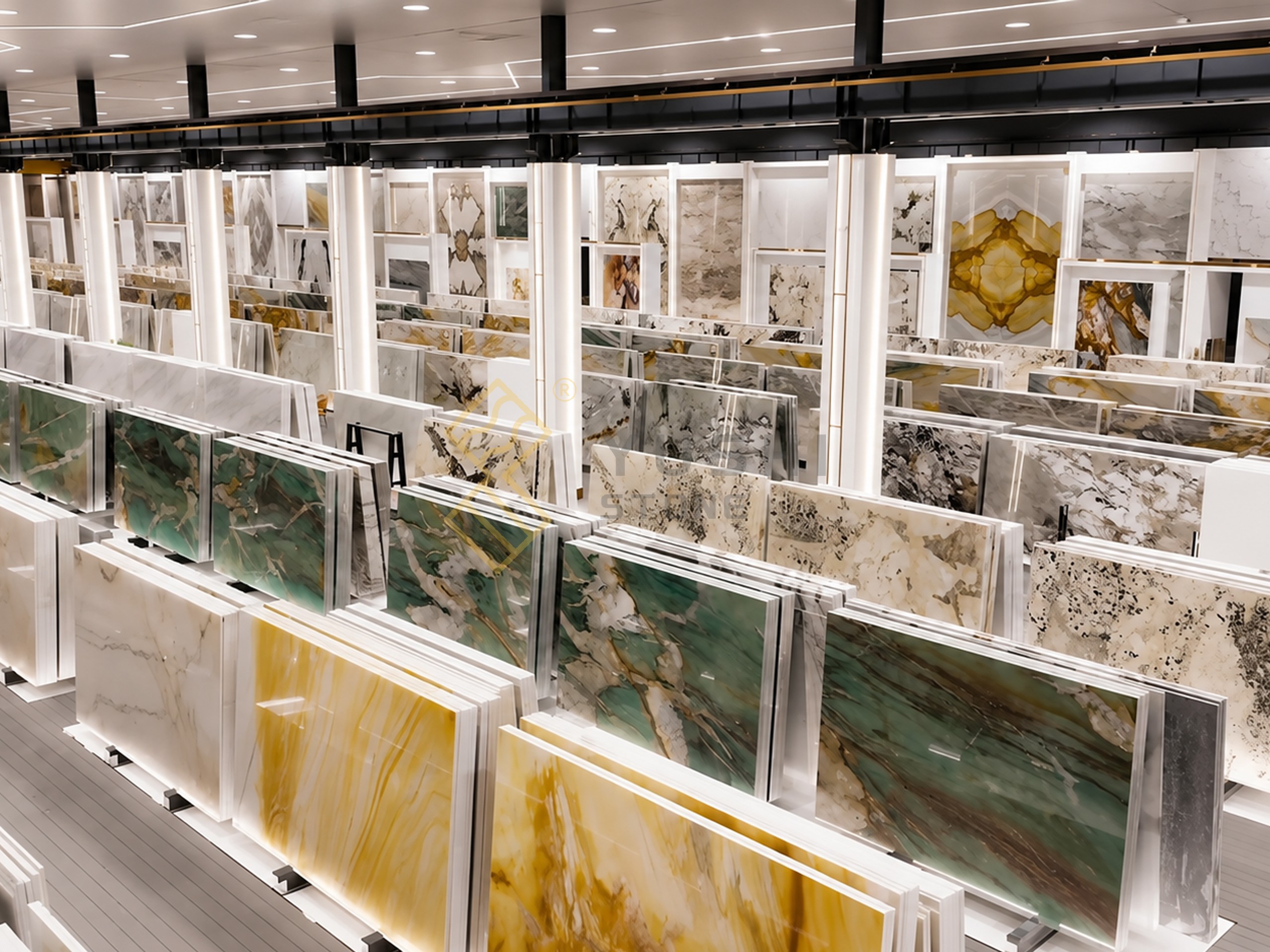
Quartzite has become increasingly popular in luxury residential and commercial interiors because it combines distinctive natural patterns with excellent hardness and durability.
Among different quartzite products, quartzite stone slabs are particularly popular for large-format applications such as kitchen islands, countertops, feature walls, vanities, and custom furniture.
However, quartzite is sometimes confused with quartz, even though the two materials are fundamentally different. Quartzite is a natural metamorphic stone formed through geological processes, while engineered quartz is a manufactured material.
For architects, designers, contractors, and stone buyers, understanding the characteristics of quartzite slabs is important when selecting the right material for a project.
What Is Quartzite?
Quartzite is a natural metamorphic rock formed when quartz-rich sandstone is subjected to intense heat and pressure over geological time.
This process changes the original sandstone structure and creates a dense, hard natural stone.
Quartzite is generally recognized for:
High hardness
Strong resistance to scratching
Low to moderate water absorption depending on the material
Natural color variation
Distinctive veining and mineral patterns
Good suitability for custom stone fabrication
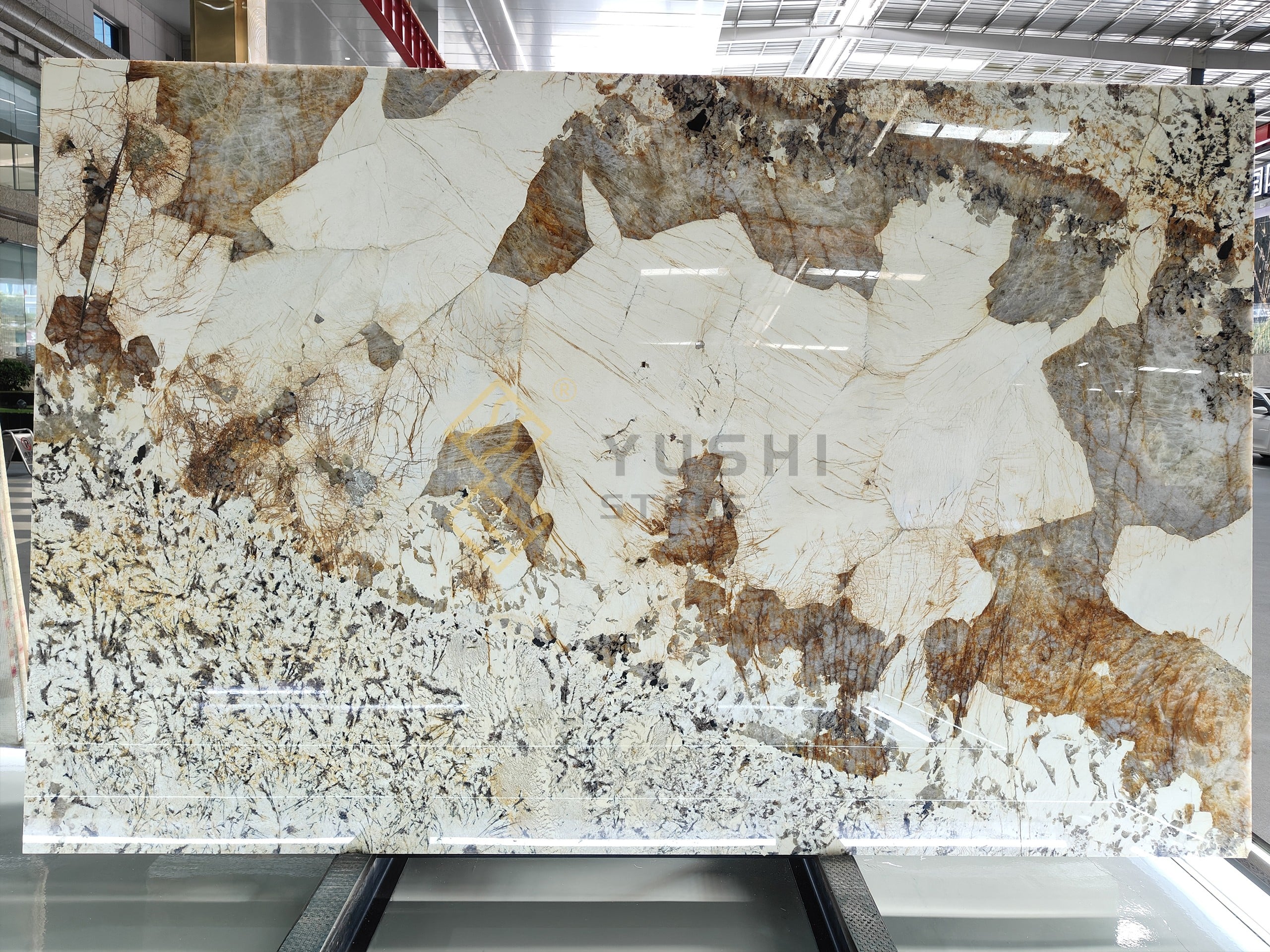
The appearance of quartzite can range from soft white and beige to dramatic green, grey, blue, brown, and other colors.
Because each quarry and block has its own geological characteristics, every quartzite slab can have a different combination of color and movement.
Quartzite Slabs vs. Quartz Slabs
The names can be confusing, but quartzite and quartz are not the same material.
Quartzite is natural stone extracted from a quarry and processed into slabs.
Engineered quartz is manufactured by combining quartz aggregates with resins, pigments, and other materials.
This difference affects their appearance, composition, fabrication, and maintenance.
For projects where natural veining and geological variation are important, quartzite stone slabs offer a genuine natural stone surface.
Why Are Quartzite Stone Slabs Popular?
1. High Hardness and Durability
Quartzite is generally harder than many commonly used natural stones, including marble.
Its hardness makes it attractive for applications where the surface may experience regular use.
This is one reason quartzite is frequently considered for:
Kitchen countertops
Islands
Bar counters
Bathroom vanities
Commercial surfaces
However, hardness does not mean quartzite is completely maintenance-free. The actual performance depends on the specific variety and application.
2. Natural Marble-Like Appearance
One of the biggest attractions of quartzite is its appearance.
Some quartzite varieties have soft backgrounds and flowing veins that resemble luxury marble, while offering different physical characteristics.
For designers, this combination can be particularly attractive:
Marble-inspired aesthetics + natural stone variation + high hardness
Popular visual styles include white quartzite with grey veining, warm beige quartzite, dramatic dark varieties, and colorful quartzites with strong mineral movement.
3. Unique Slab-to-Slab Variation
Unlike mass-produced surfaces, natural quartzite does not have a completely uniform pattern.
The color, veining, mineral inclusions, and movement can vary between slabs from the same block or quarry.
This variation is part of the appeal of natural stone.
For high-end projects, slab selection therefore becomes an important part of the design process rather than simply a purchasing step.
Common Applications of Quartzite Stone Slabs
Kitchen Countertops and Islands
Quartzite is widely considered for kitchen countertops and islands because of its hardness and natural appearance.
Large slabs can create a strong visual focal point, especially when the project uses dramatic veining.
For kitchen applications, buyers should still consider sealing, cleaning requirements, edge design, and exposure to acidic substances.
Bathroom Vanities
Quartzite slabs can also be used for vanity tops and bathroom surfaces.
The combination of natural patterns and a hard surface makes quartzite suitable for luxury residential and hospitality bathrooms.
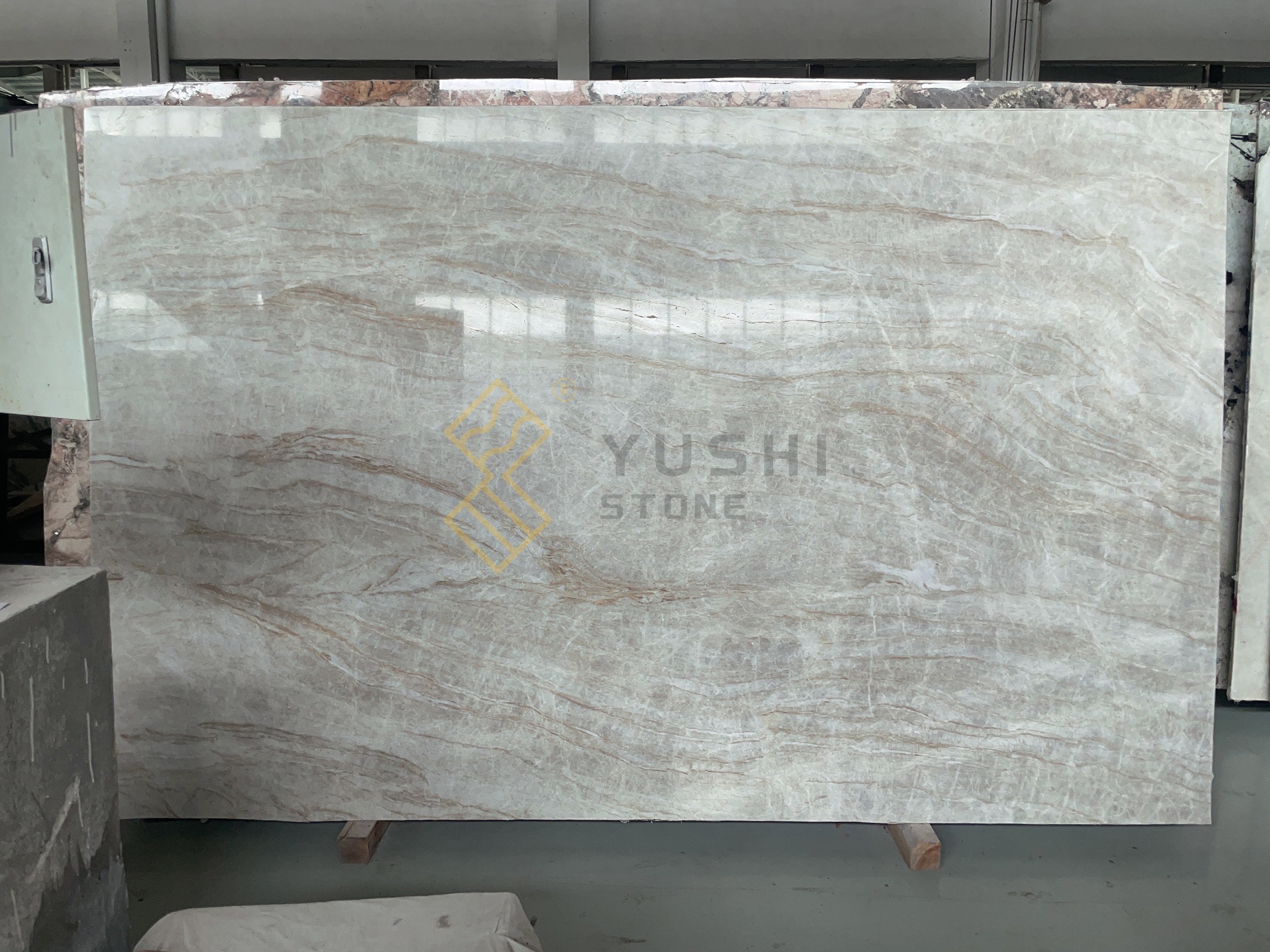
Light-colored quartzite can create a clean and sophisticated appearance, while darker varieties can create stronger contrast.
Feature Walls
Quartzite does not need to be limited to horizontal surfaces.
Large-format slabs can be used for:
TV walls
Fireplace surrounds
Hotel feature walls
Reception areas
Decorative panels
For these applications, appearance and slab matching are often more important than the stone's mechanical properties.
Custom Furniture
Quartzite can also be fabricated into selected furniture components.
Examples include:
Dining tables
Coffee tables
Console tops
Side tables
Reception furniture
The supporting structure should be designed according to the weight and dimensions of the stone.
How to Choose Quartzite Stone Slabs
Choosing quartzite should start with the project's requirements rather than simply selecting the most attractive slab.
1. Consider the Application
Different applications place different demands on the material.
For countertops, focus on hardness, staining, sealing, edge processing, and daily maintenance.
For feature walls, color, veining, slab size, and visual consistency may be more important.
For furniture, thickness, weight, structural support, and fabrication requirements should be considered together.
2. Look at the Entire Slab
Small samples are useful for understanding the general color, but they cannot always represent the complete pattern of a natural stone.
For large projects, reviewing full slabs is recommended.
Pay attention to:
Background color
Veining direction
Mineral movement
Natural fissures
Surface quality
Thickness
Available slab dimensions
This is especially important when several slabs will be installed together.
3. Consider Veining and Slab Layout
Some quartzite has strong directional movement.
If the material is being used for a large island, feature wall, or bookmatched installation, slab orientation should be planned before fabrication.
For projects with highly visible patterns, a dry layout can help determine how individual slabs will work together.
4. Check Maintenance Requirements
Quartzite is hard, but natural stone still requires appropriate care.
Some varieties may have different levels of porosity and may benefit from sealing.
Before purchasing, buyers should confirm the specific stone's technical characteristics and recommended maintenance method.
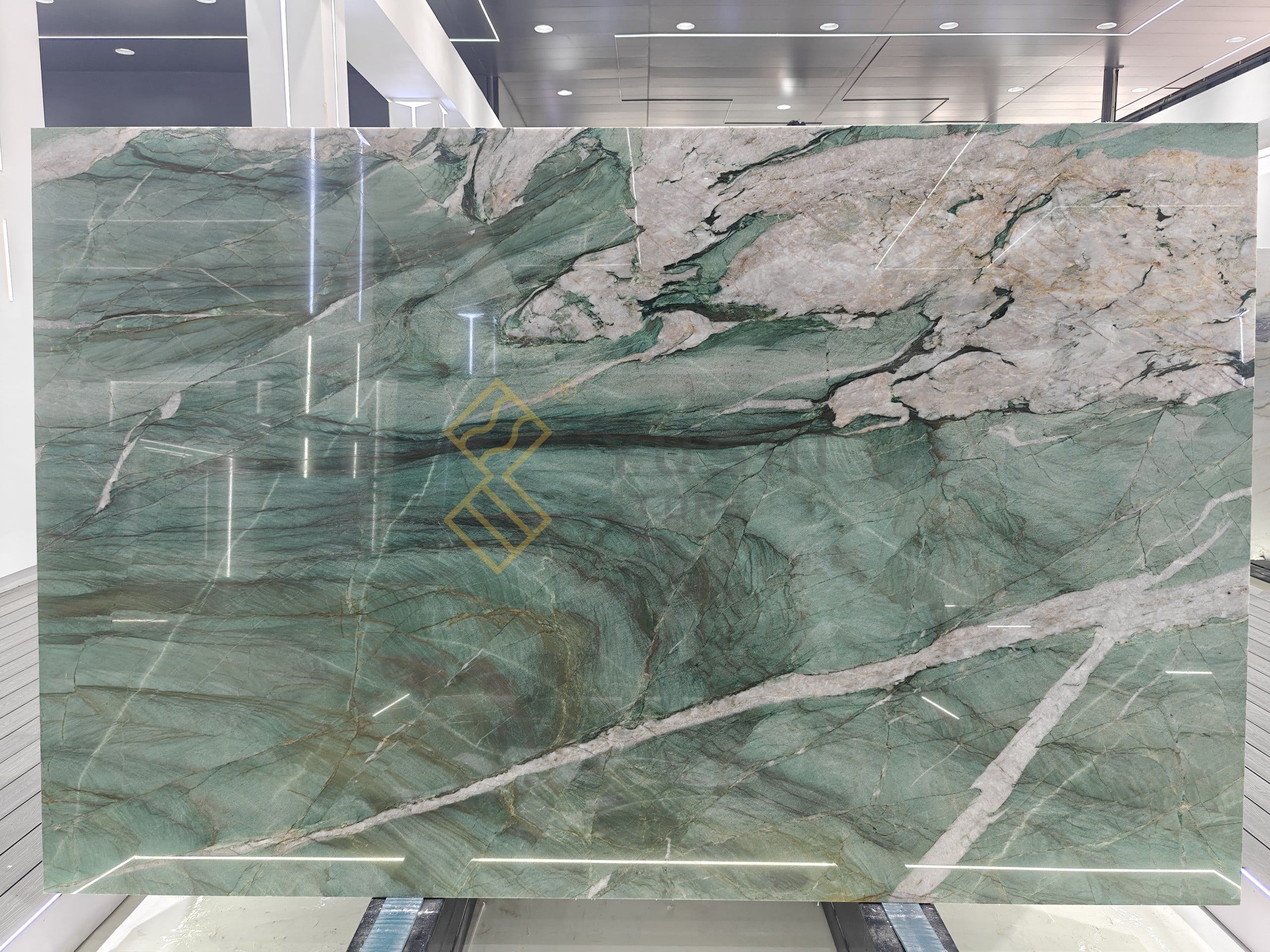
Popular Quartzite Colors and Styles
Quartzite is available in a broad range of natural appearances.
White Quartzite
Often selected as a natural alternative to white marble aesthetics, especially for kitchens, bathrooms, and luxury interiors.
Beige Quartzite
Warm beige tones work well with wood, brass, natural fabrics, and neutral interiors.
Green Quartzite
Green quartzite can provide strong visual character for feature walls, islands, and statement furniture.
Blue Quartzite
Blue varieties are often chosen for high-end decorative applications where the stone itself becomes the focal point.
Dramatic Quartzite
Some quartzites contain strong veins and contrasting mineral structures, making them suitable for statement walls, reception desks, and large islands.
Quartzite Slabs for Luxury Projects
Quartzite has become increasingly relevant to high-end architectural design because it can combine visual impact with practical performance.
In luxury villas, quartzite may be used for a large kitchen island or bathroom vanity.
In hotels, it can become a feature material for reception areas, bars, and guestroom interiors.
For commercial projects, the material can also be integrated into furniture, counters, wall panels, and other custom elements.
The key is to select the stone based on both design requirements and technical performance.
Quartzite Slab Fabrication
Natural quartzite is a hard material, so fabrication requires appropriate equipment and experienced processing.
Depending on the project, quartzite slabs can undergo:
Precision cutting
CNC machining
Edge profiling
Sink cutouts
Waterjet cutting
Polishing
Honing
Custom shaping
For complex projects, fabrication drawings and approved samples should be confirmed before production.
This helps reduce material waste and ensures that important natural patterns are positioned correctly.
How YUSHI STONE Supports Quartzite Projects
At YUSHI STONE, quartzite selection and fabrication can be coordinated according to the project's application, design, and technical requirements.
The process can include:
Material Selection → Slab Inspection → CAD Development → Cutting & Fabrication → Surface Finishing → Quality Control → Protective Packaging
For large projects, we can also consider slab consistency, pattern direction, dimensions, finish, and fabrication requirements before production.
This is particularly important when quartzite is used for large islands, feature walls, hotel interiors, or customized stone furniture.
Frequently Asked Questions
Is quartzite natural stone?
Yes. Quartzite is a natural metamorphic rock formed through heat and pressure over geological time.
Are quartzite slabs harder than marble?
Generally, quartzite is significantly harder than marble, although the exact characteristics vary between different quartzite varieties.
Is quartzite the same as quartz?
No. Quartzite is natural stone, while engineered quartz is a manufactured material.
Are quartzite slabs suitable for kitchen countertops?
Many quartzite varieties can be used for countertops, but the specific stone should be evaluated for porosity, sealing requirements, and the intended application.
Does quartzite need to be sealed?
Some quartzite slabs may benefit from sealing depending on their porosity and application. The recommended treatment should be confirmed for the specific material.
Final Thoughts
Quartzite stone slabs offer a combination of natural geological beauty, high hardness, and design versatility.
For architects and designers, their appeal lies not only in durability but also in the wide range of natural colors, mineral patterns, and marble-like veining available.
The best quartzite is not necessarily the most dramatic slab. The right choice depends on the project's application, color requirements, slab size, pattern, fabrication needs, and maintenance expectations.
With careful slab selection and professional fabrication, quartzite can become a long-lasting material for countertops, islands, walls, furniture, and other luxury architectural applications.