
 EN
EN
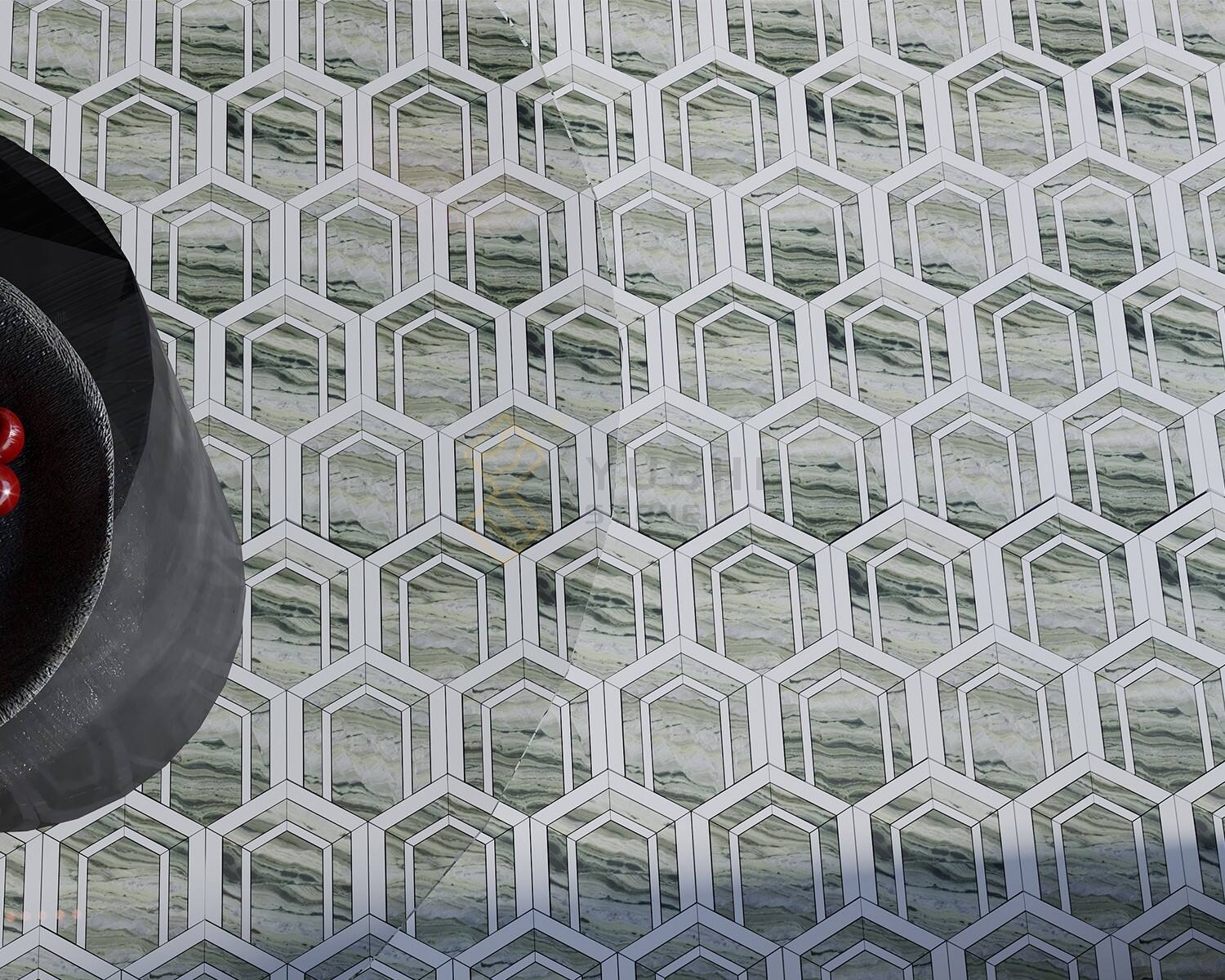
Quality, Variability, and Structural Realities of Marble Mosaic Tile Materials
How Structural Performance and Aesthetics are Affected by the Natural Variability of Veining Patterns
The unique visual appeal of marble's natural veins comes at the cost of structural variability, which subsequently impacts performance in mosaic tile wholesale. Visually striking, high contrast veins may increase the likelihood of fracture or failure by as much as 40% compared to more uniform stone. This occurs as veins act as stress concentrators, particularly for veins that cross the grain of the stone. This complexity creates an intricate balance which requires careful intentionality. For example, eye-catching Calacatta Gold veins will require more stone and epoxy grout in high traffic areas. Conversely, uniform Carrara marble will provide stone of predictable behavior, making it ideal for large scale installations. When selecting marble, stone professionals must consider the appearance and other characteristics such as fissure density, grain orientation, and vein continuity. Applying ASTM C503, water absorption of 0.20% or lower is the standard for integrity in wet areas.
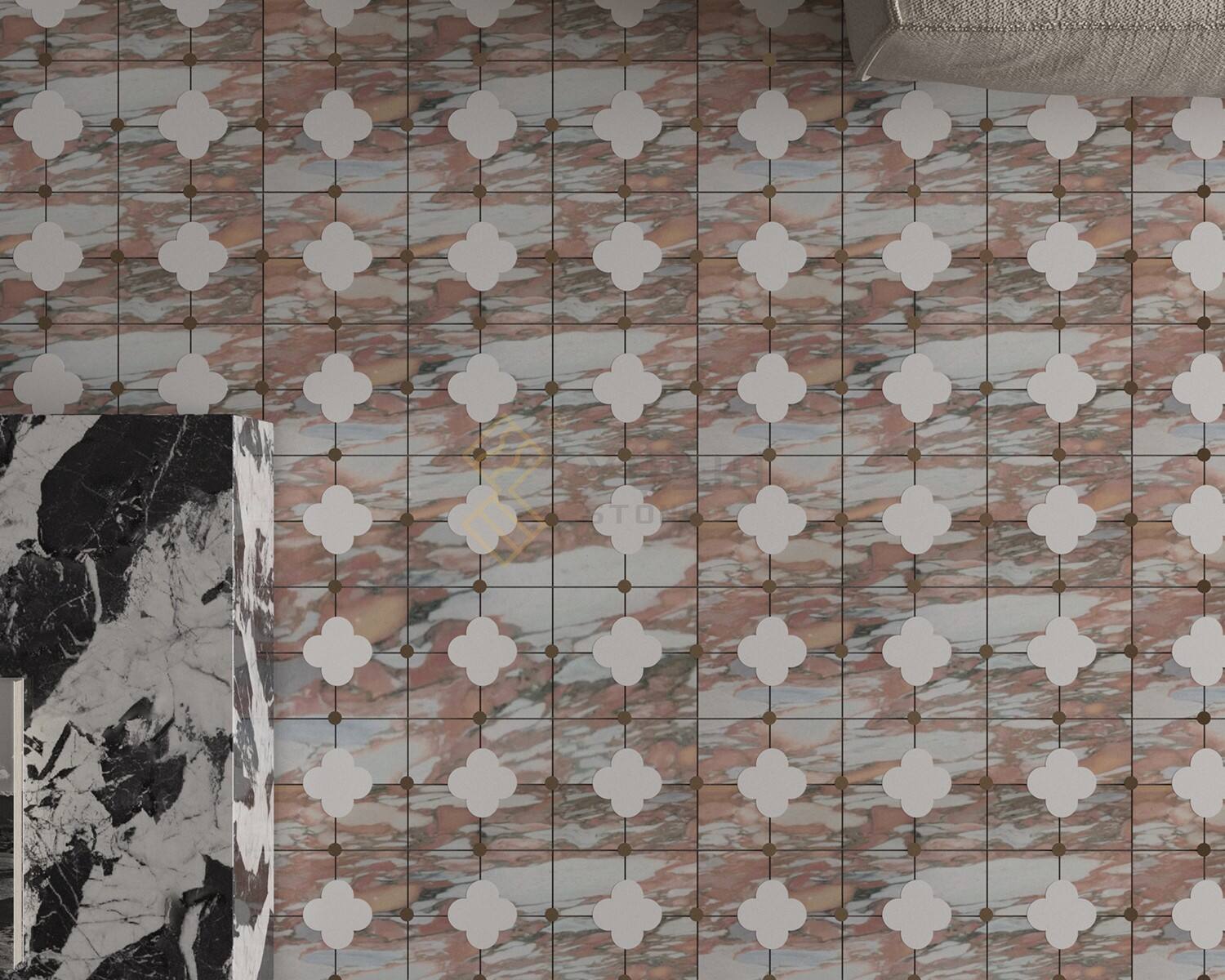
Marble Types and Their Use Cases: Carrara, Calacatta, and Nero Marquina
In the high-end marble mosaic tile wholesale market, three marble types take center stage:
The following table presents compressive strength, applications, and installation considerations for these marble varieties.
- Carrara
- Compressive strength: 80 - 100
- Suitable applications: bathrooms (including wet areas), feature walls, residential horizontal and vertical surfaces.
- Carrara has a mid-range Mohs hardness (3 - 4) and moderate foot traffic.
- Calacatta
- Compressive strength: 70 - 90
- Ideal for: backsplashes, luxury accents, and striking walls (including wet areas).
- Calacatta has a high fissure density and slightly lower hardness than Carrara.
- Nero Marquina
- Compressive strength: 90 - 110
- Suitable for hotel lobbies, vertical feature walls, commercial interiors, and unpolished areas.
- Nero Marquina has high compressive strength and low slip resistance, the latter of which must be countered by an honed finish.
Marquina's contrasts are better suited for dry environments, like unpolished areas, as the density supports heavy-duty use.
The Importance of Scale, Lighting, and the Overall Space
How Lighting Impacts Marble Mosaic Tile Reflectivity, Color, and Vein Visibility
Light plays an important functional and visual role when it comes to marble mosaic tile. Natural daylight improves overall reflectivity and vein contrast, while different artificial lights impact the perceived temperature of the color reflected. Cooler LEDs may mute warmer tones in the Carrara marble while a warm halogen may make Marquina's color richer. During the day, diffusing light from an opening in an otherwise dark north-facing room may make the veining in a lighter marble appear. When assessing coverage and pattern, take a sample of the tile and assess it frequently, under the intended light. For high-traffic spaces, a honed finish compromises a luxurious feel by improving pattern legibility.
Mosaic Scale Strategy: Selecting 10×10mm, 20×20mm, or Custom Grids in Accordance with Room Dimensions and Design Objectives
Mosaic tiles not only provide a decorative element to a space, but they also have a large effect on a user's perception of the space. In smaller environments, like a cramped bathroom, the 10×10mm mosaic tiles provide the greatest visual spread, but they also contribute a large amount of excessive grout lines that can be time consuming to maintain. 20×20mm mosaics provide the benefit of easier upkeep with the least amount of grout line and can be used in large, open, commercial environments, like a lobby, due to the large amount of time saved on labor. Custom grids can be used to address some of the aesthetic challenges posed by large spaces. For example, an elongated hexagon can be used to visually elongate a narrow corridor, or a radial grid can be used to create a focal point in an upscale bathroom. When selecting a grid format, proportion and format should be in agreement, and be mindful of selecting a large format tile in a smaller space as this can create a disjointed effect.
Pattern, Palette, and Pairing: Designing Cohesive, Ready-to-Install Solutions
Functional Pattern Guide: Herringbone, Brick Joint, and Arabesque—Trade-offs of Durability, Grout Visibility, and Maintainance
In designing a tile layout, a key factor is the combination of aesthetic appeal and functionality. Herringbone is a highly recommended pattern as it is able to withstand greater amounts of wear due to the interlocking design, however this is also a more visually intrusive pattern since the angled joints cause more grout lines to become visible. As a duplexing pattern, a standard brick joint pattern line enables an installation process that is slightly more forgiving of uneven subfloor surfaces. Of these 3 styles, the arabesque is the best in terms of visually concealing the grout line, however the irregular edges can chip and become damaged more easily which as a result can lead to a greater maintenance needs. For large projects, be sure to choose appropriate and functional patterns to to use in high traffic pattern areas, on high walls and backsplashes, and only use arabesque on low-traffic, feature walls.
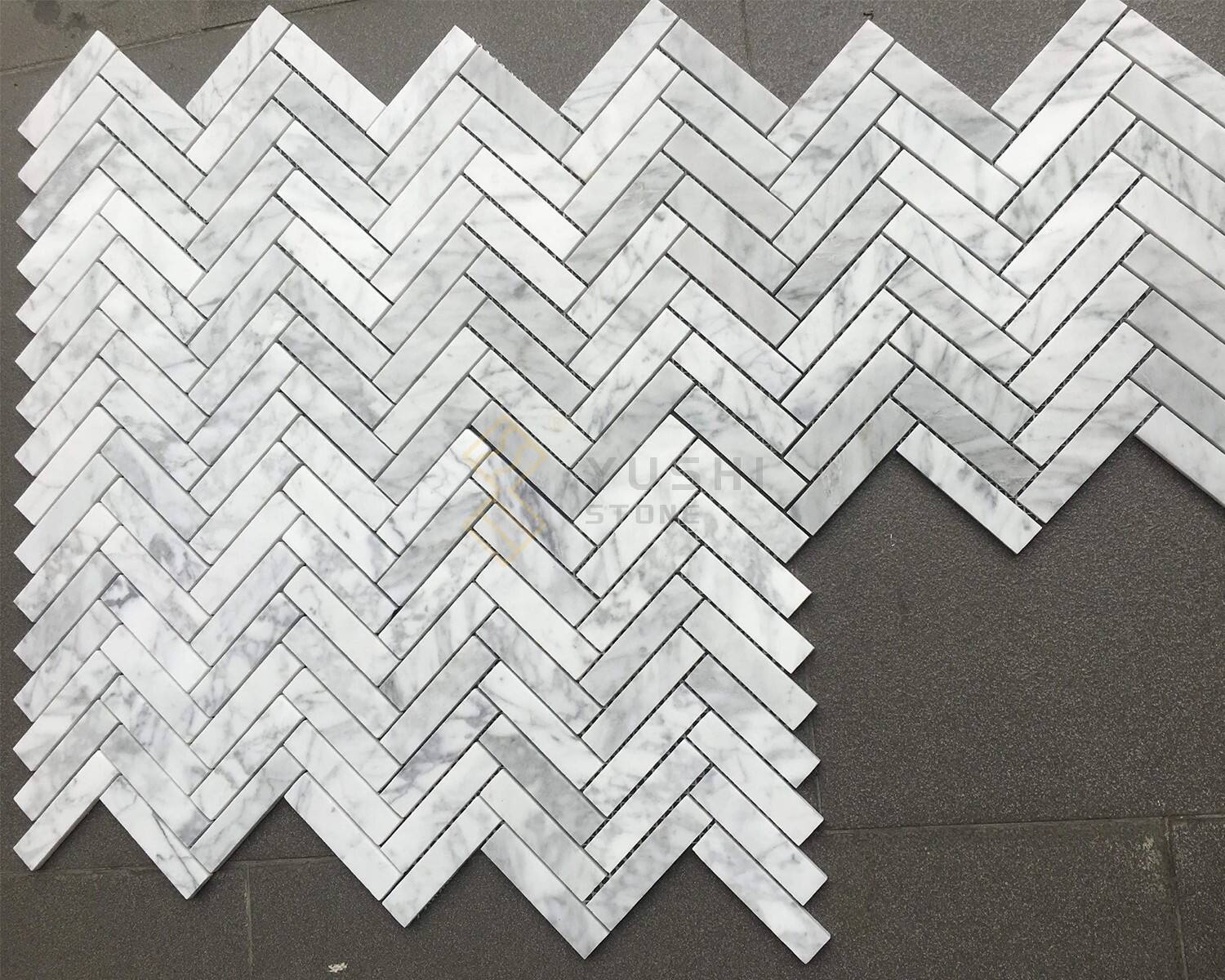
The Art of Stone Pairing: Creative Use of Marble Mosaic Tiles with Quartz, Limestone, and Metals to Enhance Luxury Style
The thoughtful layering of materials exemplifies architectural style and functional integrity. For instance, in wet areas, a marble mosaic can be paired with a border of quartz, which serves as a protective transition zone due to its non-porous surface and moisture absorption capabilities of up to 60%. For a neutral palette and a spa-like environment, limestone accents harmonize with marble’s organic veins, but keep in mind, both stones are susceptible to etching from pH imbalanced cleaners. If used in very small amounts (≤15% of total surface area), brass or stainless steel accents can provide a pleasing contrast, but should be avoided due to visual fatigue. When purchasing marble mosaic tiles, we recommend prioritizing materials in the following order: quartz for shower bases and thresholds, limestone for adjacent floors or plinths, and metal for precision-backed, undivided backsplashes. To achieve a seamless design, ensure all materials have the same finish and are the same type (honed or polished).
Quality Procurement and Vendor Assessment for Marble Mosaic Tile Wholesaling
The procurement of quality marble mosaic tiles at wholesale prices is a function of thorough, data-based vendor assessments beyond pricing and lead times. Design professionals need to evaluate vendors through four certified criteria: Vendor’s documented evidence of ISO 9001 certification for quality control, documented vendor sample testing for porosity and fissure evidence, documented factory auditing of vendor slab grading, and documented evidence of client reference for three years or more. Also, request vendor documents of block provenance and vendor crystallographic analysis that show weak crystallographic patterns leading to poor marble integrity after installation. These documents are helpful in the case of mass marble tile procurement. It’s also important to require, and clearly write, the criteria for marble bulk purchases that should involve third-party vendor inspections for integrity of packaging and shipment and also the dimensions, shades, and colors of the marble tiles. Also, be clear and firm on the criteria for the rejection of the vendor’s goods, including the maximum water absorption (≤0.20%) and the minimum failure of the goods to meet the required standards for the project.
FAQ
What are the factors to put into consideration when selecting marble mosaic tiles?
The factors to consider when selecting marble mosaic tile are the tile design, the strength and installation of the tiles, the lighting, size and pattern of the selected tiles.
How does lighting affect marble mosaic tiles?
Lighting affects the reflectivity, and the depth of the color, and the visibility of veins in a tile. Daylight enhances the contrast of the tile whereas, artificial light, adjusts the color.
What do I need to confirm when procuring marble mosaic tiles wholesale?
The marble mosaic tile vendor should have ISO certification, a vendor sample inspection, an in-house vendor audit, and documented vendor references.