EN
EN



Purchasing stone from a marble factory for large construction projects can be very complicated. It’s essential to plan in advance to deliver on time, provide stone of consistent quality, and remain within cost estimates. From setting requirements through to logistics, every detail needs to be taken within consideration to avoid delays. Here’s a step by step process.
Define Project Requirements Clearly

Start with outlining detailed specifications for the marble needed. This can be stone type (Carrara, Calacatta, etc.), dimensions (how large the slabs are, the thickness of tiles), finishes (polished, honed), and quantity. Large scale projects often have specific needs in regard to the veining and color. For example, a luxury hotel lobby may require 500 slabs of polished white marble with very little variation in color. Blueprints and / or 3D models help the marble factory understand cutting requirements. This helps reduce errors made during production.
Choose a Reliable Marble Factory
Search for marble factories that are familiar with large-scale projects and understand their needs. Look into their production capabilities, production quality, and their ability to meet deadlines. if possible, visit the production site for the marble factory to visually assess the cutting machine, polishing line, and their ability to handle bulk orders.
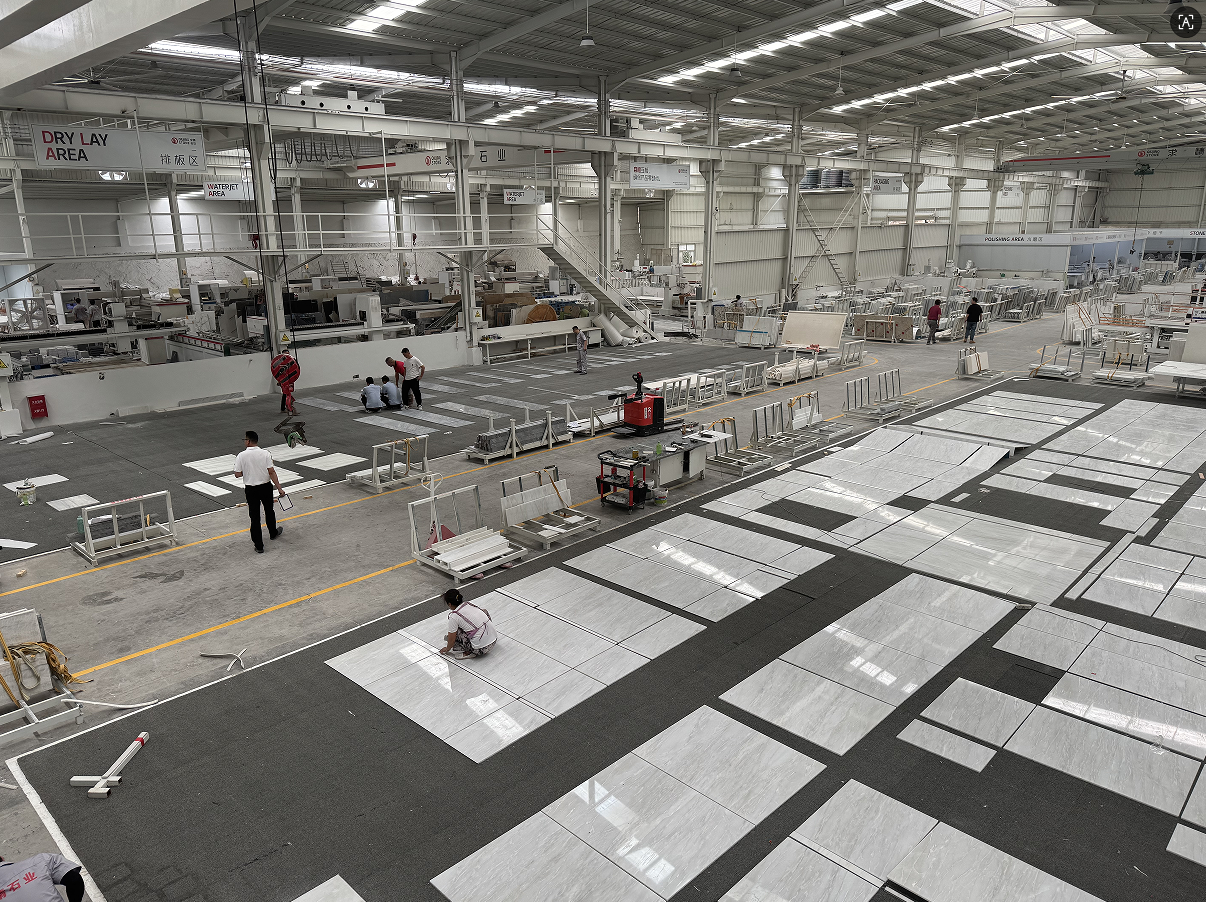
Look for certifications in responsible sourcing and safety as they are essential for compliance documents. A factory with a solitary project manager helps in faster touches since it enables faster resolution of any arising chasms or stalls.
Finalizing and Signing Contracts
After factory selection, finalizing and signing contracts becomes crucial for payment, delivery dates, and quality assurance. Discounts due to large orders consider the payment options; for example, project milestones paying in deposits, and installment basis. Quality control—on-site examinations of the products before they get shipped—has to come with penalties for late payments as well. Specify with a bound contract the acceptable defective rates to elude misunderstandings; for example, no more than 2% of plates can be broken. A comprehensive contract defends both sides and fulfills the expectations as well.
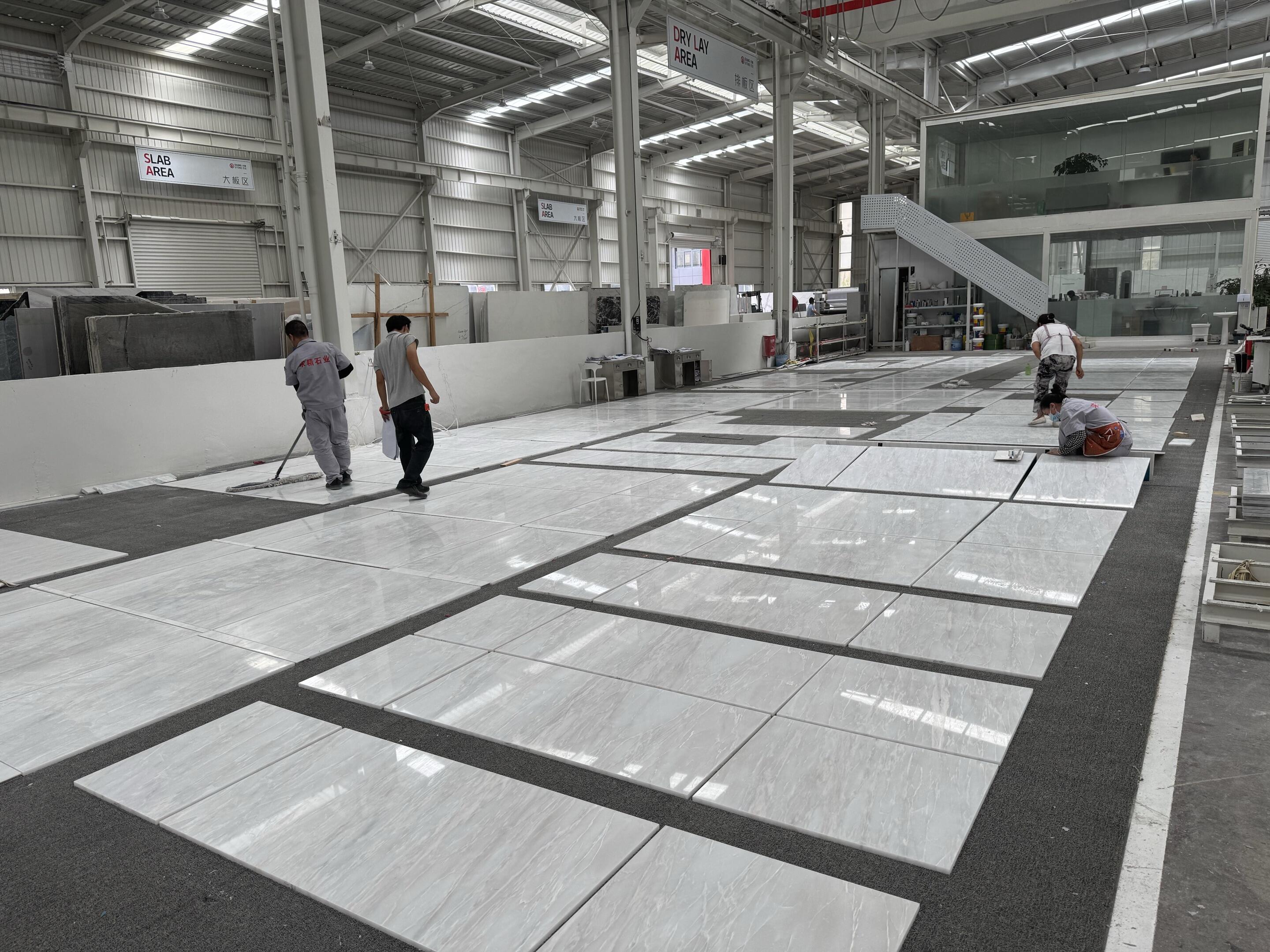
Integrate Mass Production and Quality Control
Primary marble producers and you as the coordinator for the project should work hand in hand in formulating a schedule. A big project has phases and timelines to be must, so slabs that form the ground should be high in placement to speed. Big order slabs should be done first, while the smaller wall slabs can be placed lower. During the production stages, quality control should be done and samples should be no more than 2% broken. The marble quality must have been tested before the project by the factory so it meets the standards of passing the tested criteria. In any delays with the other batched slabs, an issue must be addressed.
Facilities Logistics and Site Management
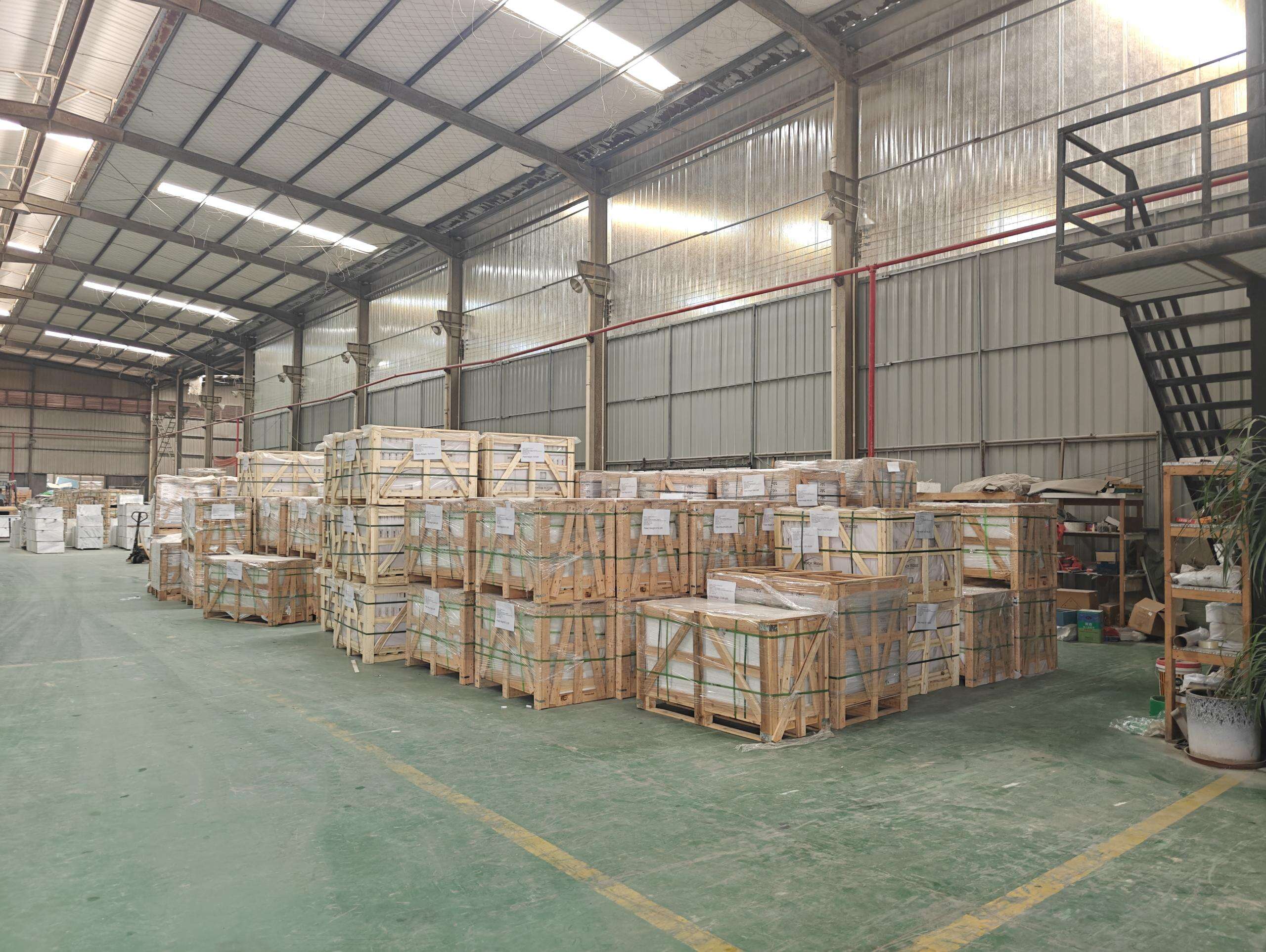
Choose a mode of transportation that will accommodate the marble’s weight and fragility. Send large marble slabs with a specialized truck having reinforced racks and adequate padding. Schedule delivery of the marble slabs with the construction so that they do not have any storage issues. Schedule the delivery so that the construction team can utilize the supplies. Have the marble stored in a covered location so that they can be protected from the weather and other construction debris. The people moving slabs should be taught that the slabs cannot be cracked. Use equipment that will lift the slabs and move them to avoid cracks. Good communication between the factory, construction, and logistics should be maintained to ensure complete integration.