
 EN
EN
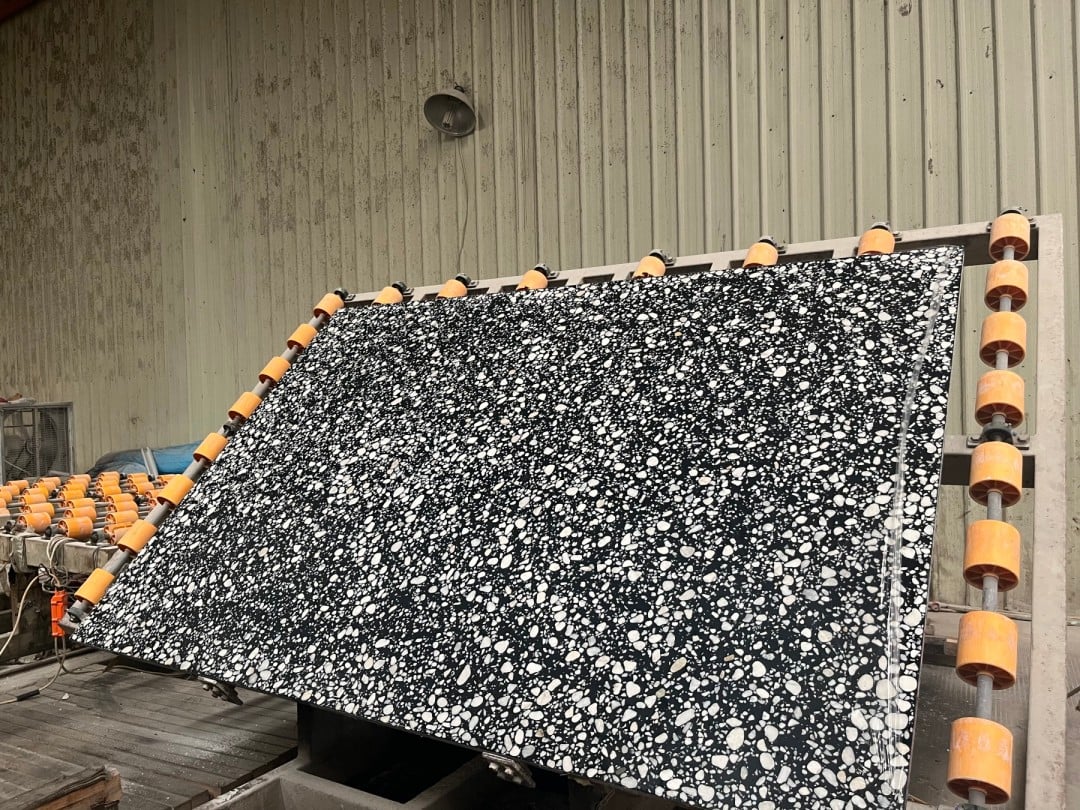
Designing Custom Terrazzo: Integration of Aggregate, Color and Pattern
Aggregate Selection and Sizing for Structural and Aesthetic Concerns
When designing your custom terrazzo, the choice of aggregate is the primary factor in the performance and aesthetic of the product. Marble chips offer a timeless elegance option, but the chips must be meticulously sized to measure in the range of 3mm to 12mm to avoid fracturing due to structural load. Modern combinations include the use of recycled glass and an increased use of iridescent metallics. While this is a contemporary approach in terrazzo design, the angular form of these products may require the addition of an epoxy binder to ensure sufficient adhesion and cohesion. The architect is faced with the challenge of balancing structural needs and the design goal of aesthetics. Larger aggregates yield a bold textured surface, but will also produce an uneven surface while increasing the risk of slipping. Smaller aggregates will produce a smoother, more uniform finish with higher reflectivity and surface finish at the expense of traction.
Customization of Color and Pigments in Cement-Based and Resin-Based Systems
The choice of the matrix greatly influences the method of color integration. Cement-based terrazzo will require the use of mineral oxide pigments blended directly into the cement to produce a muted, earthy, and stable palette of color that will suit heritage projects. The use of resin-based systems will allow for a liquid colorant to be used, ensuring that color is immediately available and at a higher resistance to UV. This also allows for the matching of Pantone colors, which is ideal for your commercial interior projects. A key difference to note between cement-based systems and resin systems is the discoloration of cement-based systems with high UV exposure. Since resin systems are binders, the color will stay intact over decades. Therefore, for projects that require utmost color consistency, resin-based systems will be the best choice.
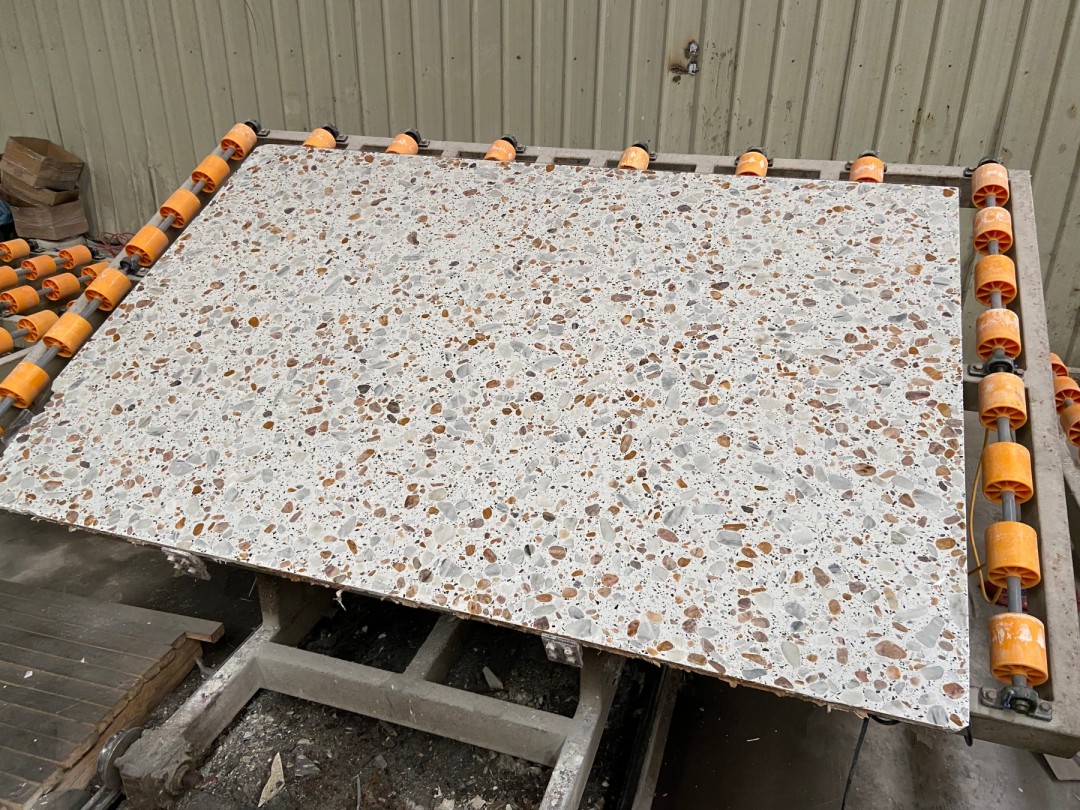
Designing Layouts for Logos, Wayfinding, and Divider Strips Using CAD and Digital Stencils
In today's design, CAD becomes the primary method for laying out full-scale logos, geospatial patterns, and wayfinding design elements. When CNC routers cut digital stencils, the placement of divider strips and casting inlay boundaries will be done with millimeter-perfect accuracy. For directional uses, brass divider strips, inlaid directly into the plastic, will eliminate the need for a grout line, which causes a weak point on the wayfinding strip. When thermal expansion coefficients of the stonemason work and the primary polymer casting matrix match each other, it minimizes the possibility of delamination of the work.
The Making of Custom Terrazzo: Tradition Versus Technology
Cement-Based vs. Resin-Based Production: Mixing, Vacuum Casting, Curing
In making cement-based terrazzo, various aggregate stones or materials are combined with the Portland cement with measured water-to-cement ratios of between 0.4 and 0.5. This minimizes shrinkage after the cement sets. After the mixture is cast, the excess moisture and the vacuum are used to decrease the cement's initial setting time and to create a denser structure, achieving an initial density of 12-15%. full strength of the structure is achieved after the 28-day curing period. The resin-based systems, however, employ a much more fluid form of epoxy and polyester resins which are mixed to ±1% accuracy. The fast reaction of these systems has made vacuum casting an innovative product for the industry where the confinement of the resin and catalyst under vacuum allows a bubble-free, finished product to be made within 3-7 days of casting.
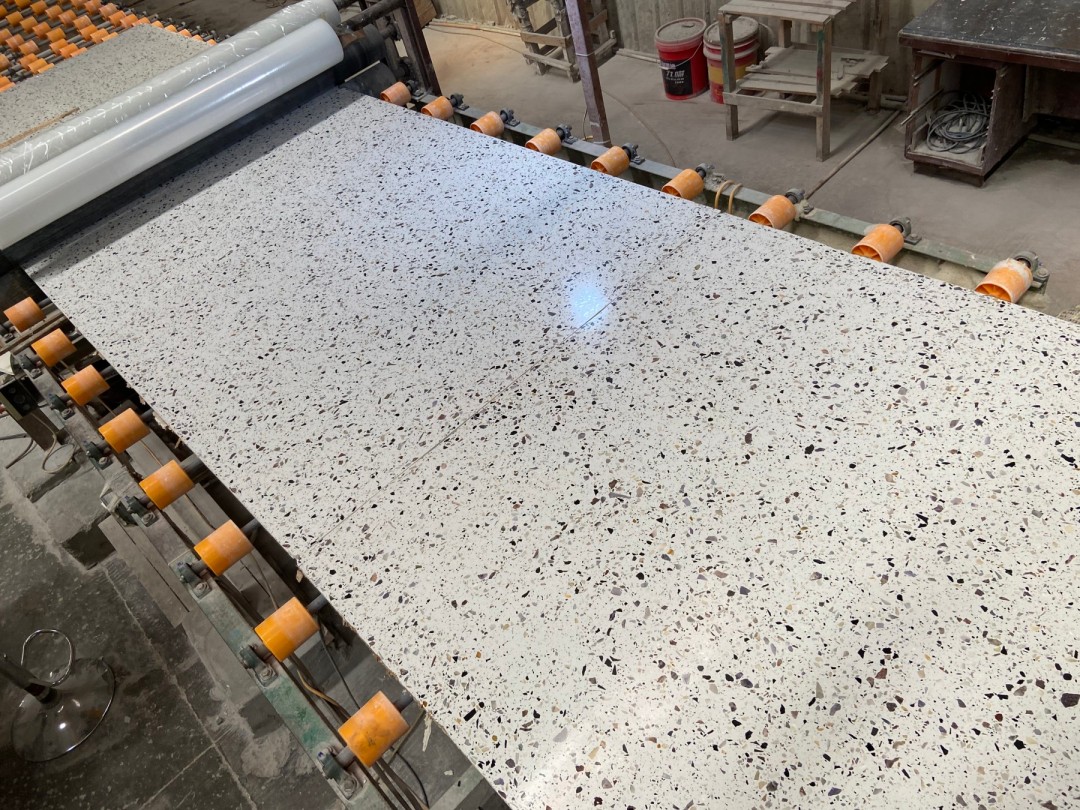
Recent Advances in Digital Fabrication: Waterjet Cutting, Prefabricated Panels, and Accurate Design Transfers
Computer-controlled systems blend craft and industry. Water jet cutting attains tolerances under ±0.5mm. Cutting with Water jets eliminates thermal distortion. Panels prefabricated in climate-controlled factories have a thickness drift of ±1mm and 40% reduced on-site labor time. CAD-based digital stencils allow for direct casting onto substrates with a drift margin of 1%. These digital stencils allow for spacing of 200+ points eliminating the manual labor of designs.
Installation and Performance Optimization of Custom Terrazzo
Installation itself accounts for a good chunk of the longevity of custom designed terrazzo. The first step in the installation process is the preparation of the subfloor. The subfloor must be flat to within a 2mm tolerance to prevent cracking and to prevent the terrazzo from coming loose. After the surface has been cast, grinding and polishing are done to bring the surface to the desired level of sheen. This surface preparation is done to develop a surface that is uniform and free of any grinding marks. After polishing, an industrial-grade penetrating sealer is then used to seal the surface to make it resistant to stains and abrasion. The longevity of custom designed terrazzo is improved with the continued maintenance of the sealer, which is done annually, and with the use of pH neutral cleaners. When custom designed terrazzo is installed under the guidelines set forth by the National Terrazzo & Mosaic Association, it lasts in excess of 50 years. For a given space, custom terrazzo fulfills the needs of having minimal long-term costs, a long life cycle, and meeting the design intent. For these reasons custom terrazzo is an optimal choice in the flooring of an airport, hospital, or city hall.
Frequently Asked Questions (FAQ)
What are the key aggregate materials used in custom terrazzo?
The three main types of aggregates in custom terrazzo systems are marble, recycled glass, and metals.
How is color incorporated into terrazzo systems?
With cement based systems, color can be introduced with colored minerals or in resin systems, color can be added as a dye.
What tools ensure precision in custom terrazzo designs?
Precision in custom terrazzo design is ensured with the use of CAD for mapping, along with the digital stencils, CNC routers, and water jets.
What is the comparison between Cement-based terrazzo and Resin-based terrazzo?
Resin based terrazzo allow for a faster install process with a more prolonged durability and a bigger variety in color as opposed to Cement-based terrazzo which is slower with a durability that is not as strong with a more neutral color.
How do you take care of a terrazzo floor?
A terrazzo floor is said to have 50+ years of longevity if routinely cleaned with a pH neutral cleaner, resealed annually, and maintains best practices for the industry.