 EN

What to Include in a Custom Marble Dining Table RFQ
A custom marble dining table is rarely a simple furniture purchase. For a hotel, restaurant, villa, showroom, or multi-unit residential project, the quotation needs to align design intent with stone selection, fabrication, safe handling, packing, delivery, and site conditions. A vague inquiry can produce quotes that look comparable but are based on different assumptions.
From an export-procurement perspective, the most useful RFQ for a marble dining table starts with project conditions—not just a reference image. The checklist below helps architects, designers, contractors, and wholesale buyers request a quote that is easier to review, approve, and place into production.
1. State the project and purchasing scope first
Begin every marble dining table RFQ with the commercial context. Identify whether the pieces are for a hospitality fit-out, restaurant seating area, private villa, furniture collection, or sample order. State the required quantity, destination country or port, target arrival date, and whether you need a single prototype before bulk production.
This context affects practical choices. A restaurant project may prioritize repeatable dimensions, replaceable components, and delivery sequencing. A villa project may place more emphasis on a particular slab character or sculptural base. For either case, confirm whether the requested marble dining table price should include only the stone components or a complete table with base, hardware, packing, and logistics support.
2. Define the table geometry with a drawing and dimensions
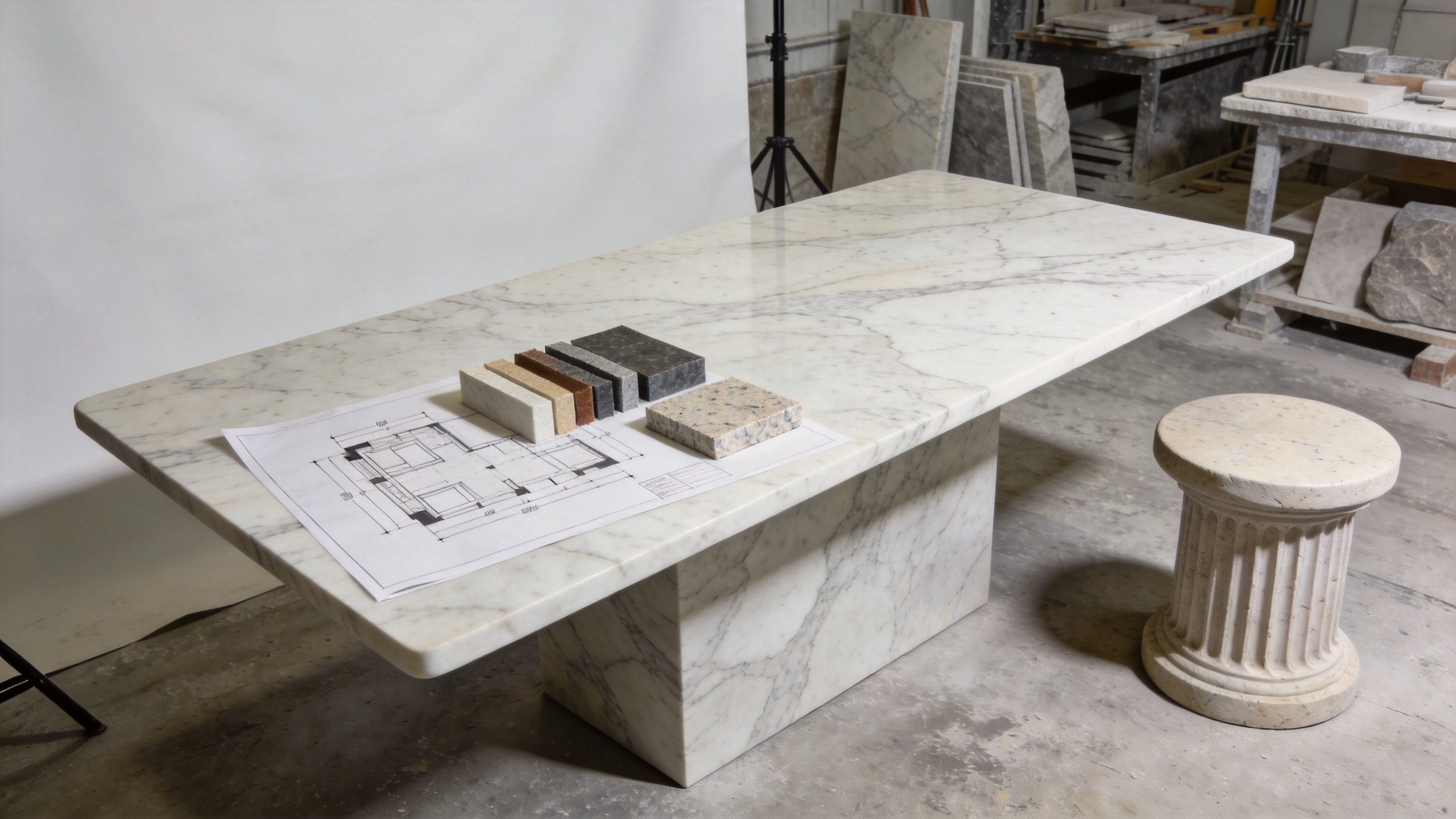
Attach a dimensioned drawing whenever possible. A reference photo is helpful, but it does not define the final marble dining table. Specify the overall length, width or diameter, finished height, top thickness, edge profile, corner radius, and the geometry of each base or pedestal. Also identify whether the top is round, oval, rectangular, racetrack-shaped, or irregular.
For a large marble dining table, show the intended seating count and clearance around chairs. If the base is supplied separately, include its footprint, material, and fixing method. The supplier needs this information to review unsupported spans, joint locations, balance, installation sequence, and the practical limits of fabrication and transport.
| RFQ field | What to provide | Why it matters |
|---|---|---|
| Overall size | L × W × H, or diameter × H | Sets material yield, fabrication scope, packing size, and freight planning. |
| Top construction | Solid thickness, laminated build-up, joint preference | Helps evaluate weight, edge treatment, and support requirements. |
| Base details | Drawings, footprint, material, attachment points | Allows the supplier to coordinate stability and installation. |
| Quantity | Prototype, sample, and production quantities | Separates one-off development costs from repeat production pricing. |
3. Name the stone and explain the visual approval standard
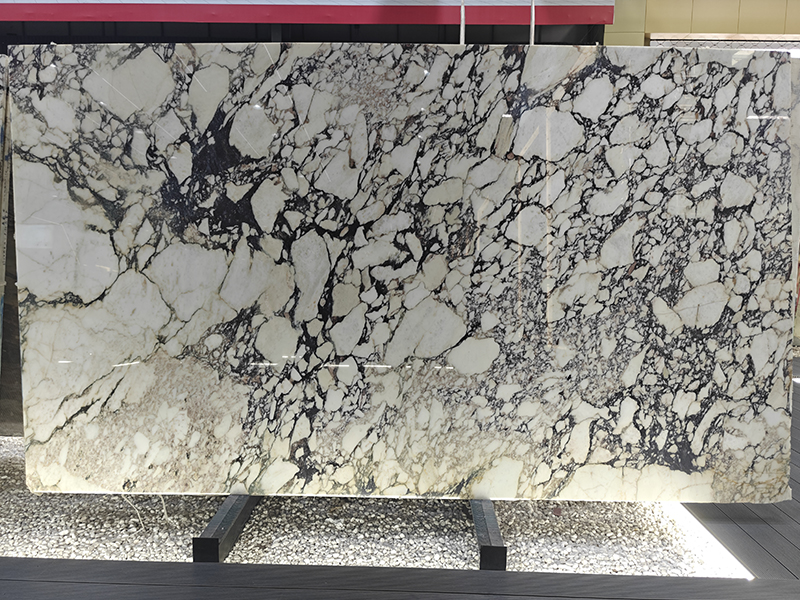
Natural stone variation should be handled before a marble dining table enters production. State the requested stone name if it is known, such as Calacatta Viola, and attach an image that shows the preferred background tone, vein scale, color movement, and finish. If the material is still open, describe the visual direction and acceptable alternatives rather than asking the supplier to guess.
For a project with several tables, clarify whether tops should be cut from the same block or batch, whether veining should run in a specific direction, and whether book-matching or vein continuity is required. Ask for slab or sample photographs for approval. A visual reference should be treated as a target range, not a promise that every natural marble dining table will look identical.
The RFQ should also state the finish: polished, honed, leathered, brushed, or another agreed treatment. Confirm how the finish applies to the top, edges, underside, and pedestal surfaces, because those areas may receive different levels of processing.
4. Ask about thickness, support, weight, and fabrication limits
These details turn a design concept into a workable marble dining table. Identify the desired top thickness and ask the supplier to confirm whether the proposed base provides adequate support for the selected size and stone. Thickness, material density, shape, openings, cantilevers, and base position all affect handling and support decisions.
One search result gives an indicative example of a 3 cm marble top weighing about 20 lb per square foot; use figures like this only for early planning, not as an engineering rule. The actual weight of a marble dining table should be confirmed from the final stone, dimensions, construction, and base design. Request the estimated net and packed weights, crate dimensions, and any lifting or installation guidance needed at the destination.
List other fabrication requirements as well: edge profile, drainage-free indoor use, cutouts, concealed reinforcement if proposed, base-to-top fixing points, and permissible tolerances. If a drawing contains a delicate fluted, curved, or deeply profiled stone base, provide sections and close-up details instead of relying on a front elevation alone.
5. Specify samples, mock-ups, and approval gates
For decision-stage buying, define what must be approved before the full marble dining table order proceeds. A small finish sample may be enough for a straightforward selection. A complex project may need a material sample, shop drawing, full-size detail, or prototype. In the RFQ, state who has approval authority and how comments will be consolidated.
Ask the supplier to distinguish between a visual material sample and a fabrication mock-up. A small sample can confirm color and finish, while a prototype can test scale, joint treatment, edge feel, and base assembly. Include the review timeline so the quotation can reflect realistic lead-time assumptions.
6. Include packing, shipment, and installation information
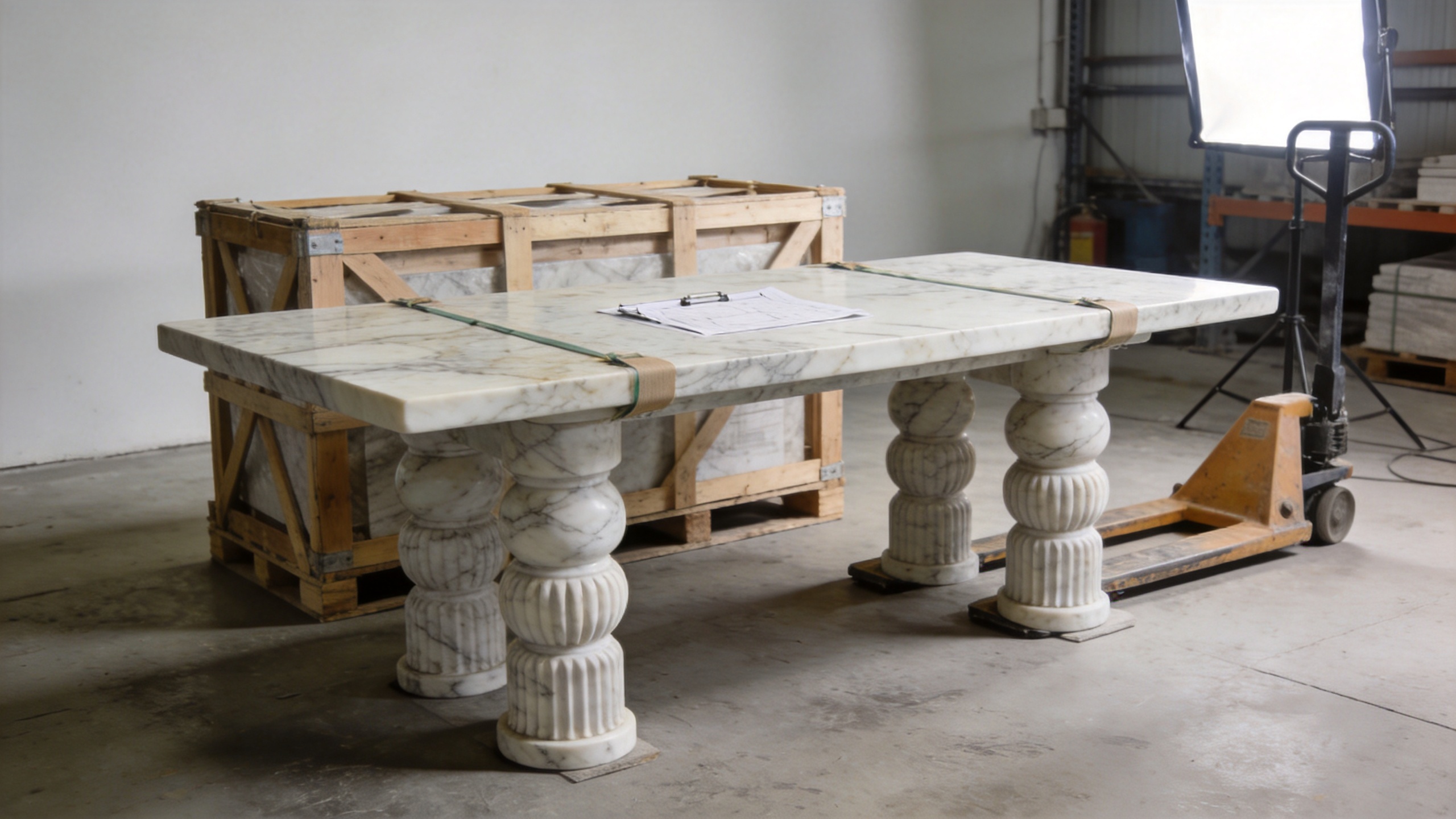
A quoted marble dining table is not fully comparable until the delivery scope is clear. Confirm the destination, Incoterm, preferred shipment method, requested delivery window, and whether the price should include export packing. Natural stone furniture needs a packing plan that considers brittle edges, heavy components, crate access, and site unloading.
Request crate dimensions, gross weight, component count, labeling, and recommended handling equipment. For projects with restricted lifts, corridors, or service entrances, provide the clear opening dimensions and any maximum item weight. Ask whether the table will be shipped assembled or in sections, who is responsible for assembly, and what site conditions are required before installation.
7. Finish with a quote-comparison checklist
Before sending the RFQ, make sure every supplier is pricing the same marble dining table scope. Ask for a line-item quote that separates stone material, fabrication, base or hardware, samples or prototypes, packing, freight terms, taxes or destination exclusions, lead time, payment terms, and quotation validity.
- Project type, quantity, destination, and target delivery date
- Dimensioned drawing, reference images, and seating requirement
- Stone, finish, vein direction, and visual acceptance criteria
- Top thickness, edge profile, base details, and attachment method
- Sample, shop-drawing, prototype, and approval requirements
- Net and packed weights, crate details, shipment terms, and site access constraints
For a useful starting reference, review the Calacatta Viola Marble Dining Table with Fluted Round Marble Legs and translate the relevant design elements into your own documented requirements. A well-scoped RFQ gives the supplier a clearer basis for review and gives the buyer a more reliable way to compare options.
Conclusion
A well-scoped custom marble dining table RFQ connects visual intent with measurable production and delivery information. When material approval, dimensions, support, fabrication, packing, and commercial terms are all stated clearly, suppliers can identify open questions early rather than pricing around unspoken assumptions. That is the most practical path to a quote that can support a confident purchasing decision.