EN

Backlit “Butterfly” Wall Panel in Patagonia Quartzite: A Full Project Fabrication Solution
2026/04/24

A marble feature wall can become the focal point of a hotel lobby, a private villa, or a reception area. When the veining opens outward in a balanced, mirror-like pattern, the effect is often created through bookmatching.
Bookmatched marble is an arrangement of selected marble slabs in which adjacent faces create a near-mirrored pattern, similar to the pages of an open book. It is a way of selecting, finishing, and arranging natural stone—not a separate type of marble.
For buyers, achieving a successful result involves more than choosing an attractive material. The actual slabs, finished dimensions, cutting positions, and joint layout all need to work together.
Marble blocks are cut into a sequence of slabs. To create a bookmatched pair, opposing faces of neighboring slabs are finished and displayed next to each other, opening the pattern around a shared edge.
Because the stone’s pattern changes through the block, even neighboring slabs may differ. The result is a natural, near-mirrored composition rather than an exact duplicate. The Natural Stone Institute’s Use Natural Stone publication explains this process in Bookmatching: Geology Meets Geometry.
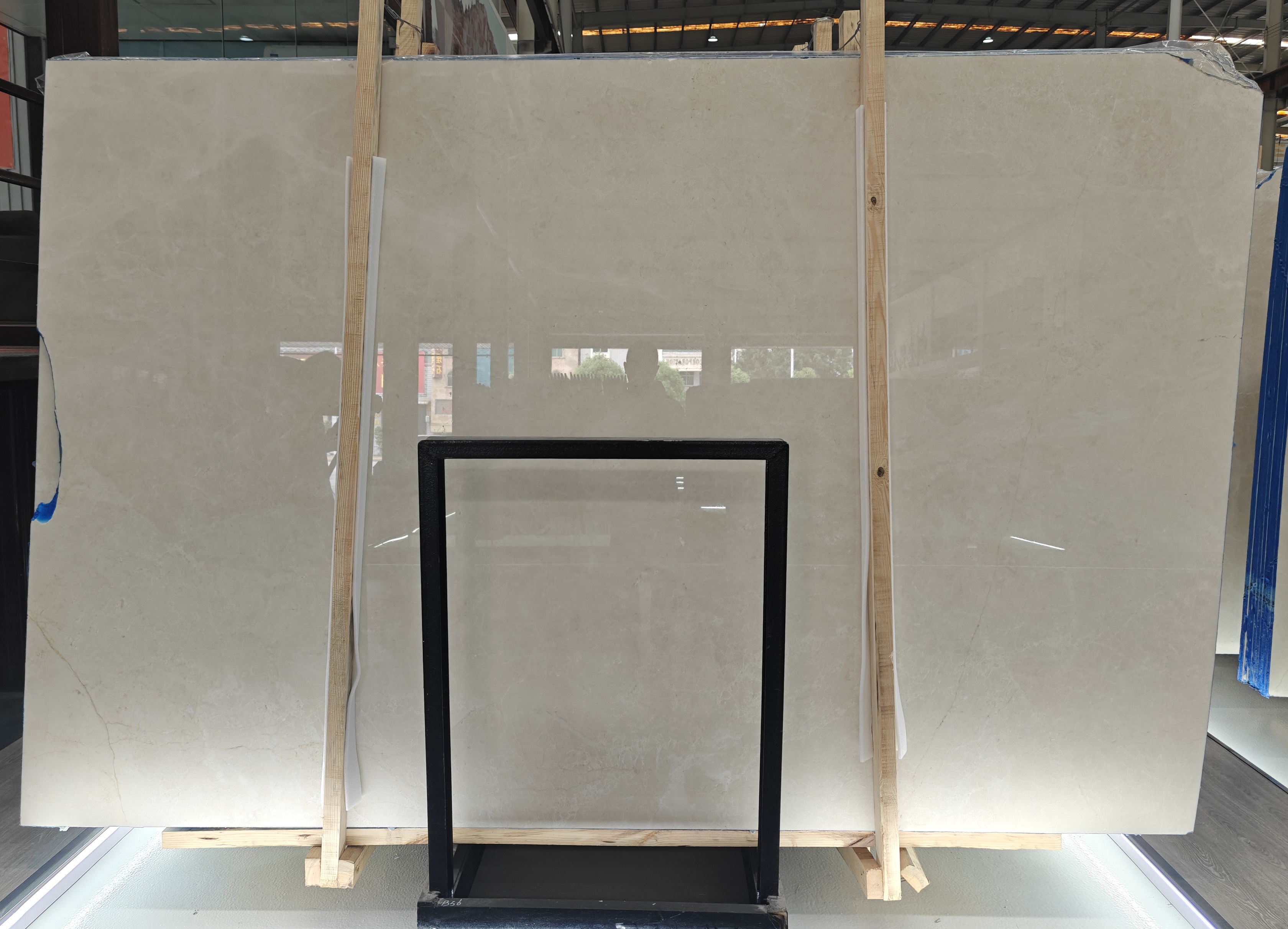
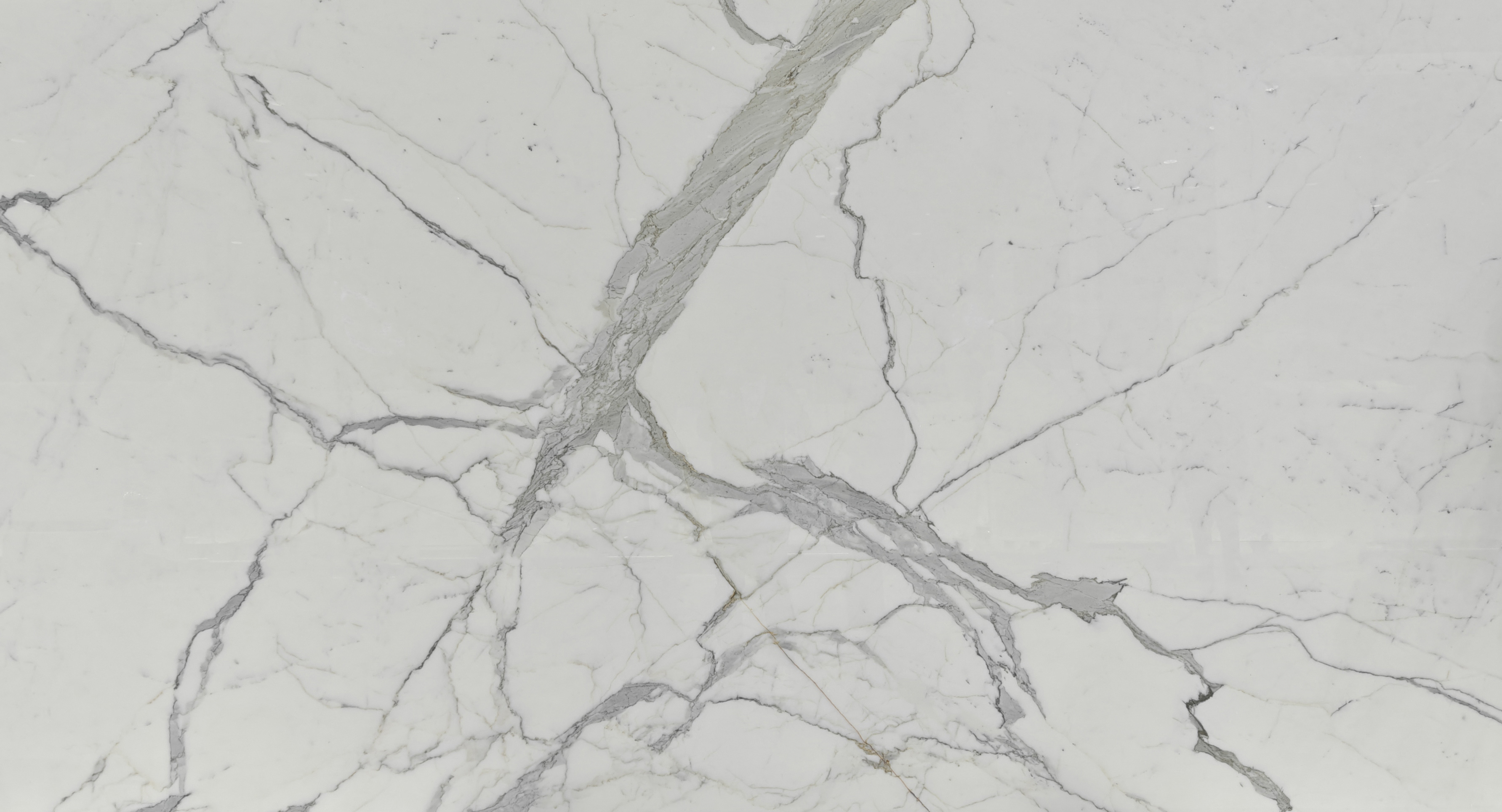
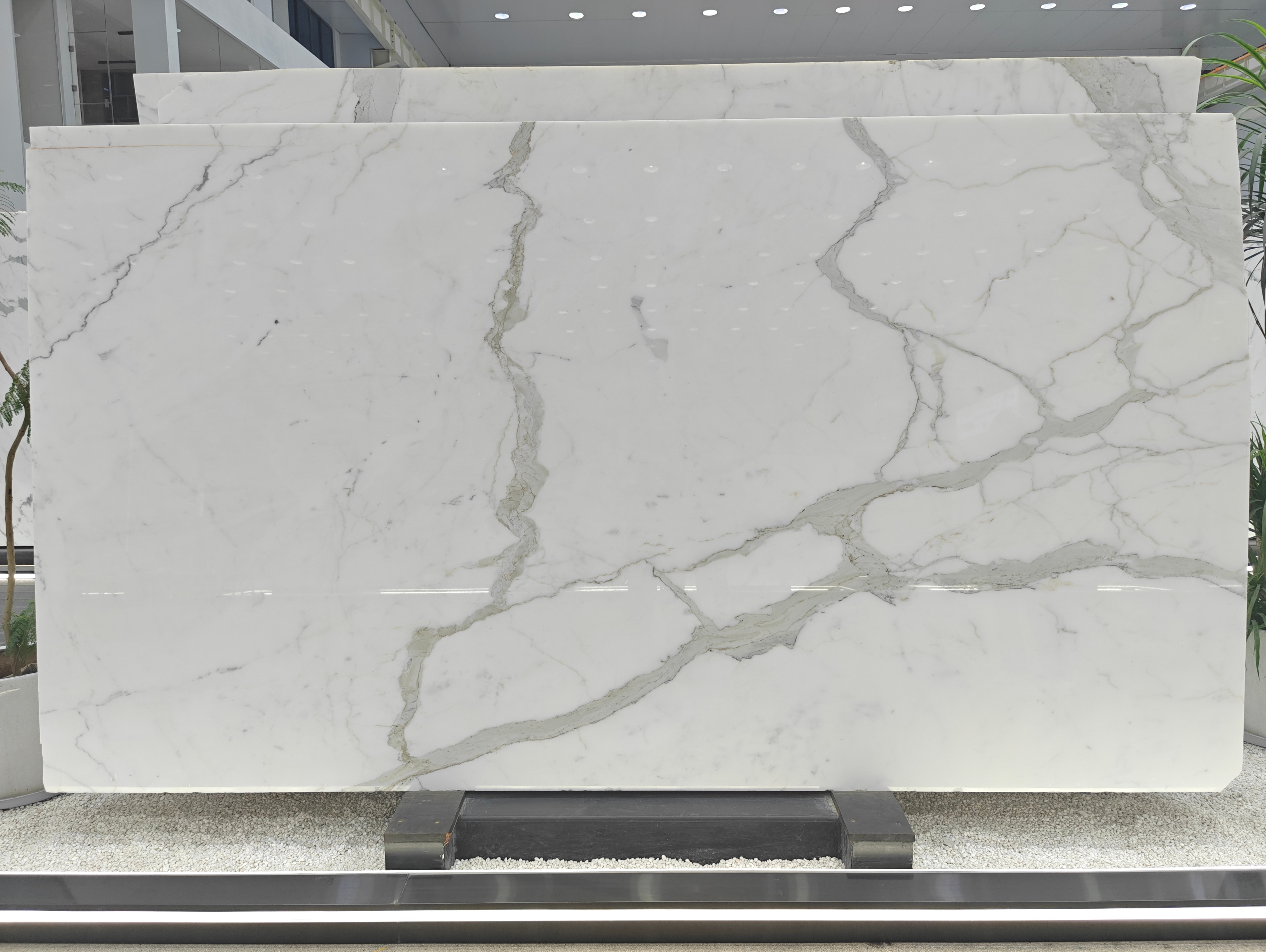
When sourcing bookmatched marble slabs, ask to see the actual proposed pair. A photograph of one slab cannot show how two finished faces will look together.
These terms describe related design goals, but buyers should confirm the intended arrangement with a drawing.
| Arrangement | Intended visual effect | What buyers should confirm |
|---|---|---|
| Bookmatching | Veining reflects around a shared joint to create a near-mirrored composition. | The actual paired faces, orientation, and position of the central joint. |
| Vein matching | Selected veins appear to flow between adjoining pieces without necessarily creating symmetry. | Which veins should align and how the pieces connect. |
| Coordinated slab selection | Panels share a compatible background color and overall character. | The acceptable variation between panels and their placement. |
If you want a symmetrical marble wall, specify bookmatching rather than simply requesting “matching marble.”
For example, a project brief might state:
Create a two-panel bookmatched marble feature wall with a vertical center joint. Submit photographs of the actual paired slabs and a dimensioned cutting layout for approval before fabrication.
This gives the supplier a clearer starting point than a reference image alone.
Bookmatching can be considered for feature walls, reception backgrounds, bathroom walls, floors, and countertop compositions. The material and installation system still need to be suitable for the application.
For a bookmatched marble wall, start with the finished wall dimensions and the desired centerline.
Consider how the pattern relates to the surrounding design. A television, reception logo, doorway, or piece of furniture may cover the most distinctive part of the composition.
Ask for an elevation showing these elements before approving the cutting layout.
For bathroom designs, show the positions of mirrors, fittings, niches, and openings on the stone layout.
A pair of slabs may look balanced when viewed in full, but that balance may change once large sections are removed or covered.
For countertops, review the top surface together with any adjoining backsplash or waterfall panels.
Specify where you want a mirrored arrangement and where you want the veins to continue around a corner. These are different layout decisions and should be shown separately on the drawings.
For floors or walls made from several panels, request an overall numbered layout. Review the complete composition rather than approving each piece in isolation.
Include the main viewing direction so the supplier understands how people will first see the pattern.
Begin with the actual available slabs rather than relying only on a material name or a small sample.
Ask for photographs of the proposed slabs side by side, in the intended orientation.
Consider:
A small sample can help you assess color and finish, but it cannot demonstrate a full bookmatched layout.
Ask the supplier to distinguish between the slab’s overall dimensions and the usable area available for your finished panels.
Review the cutting boundaries against the actual photographs. Do not assume that every part of a photographed slab will remain in the finished composition.
Bookmatching depends on the relationship between adjoining pieces. Trimming an edge can alter where the patterns meet, and matching adjustments may be needed on the paired slab. This is one reason edge condition matters during selection, as discussed in the Use Natural Stone bookmatching guide.
Ask the fabricator to show the proposed joint after allowing for trimming and fabrication.
Before fabrication, request a layout that identifies both the visual arrangement and the finished pieces.
A useful approval package should include:
| Item | Information to confirm |
|---|---|
| Slab identification | The exact slabs and finished faces being approved. |
| Slab photographs | Clear images showing the complete proposed arrangement. |
| Finished dimensions | Panel sizes and overall installation dimensions. |
| Cutting positions | Where each finished piece will come from within the slabs. |
| Joint layout | Joint positions and the proposed joint width. |
| Openings | Locations of niches, sockets, fittings, and cutouts. |
| Panel orientation | Top and bottom directions, sequence, and piece numbers. |
| Finish | The agreed surface finish for all adjoining pieces. |
Confirm whether a digital preview uses photographs of two actual slabs or simply mirrors one photograph. A mirrored image can illustrate a design idea, but it does not demonstrate that a matching physical pair is available.
If the slabs change after approval, request a revised layout.
A digital layout helps explain the proposed design. Where practical, a physical pre-layout provides another opportunity to review the fabricated pieces together before packing.
Request an overall photograph and closer views of the main joints. Compare these with the approved layout and check that piece numbers and orientation marks are consistent.
For a large wall that cannot be fully assembled for photography, agree on how the supplier will document smaller groups of adjoining panels.
The aim is to make the installation sequence clear and resolve visible layout concerns while the pieces are still at the factory.
Ask for a quotation based on the approved composition, not only a price per square meter of raw slabs.
Have the supplier identify whether the quotation includes:
There is no single price premium that applies to every bookmatched marble project. Request a project-specific quotation so you can compare suppliers on the same scope.
Approving only a material name.
Request the exact slab photographs and identifiers for your order.
Treating a mirrored rendering as proof of available material.
Confirm that both displayed faces correspond to real slabs.
Reviewing the pattern without the finished dimensions.
Assess the composition after the proposed cutting boundaries are shown.
Leaving openings out of the layout.
Include architectural details that remove or cover parts of the stone.
Assuming the installer will know the sequence.
Provide numbered drawings and matching identification on the pieces.
Not necessarily. Natural patterns can change between neighboring slabs. Approve the actual pair and its final cutting layout rather than expecting an exact reflection.
Do not assume that two slabs with the same material name will form a suitable pair. Ask the supplier to demonstrate the proposed match using the actual finished faces.
No. The design includes joints between separate pieces. Confirm their location, width, and appearance as part of the layout.
A sample can support color and finish selection, but it cannot show the full composition. Request complete slab photographs and a dimensioned layout.
Send the installation dimensions, intended application, preferred material or reference images, required finish, and drawings showing openings. State whether you want a mirrored bookmatch or a different vein arrangement.
A successful bookmatched marble design starts with clear material selection and layout approval.
Explore our marble slabs, or contact YUSHI STONE with your project dimensions, reference images, and drawings to discuss material options and your proposed arrangement.
2025/07/09
This is a title description that can briefly introduce the module.