 EN

Travertine Coffee Table: How to Choose Shape, Size and Finish
A travertine cocktail table can anchor a hotel lounge, a residential living room, or a commercial reception area, but it should be specified as more than a decorative object. For architects, designers, contractors, and sourcing teams, the practical question is how its shape, dimensions, finish, and fabrication details work together. As an export procurement advisor, I would clarify the intended use, drawing constraints, packing expectations, and approval path before comparing quotations for a travertine cocktail table.
Natural variation is part of the material. Veining, pores, tone, and filled areas can differ reasonably between pieces, so the approved sample and finish description matter as much as the concept image. A considered selection process makes it easier to compare like for like and to communicate a workable brief to the supplier.
Start with the room plan, not the stone block
The first decision for a travertine cocktail table is its job in the room. Is it a central surface for a low seating group, a pair of movable tables in a lounge, or a sculptural focal point in a reception space? The answer affects shape, access, edge treatment, base design, and the level of surface texture that is practical.
Measure the seating arrangement before selecting a top size. A commonly cited starting point is to align the table near, or slightly below, sofa-seat height; many residential guides place coffee tables around 16–18 inches high. Another useful planning reference is roughly 356–457 mm (14–18 inches) between sofa and table. These are checks, not fixed rules: circulation paths, accessibility needs, and the actual furniture drawings should determine the final dimensions of a travertine cocktail table.
- Record the clear floor area: include walkways, doors, rug boundaries, and loose seating.
- Confirm the use pattern: display-only, occasional drinks, or frequent guest service creates different priorities.
- Set a height reference: verify the finished seat height rather than relying on a catalogue category.
- Identify handling constraints: delivery route, lift capacity, installation sequence, and any need for a split or modular design.
Choose a shape that supports circulation and composition
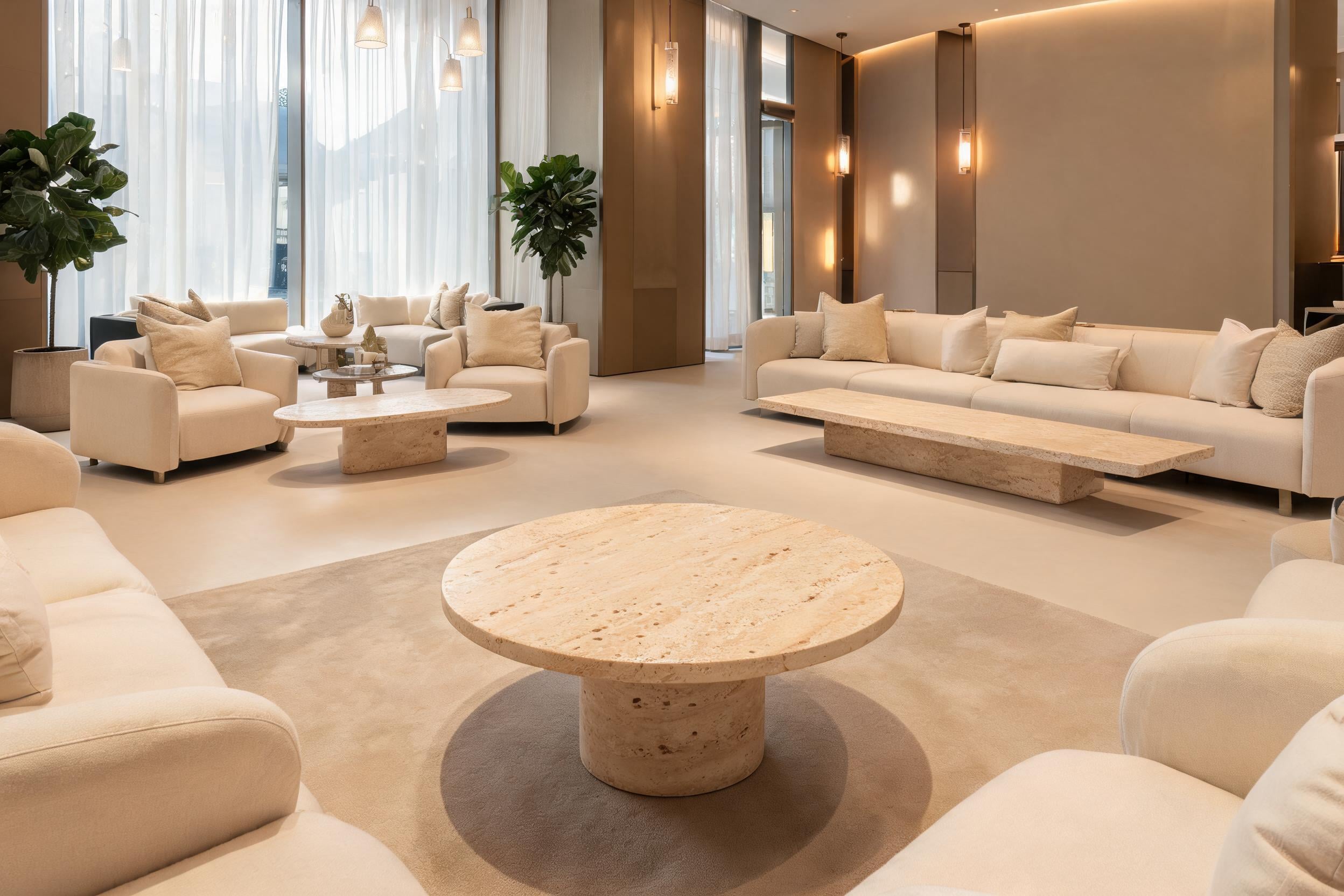
A round or oval travertine cocktail table softens a seating cluster and can make movement easier where people pass around the corners. It is often a practical choice for hospitality lounges, compact residential rooms, and layouts with several loose chairs. Round geometry also puts attention on the stone’s tonal movement rather than on rigid alignment.
Rectangular and square formats create a more architectural reading. They suit sofas, paired seating, and rooms where the coffee table must align with a rug, joinery, or grid. A square travertine cocktail table can give equal reach from surrounding seats, while a rectangular version can organize a longer conversation area. More precisely, these formats need a plan check: a visually balanced top can still interrupt circulation if the corners extend into the main route.
Irregular, organic, or softly faceted shapes are useful when the design calls for a wabi-sabi character. They should be approved through a clear outline drawing or template, especially when a project needs repeat pieces. For a relevant product reference, teams can review the Wabi Sabi Natural Travertine Coffee Table alongside the room layout, rather than treating a product image as a final project specification.
Set dimensions through reach, proportion, and fabrication
When sizing a travertine cocktail table, begin with the seating footprint and then test the proposed top against the approved clearance. A large top may look calm in a wide plan, yet become inconvenient if users must stretch too far or walk around it constantly. Conversely, an undersized table can disappear beneath a large sectional or fail to provide a useful shared surface.
| Decision point | What to confirm before quotation |
|---|---|
| Overall footprint | Length, width or diameter, plus the clearances shown on the furniture plan. |
| Finished height | Relationship to the specified seat height and intended service use. |
| Top and base geometry | Whether the silhouette is monolithic, pedestal-based, framed, or assembled from separate stone parts. |
| Edge and corner detail | Radius, chamfer, softened edge, or other approved profile. |
| Installation conditions | Access, floor protection, joining method, and who is responsible for final placement. |
Thickness is not simply a visual choice. The stone type, span, base configuration, and handling method should be reviewed together by the fabricator and project team. It is often useful to separate visual preference from fabrication questions: a substantial-looking travertine cocktail table may use a design that is different from what a single solid block appearance suggests.
Compare surface treatments by use zone and maintenance plan
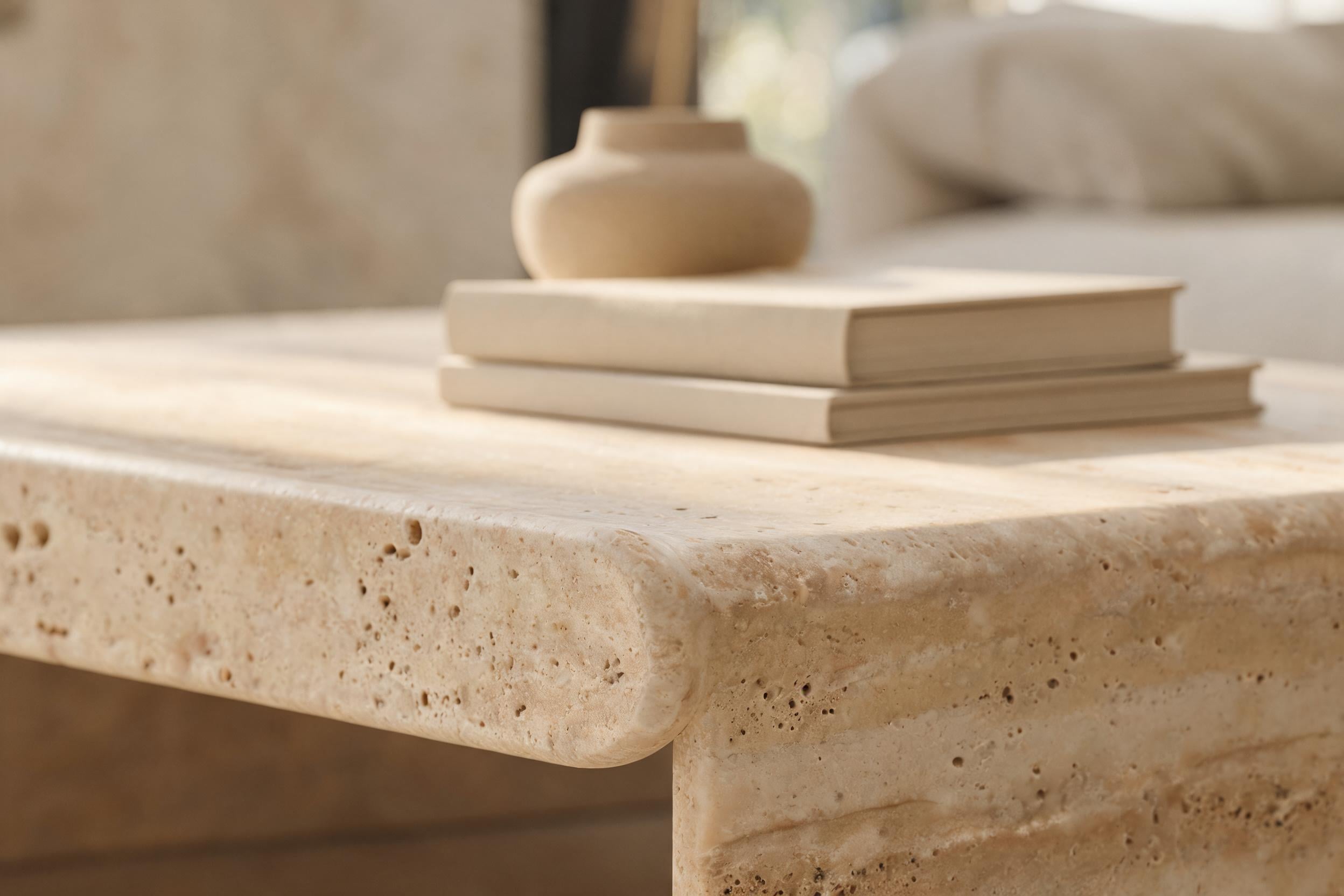
Finish choice changes both the appearance and the day-to-day expectations for a travertine cocktail table. Travertine naturally contains voids and tonal variation. Ask whether the desired surface is filled, honed, polished, brushed, or otherwise treated, and request the finish description with the sample. Do not assume that a showroom image shows every pore, fill, or edge condition that the production piece will have.
Honed surfaces provide a low-sheen, tactile look that works well with contemporary and natural interiors. Filled-and-honed surfaces can reduce open texture where debris may collect, making the visual language more even. Polished surfaces increase reflectivity, but they should be reviewed against the project’s lighting, intended use, and cleaning plan. A polished finish can suit an interior—more precisely, it should be validated against the use zone and maintenance routine rather than selected only for shine.
For every travertine cocktail table, approve a control sample that identifies colour range, pore treatment, finish level, and edge detail. If several tables are required, establish how variation across the batch will be evaluated. This moves the conversation from “natural stone looks different” to a practical approval standard.
Prepare a supplier-ready inquiry
A clear RFQ helps suppliers assess a travertine cocktail table consistently. Include the finished dimensions, shape drawing, quantity, use zone, preferred finish, edge profile, target delivery location, and any packaging or installation constraints. If the project is still developing, state which elements remain open rather than implying that every visual reference is a final requirement.
- Share a dimensioned drawing and a reference image for design intent.
- Request a stone and finish sample before production approval.
- Confirm how natural variation, filled areas, and joints will be reviewed.
- Align packing, trade terms, lead-time assumptions, and delivery responsibilities.
- Keep the approved sample, drawing revision, and finish description together in the project record.
For stone furniture procurement, a reliable result comes from linking aesthetics to executable information. A well-specified travertine cocktail table is easier to price, fabricate, approve, pack, and install because the team has defined the decisions that images alone cannot resolve.
Final selection checklist
Before releasing an order, check that the travertine cocktail table shape supports movement, its size suits the seating and circulation plan, and its finish matches the use zone. Confirm the approved sample, dimensional drawing, edge profile, batch expectations, packing requirements, and delivery scope. Those checkpoints give designers and procurement teams a reliable basis for turning a stone-furniture concept into a buildable item.