EN
EN

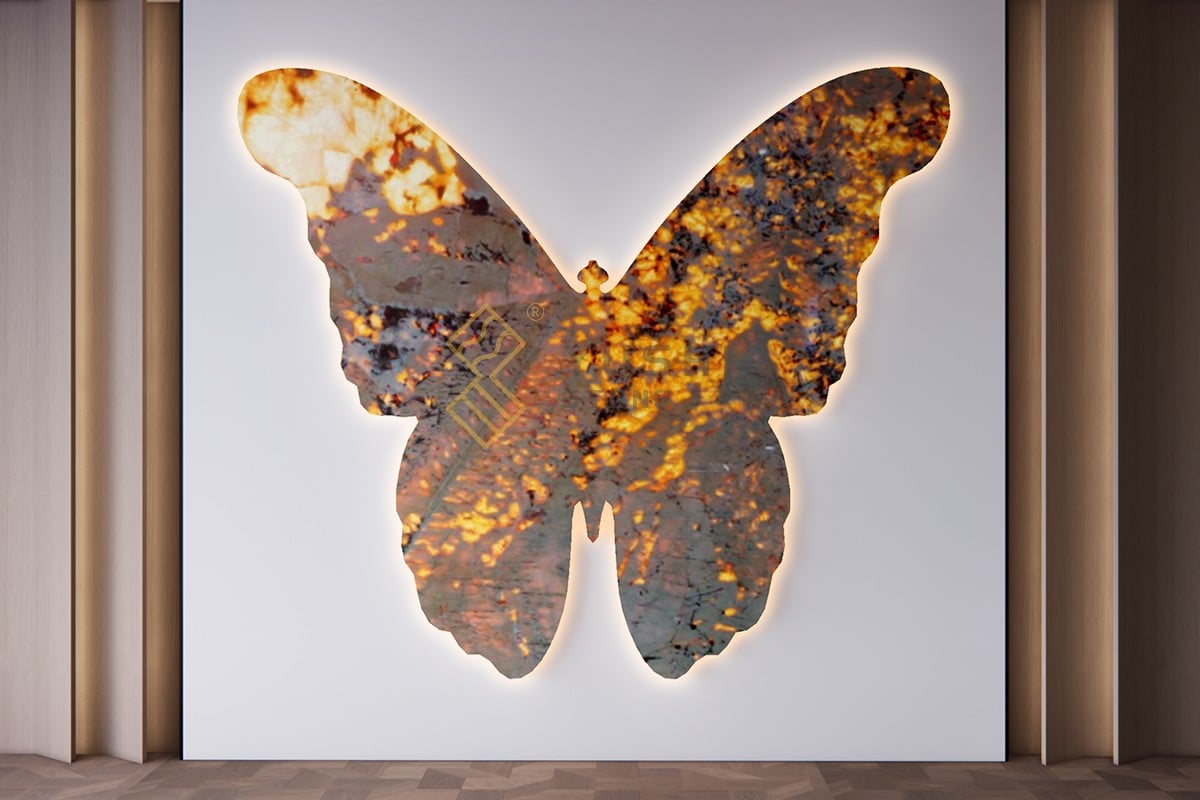
Backlit “Butterfly” Wall Panel in Patagonia Quartzite: A Full Project Fabrication Solution
2026/04/24
2026/07/07
When selecting stone materials for interior design and architectural projects, many developers, contractors, and designers find themselves confused. While traditional names like marble and granite are familiar, the modern market offers highly sophisticated manufactured alternatives for almost every natural option.
Specifically, Granite, Limestone, and Travertine are the three materials where natural and engineered versions are most easily confused, causing the most hesitation during project budgeting. Understanding their distinct characteristics is the best way to avoid costly mistakes during material sourcing.
The Unmatched Luxury of Natural Stone
Natural stone is quarried directly from mother earth, undergoing straightforward cutting and polishing before it reaches your project site. Because every single slab boasts a non-repetitive, unique veining pattern, it delivers an organic luxury that engineered materials try hard to mimic.
The Evolution of Manufactured Stone: Engineering Out the Flaws
Today, engineered stone technology has fully matured. By combining natural stone dust, quartz sand, and high-quality resins under immense pressure, manufacturers have successfully resolved many inherent weaknesses of raw minerals.
Material Type |
|||
Composition |
Pure natural stone quarried from nature. |
Man-made; quartz powder mixed with organic resin binders. |
Silica and inorganic clay pressed under 15,000 tons & fired at 1200°C. |
Pros (✔) |
• Exquisite unique patterns
• Organic high-end texture
• Highly prestigious |
• Superb wear resistance
• High hardness
• Excellent stain resistance |
• Zero penetration / Stain-proof
• Antibacterial & scratch-resistant
• Extreme high-temperature resistance |
Cons (✘) |
• Prone to scratching
• Easily absorbs stains / Etches easily
• Lower density than synthetics |
• Less natural vein aesthetics
• Light colors can yellow over time
• Limited heat resistance |
• Prone to edge chipping
• Brittle under heavy localized impacts
• Higher cost / Market filled with fakes |
Best Used For |
Countertops, thresholds, window sills, and luxury staircases. |
Kitchen countertops, vanity tops, and heavy-duty work surfaces. |
Feature wall cladding, dining tables, and premium island wraps. |
Other Common Aggregates to Consider
Beyond the trio mentioned above, standard Artificial Marble remains popular for low-budget wall decorations. However, due to its low resin density and average texture, we strongly advise against using standard artificial marble for high-wear kitchen or bathroom countertops.
Sourcing Wisely for Your Next Project
Ultimately, natural stone wins on pure, unadulterated texture, making it ideal for low-frequency, luxury spaces prioritizing premium status. Manufactured stone excels in stability, effortless maintenance, and price-to-performance ratio, making it the perfect fit for high-frequency residential and commercial areas.
There is no need to blindly chase natural stone for every application. Balancing your budget with your practical usage scenario is the only way to source durable, beautiful, and cost-effective stone materials.
Need professional guidance or 4K HD material scans for your next project?
As global stone project experts, YUSHI STONE provides tailored natural and engineered stone fabrication. Contact us today for samples and direct factory-direct quotations!
2025/07/09
This is a title description that can briefly introduce the module.