EN

Backlit “Butterfly” Wall Panel in Patagonia Quartzite: A Full Project Fabrication Solution
2026/04/24

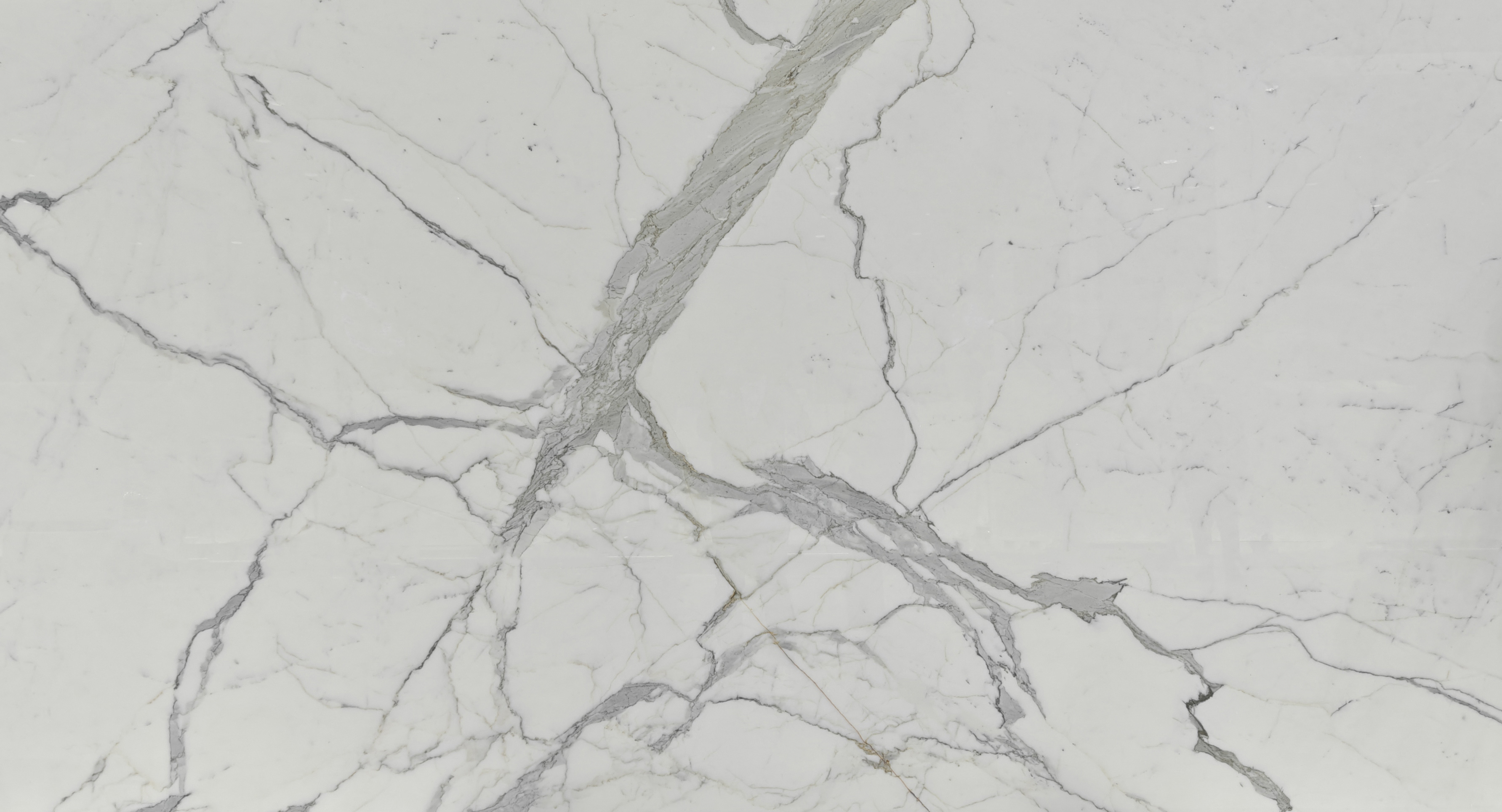
A fine line across a marble slab can raise an immediate question: is it a natural feature, or does it indicate damage?
For buyers selecting marble for wall cladding, flooring, countertops, or custom furniture, the answer matters. A visible line can affect appearance, cutting decisions, and the suitability of a piece for its intended use.
In stone-industry terminology, a fissure is a naturally occurring separation within the stone, while a crack generally refers to a break caused by mechanical stress. However, appearance alone does not reliably establish the cause or condition of a particular line. The Natural Stone Institute explains this distinction in its guide to natural stone countertops.
The most useful question is therefore not simply, “Is this a fissure or a crack?” It is, “Has this area been properly assessed for the product we intend to make?”
A natural fissure is a separation that occurs within the stone naturally. In commercial stone terminology, it refers to a visible separation along crystalline boundaries.
A fissure may appear within the surface of a slab or extend to an edge. Its presence should not be confused with veining: a colored line or mineral pattern does not, by itself, demonstrate a separation in the stone. The Natural Stone Institute defines the commercial meaning of fissure in its stone terminology glossary.
For buyers, identifying a feature as natural is only part of the assessment. Its location, extent, condition, and relationship to the proposed cutting layout still need consideration.
Avoid accepting or rejecting an entire slab based only on a close-up photograph of one line.
Cracks can develop when stone experiences mechanical stress during handling, fabrication, transportation, or installation. Where a crack is found before fabrication, it may be possible to position the cutting layout to avoid the affected area. Some situations involve repair, but the appropriate approach depends on the stone and the damage. These circumstances are described in the Natural Stone Institute’s consumer guide.
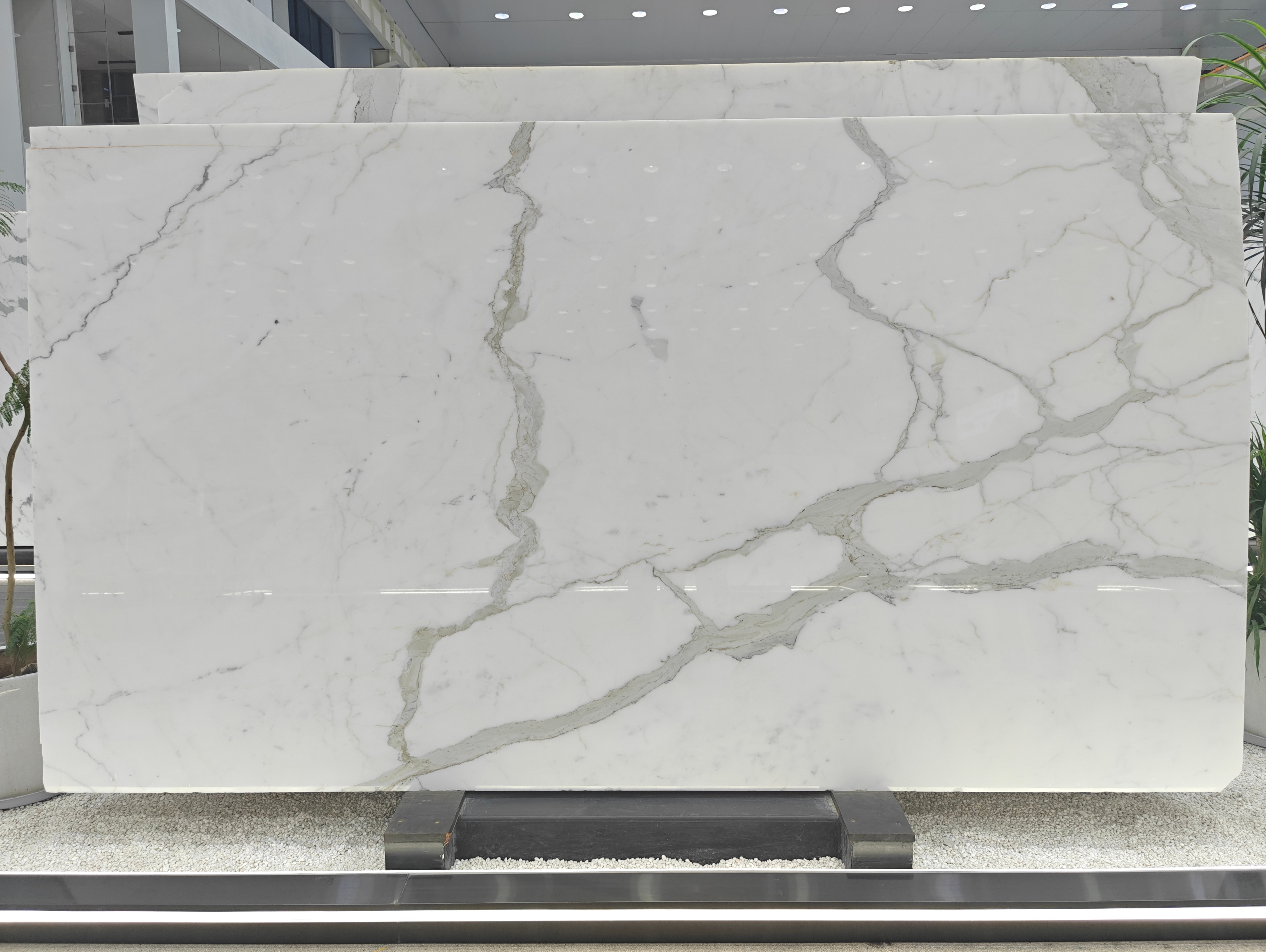
When reviewing a suspected crack, ask the supplier to show where it sits within the complete slab and the proposed finished piece.
A line near a planned sink opening, narrow strip, or exposed edge deserves a different discussion from an area that will be removed during cutting.
Use the following observations to guide inspection and supplier discussions. They are not a definitive visual test.
| Observation | What to ask or check |
|---|---|
| A fine line appears on the polished face | Request a close-up and a full-slab photograph showing its location. |
| A line reaches an edge | Ask for photographs of the edge and corresponding back surface. |
| Filling or repair is visible | Confirm what was treated, the extent of the treatment, and its relevance to the intended use. |
| An opening, chip, or uneven surface is visible | Request a closer assessment before approving fabrication or shipment. |
| The line crosses a planned cutout or narrow section | Ask the fabricator to review the cutting layout and support requirements. |
| The condition appears different from an earlier photograph | Compare dated images of the same identified slab and investigate the change. |
A useful inspection record connects three things: the exact slab, the area of concern, and the proposed application.
A fingernail catching on a line tells you that there is a detectable surface irregularity. It does not establish when the line formed, what caused it, or whether the finished piece will perform adequately.
Similarly, a smooth surface should not be treated as proof that no repair or separation exists.
Do not base approval on one shortcut, such as:
If the condition remains uncertain, have the actual stone assessed by a qualified fabricator or stone specialist.
Resin filling alone is not enough to determine marble quality. Buyers should distinguish between a general treatment description and information about a particular repaired area.
Instead of asking only whether resin was used, ask:
For example, a buyer approving decorative wall panels may focus on visible appearance and panel placement. A buyer ordering a vanity top also needs the fabricator to consider the position of openings and narrow sections.
Agree on acceptable appearance and any necessary treatment before cutting begins.
For remote purchases, request a clear, traceable inspection package rather than relying on showroom images or a small sample.
Ask for the slab number, dimensions, thickness, finish, and a full-face photograph. Make sure close-up images can be matched to that same slab.
A reference sample helps communicate the material’s appearance, but it cannot document the condition of every slab in an order.
For any questionable area, request:
Ask for dry-surface photographs and avoid relying on filters or strongly edited images. Photographs support the review but cannot replace a physical assessment when the condition is uncertain.
Show the supplier what will be made from the slab. Include finished dimensions, openings, exposed edges, and any narrow sections.
Ask the fabricator to mark the area of concern against the proposed cutting layout. This makes the discussion more useful than a general statement that the slab is “acceptable.”
Keep the approved slab images, cutting drawings, and any agreed repair information together. Request final photographs of the finished pieces before packing, especially where an area has previously been discussed.
For project orders, identify finished pieces by number so that inspection records can be matched to the packing list and installation drawings.
No blanket conclusion should be made from the word “natural.” The actual condition and intended application still need assessment. Ask for a closer review if the area is open, damaged, or located within a critical part of the finished piece.
Not automatically. First establish whether the line is a visual pattern, a natural separation, or possible damage. Then review its location and condition with the fabricator before deciding whether to approve the slab, revise the cutting layout, or select another piece.
Possibly, but a repair does not establish suitability by itself. Request details of the affected area and have the proposed use reviewed. Appearance requirements should also be agreed before production.
Photographs are useful for documenting visible conditions and locating areas of concern. They may not reveal the full depth, extent, or cause of a separation. Uncertain cases require inspection of the actual stone.
Selecting marble involves more than choosing a color or vein pattern. Clear slab identification, detailed photographs, and a reviewed cutting layout help buyers make better-informed decisions.
Browse our marble slabs, or contact YUSHI STONE with your preferred material, finished dimensions, application, and project drawings to discuss your requirements.

2025/07/09
This is a title description that can briefly introduce the module.