EN
EN
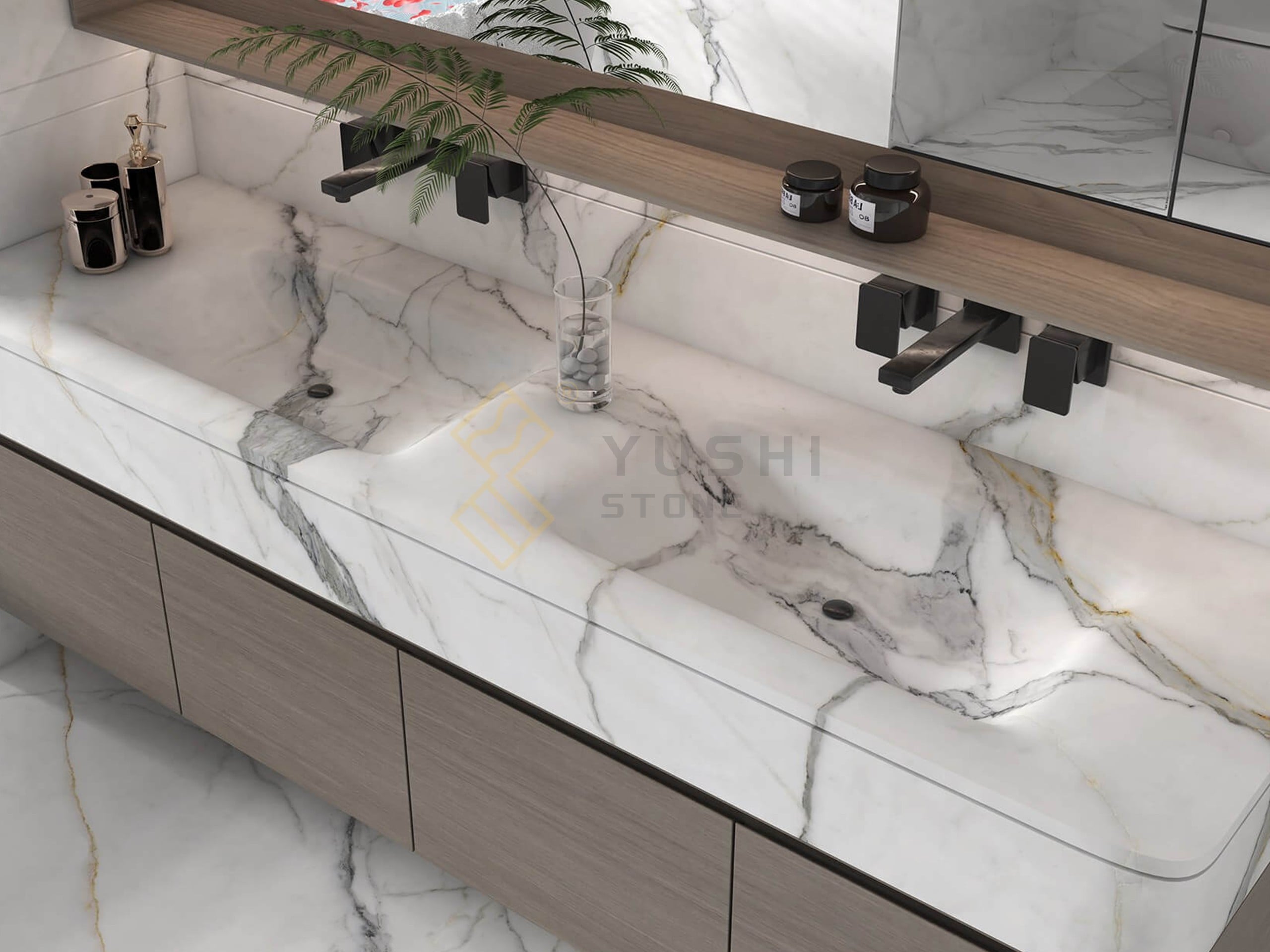
Sintered stone is widely known for its strength, low water absorption, heat resistance, and wide range of surface designs. Traditionally, however, it has mainly been used as a flat slab material.
As modern interiors increasingly incorporate curved furniture, rounded countertops, and flowing architectural forms, designers are looking for ways to bring the same stone surface into more complex shapes. Hot bending sintered stone provides one solution.
By combining controlled heating with precision forming, selected sintered stone panels can be shaped into curves that would be difficult to achieve with conventional flat-slab fabrication.
For architects, interior designers, contractors, and stone buyers, understanding how hot bending works can help determine when curved sintered stone is appropriate for a project.
What Is Hot Bending Sintered Stone?
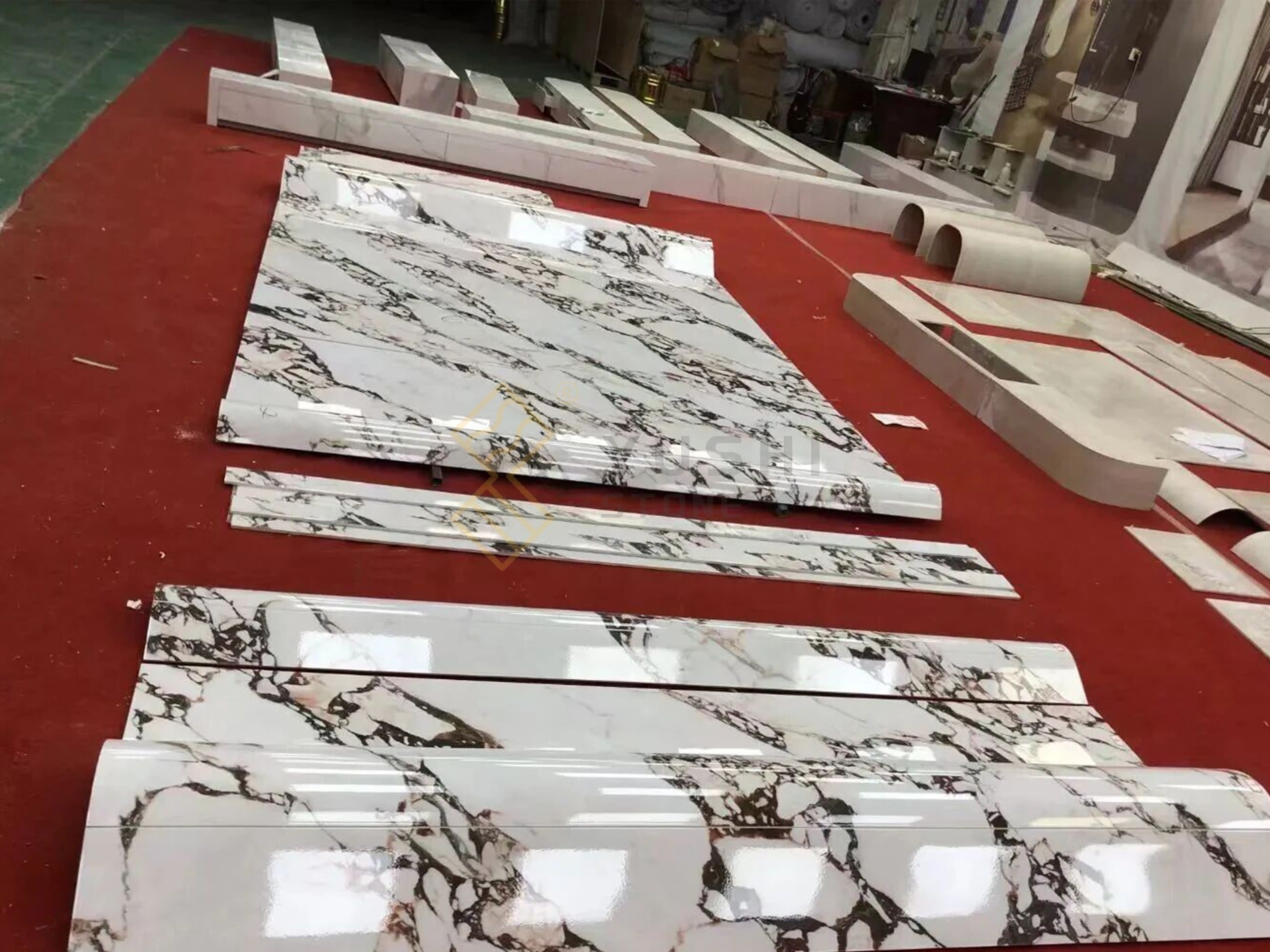
Hot bending is a specialized fabrication technique in which a sintered stone panel is heated under controlled conditions and gradually formed into a curved shape.
Instead of cutting several flat pieces and joining them together, the panel itself is shaped to follow a specific radius or profile.
This creates new possibilities for applications such as:
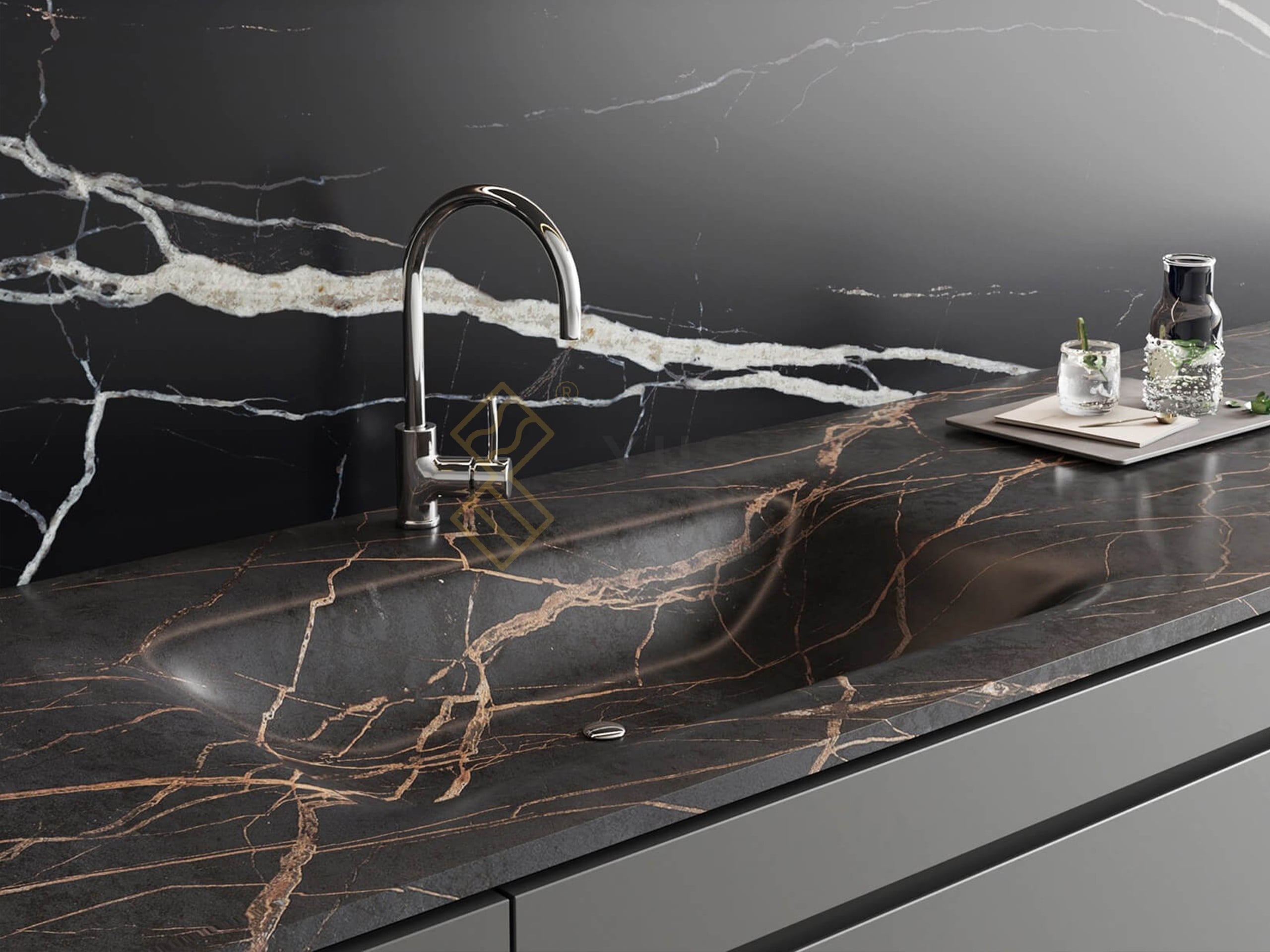
Curved countertops
Kitchen islands
Reception desks
Bar counters
Custom furniture
Curved wall panels
Decorative architectural elements
The exact bending conditions depend on the specific sintered stone, including its composition, thickness, dimensions, and surface finish. Therefore, not every sintered stone product should be assumed to have the same bending capability.
Why Are Curved Stone Designs Becoming More Popular?
Straight lines have traditionally dominated stone interiors. However, contemporary design is increasingly incorporating softer forms.
Rounded corners, curved islands, circular furniture, and flowing walls can make an interior feel more dynamic while creating a smoother visual transition between different spaces.
For hospitality and commercial projects, curves can also help create distinctive focal points.
A curved reception desk, for example, can become part of the identity of a hotel or office rather than simply functioning as a practical counter.
This is where curved sintered stone becomes interesting. It combines the visual qualities of a stone surface with a geometry that conventional flat panels cannot easily achieve.
How Does the Hot Bending Process Work?
Hot bending is more than simply applying heat to a stone panel. The process requires careful preparation and control.
1. Material Selection
The first step is selecting a suitable sintered stone.
The material should be evaluated according to:
Composition
Thickness
Slab size
Surface finish
Required bending radius
Final application
For a customized project, testing a sample before full production can help determine whether the selected material is suitable.
2. CAD Design and Radius Planning
Before fabrication, the curved component should be clearly defined.
CAD drawings can be used to determine the:
Overall dimensions
Bending radius
Curve direction
Edge details
Cutouts
Connection points
The bending radius is particularly important. A broad curve and a tight curve can require very different fabrication conditions.
3. Controlled Heating
The sintered stone panel is gradually heated using specialized equipment.
Uniform heating is important because uneven temperature distribution can increase the risk of cracking, deformation, or surface defects.
The appropriate heating conditions depend on the specific material and production setup.
4. Forming
Once the panel reaches the required processing condition, it is gradually formed against a prepared mold or support structure.
The forming process needs to be controlled according to the design radius.
For complex curves or customized shapes, a prototype or sample can be useful before moving into mass production.
5. Cooling and Stabilization
After forming, the panel is cooled under controlled conditions.
This allows the material to stabilize in its new shape.
Controlled cooling is an important part of the process because the final dimensional accuracy and shape stability depend not only on heating and forming but also on how the material is cooled.
6. Final Processing and Inspection
After the curved panel has stabilized, it can undergo additional fabrication.
Depending on the project, this may include:
Edge processing
Cutting
Drilling
Polishing
Opening preparation
Final dimensional inspection
The finished component should be checked against the approved drawings and sample.
What Can Hot Bending Sintered Stone Be Used For?
Curved Countertops and Kitchen Islands
Curved kitchen islands can create a softer and more contemporary appearance than conventional rectangular designs.
Hot bending can be considered when the project requires a continuous curved stone surface.
The supporting structure, countertop dimensions, radius, and edge details should all be considered during the design stage.
Reception Desks
Hotels, offices, showrooms, and other commercial spaces often use reception desks as architectural focal points.
A curved sintered stone reception desk can combine a strong stone appearance with a more fluid form.
For large commercial projects, material consistency and dimensional accuracy are particularly important because the finished piece is often highly visible.
Bar Counters
Curved bar counters are another application where hot bending can offer additional design flexibility.
The technique can help create rounded fronts or continuous curves that would otherwise require multiple fabricated pieces.
This can be particularly effective in:
Hotels
Restaurants
Clubs
Luxury residences
Commercial hospitality spaces
Custom Stone Furniture
Sintered stone is increasingly used in furniture design, and curved forms can add another level of customization.
Potential applications include:
Side tables
Console tables
Cabinets
Display furniture
Reception furniture
Decorative panels
Because furniture has its own structural requirements, the stone component should be designed together with the supporting frame or substrate.
Architectural Feature Elements
Hot bending can also be considered for selected architectural applications, including curved wall elements, decorative partitions, and other interior features.
These applications allow designers to use stone as part of the architectural form rather than simply as a flat surface.
What Should Be Considered Before Hot Bending?
Hot bending can expand design possibilities, but it is not suitable for every stone project.
Bending Radius
The required radius is one of the first factors to evaluate.
A large, gentle curve may be easier to produce than a tight curve.
The desired radius should therefore be reviewed together with the material and thickness before production.
Material Thickness
Thickness affects the forming process, weight, structural performance, and final appearance.
Rather than automatically choosing the thinnest available panel, the thickness should be selected according to the application and design requirements.
Surface Finish
The selected surface finish should also be considered before bending.
Polished, matte, textured, and other finishes may require different handling and inspection during fabrication.
Pattern Direction
For sintered stone with marble-inspired veins or directional patterns, orientation is especially important.
The pattern can influence the visual effect of the final curved surface.
Before production, designers should consider whether the pattern should run:
Along the curve
Across the curve
Vertically
Horizontally
For visually important projects, a physical sample or mock-up can help confirm the expected result.
Hot Bending vs. Conventional Curved Stone Fabrication
There are different ways to create curved stone surfaces.
One traditional approach is to fabricate several flat pieces and join them together. Hot bending takes a different approach by forming the stone panel itself.
|
Hot Bending |
Conventional Assembly |
Curved design |
Suitable for selected curves |
Possible |
Visible joints |
Can be reduced |
More likely |
Customization |
High |
Depends on design |
Equipment |
Specialized |
More conventional |
Sample testing |
Recommended |
Recommended |
Neither method is suitable for every project.
The right approach depends on the material, geometry, radius, budget, structural requirements, and desired appearance.
Quality Control for Curved Sintered Stone
Curved stone components require careful inspection because both the material and the geometry need to meet project requirements.
At different stages, quality control can include:
Material inspection
Check color, pattern, thickness, and surface condition before processing.
Dimensional inspection
Verify the overall dimensions and bending radius against the approved drawings.
Surface inspection
Check for cracks, chips, deformation, or other visible defects.
Edge inspection
Inspect processed edges, openings, and connection areas.
Sample comparison
For larger projects, compare production pieces with the approved sample or mock-up.
For projects requiring multiple curved components, consistent fabrication is especially important.
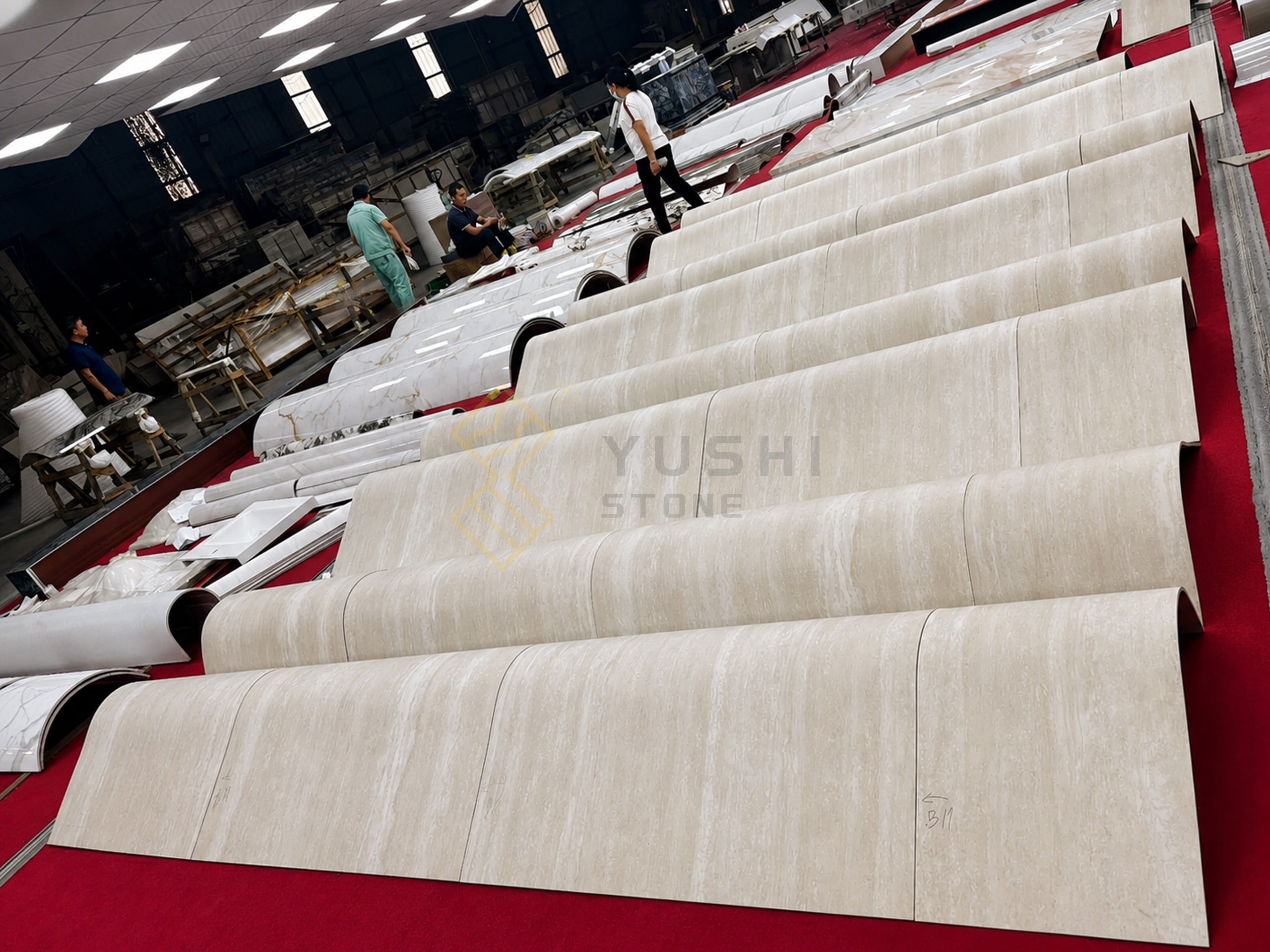
How YUSHI STONE Supports Custom Sintered Stone Projects
At YUSHI STONE, customized stone fabrication starts with understanding the project's design and application requirements.
For curved sintered stone, the process can include:
CAD Design → Material Evaluation → Sample Development → Hot Bending → Cutting & Edge Processing → Quality Inspection → Protective Packaging
Before production, factors such as material, thickness, bending radius, dimensions, surface finish, and application environment can be evaluated together.
This helps determine whether hot bending is the right fabrication solution or whether another processing method would be more appropriate.
For architects, designers, contractors, and project buyers, early communication about the design drawings and technical requirements can also help reduce fabrication risks.
Frequently Asked Questions
Can all sintered stone be hot bent?
No. Bending capability depends on the specific sintered stone material, thickness, dimensions, and manufacturer's technical requirements. Testing is recommended for customized applications.
What is curved sintered stone used for?
It can be used for selected countertops, reception desks, bar counters, furniture, wall panels, and architectural features.
Does hot bending change the appearance of sintered stone?
The final appearance depends on the material, surface finish, bending direction, and pattern. For marble-look designs, pattern orientation should be considered during the design stage.
Is hot bending suitable for commercial projects?
It can be suitable for selected hospitality, retail, office, and commercial applications. Structural support, installation conditions, dimensions, and material specifications should be evaluated for each project.
Final Thoughts
Hot bending sintered stone expands the possibilities of modern stone design by allowing selected sintered stone panels to move beyond traditional flat surfaces.
The process combines material selection, CAD development, controlled heating, forming, cooling, and precision fabrication. The success of a curved stone project depends not only on the bending process but also on selecting the right material, radius, thickness, and surface finish.
For curved countertops, reception desks, bars, furniture, and architectural features, hot bending can provide an alternative to assembling multiple flat stone pieces.
At YUSHI STONE, we can support customized sintered stone projects from material evaluation and sample development through fabrication, quality inspection, and international delivery.