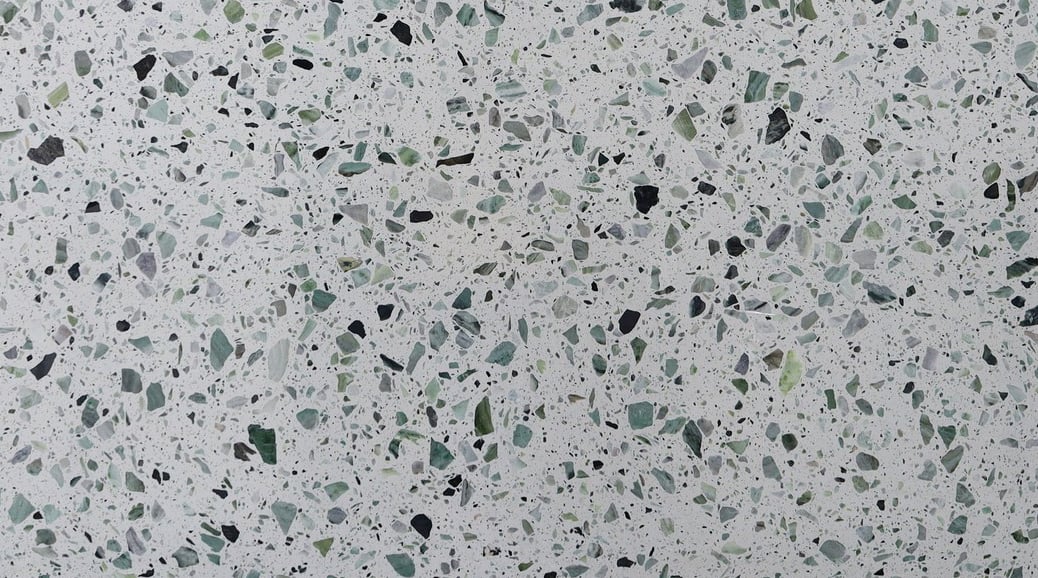
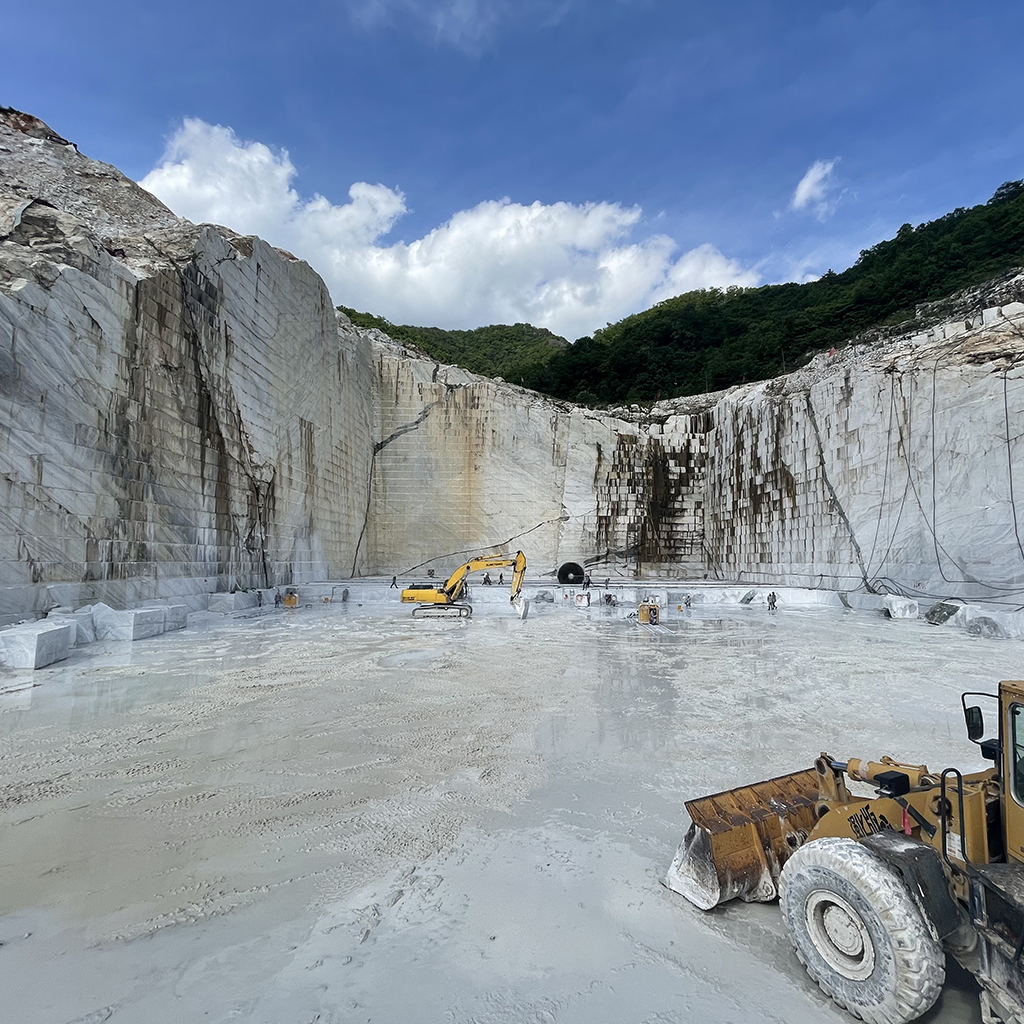
Choosing a marble slab is about much more than finding a beautiful pattern.
Two slabs may come from the same quarry and carry the same commercial name, yet differ significantly in appearance, stability, usable area, processing quality, and suitability for a specific project. One slab may have a cleaner background and more desirable veining, while another may contain more fissures, repairs, color variation, or areas that require careful cutting.
For professional buyers, architects, designers, contractors, and project developers, the real question is therefore not simply:
“Does this marble look beautiful?”
It should be:
“Is this the right marble slab for my project?”
At YUSHI STONE, we believe a high-quality marble slab should achieve the right balance between natural beauty, material stability, processing quality, and project suitability.
Here are the key factors to consider when selecting marble slabs.
1. Start with the Full Slab, Not Just a Small Sample
A small marble sample can help you understand the basic color, texture, and surface finish of a material, but it cannot represent the complete character of a full slab. Natural veining, color movement, mineral characteristics, fissures, and pattern distribution can change significantly across a large surface. For project selection, especially for feature walls, countertops, kitchen islands, hotel interiors, and large-format applications, buyers should review current full-slab photos or inspect the actual slabs whenever possible. The larger the visible stone surface in the final project, the more important the overall slab appearance becomes.
2. Look at the Background Color and Overall Consistency
Background color is one of the most important visual characteristics of marble, particularly for white, beige, grey, and other light-colored stones. Different blocks of the same marble may show warmer or cooler tones, cleaner backgrounds, cloudy areas, or natural color movement. A good selection should match the intended design rather than simply being as uniform as possible. When several slabs will be installed together, consistency does not mean every slab must look identical; instead, the colors and overall visual character should work harmoniously as a group.
3. Evaluate the Veining, Not Simply the Number of Veins
More veins do not automatically mean better marble, and fewer veins do not necessarily mean higher quality. What matters is the character, direction, balance, and continuity of the veining in relation to the design. A dramatic vein may be perfect for a statement wall or fireplace, while a calmer and more consistent pattern may work better for large flooring areas. For projects using multiple slabs, buyers should also consider how the veins transition between slabs and whether the material is suitable for vein matching or bookmatching.
Beautiful marble is not about having more or fewer veins—it is about having the right veins for the design.
4. Understand Natural Fissures Before Calling Them Defects
Natural marble can contain fissures, mineral lines, crystalline structures, and other geological characteristics formed over millions of years. These should not automatically be considered defects. What matters is their condition and location. Buyers should evaluate whether a fissure is stable or open, whether it has been professionally treated, and whether its position could affect fabrication or the final application. A natural fissure in a decorative wall panel may be acceptable, while the same feature running through a sink cutout, narrow strip, or other high-stress area may require more careful consideration.
5. Check Resin Treatment and Repairs Carefully
Resin treatment is common in natural stone processing and does not automatically indicate poor-quality marble. Some materials naturally contain fissures or small voids that benefit from professional resin treatment to improve stability and processing performance. The important consideration is the extent and quality of the treatment. Excessive resin, obvious repair marks, poorly matched fillers, uneven surfaces, or heavily repaired areas may affect the appearance and usable area of a slab. A premium marble can still be resin-treated—the key is whether the treatment has been properly carried out and whether the finished slab remains suitable for its intended application.
6. Don’t Forget to Check the Back of the Slab
The front tells you how the marble looks. The back can tell you how the marble has been reinforced. Many marble slabs use fiberglass mesh and resin backing to improve stability during transportation, cutting, and fabrication, especially for materials with natural fissures or more delicate structures. Mesh backing itself is not necessarily a negative sign. Instead, buyers should look at the overall condition of the backing and pay attention to unusually heavy reinforcement or localized repairs that may indicate areas requiring additional consideration during fabrication.
7. Check the Surface Finish and Processing Quality
A high-quality slab requires both good raw material and proper processing. For polished marble, the surface should have an even appearance without obvious dull areas, scratches, grinding marks, inconsistent reflections, or other processing issues across the usable area. Honed and textured finishes should also remain visually consistent throughout the slab. Viewing the surface from different angles and under appropriate lighting can often reveal processing irregularities that are difficult to see when looking directly at the stone.
8. Measure Thickness and Check Flatness
A beautiful slab still needs to meet the technical requirements of the project. Thickness consistency and flatness are particularly important when marble will be fabricated into countertops, wall panels, floor tiles, stairs, or other cut-to-size products. Significant thickness variation or poor flatness can create additional difficulties during cutting, calibration, installation, and alignment. For project orders, the required thickness and tolerance should therefore be clearly agreed upon before production and verified during quality inspection.
9. Consider the Usable Area, Not Just the Slab Size
A large slab is not necessarily a valuable slab if a significant part of it cannot be used for the required cutting layout. Professional stone selection should consider usable yield—how much of the slab can actually become finished products after taking into account natural characteristics, repairs, edges, pattern requirements, and cutting positions. This is especially important for large countertops, wall panels, stairs, islands, and customized cut-to-size projects. Sometimes a slightly smaller but cleaner slab can provide better project value than a larger slab with limited usable areas.
10. For Multiple Slabs, Judge Them as a Group
Selecting one beautiful slab is relatively easy. Selecting twenty slabs that work beautifully together is much more difficult. For hotels, villas, commercial interiors, large flooring areas, and other projects requiring multiple slabs, buyers should evaluate the entire selection for background tone, vein character, pattern direction, and overall visual harmony. Whenever possible, materials from the same block or closely related batches should be reviewed together. The goal is not to eliminate the natural variation of marble, but to manage that variation so the finished installation looks intentional and cohesive.
11. Think About the Final Application Before Approving the Slab
There is no universal definition of a “perfect” marble slab because quality should always be considered in relation to its final use. A highly dramatic slab may be excellent for a feature wall but unsuitable for a project requiring hundreds of visually consistent floor tiles. A natural fissure that can easily be avoided in a wall-panel cutting layout may become problematic if it crosses an important countertop cutout. This is why professional slab selection should consider not only what the material looks like today, but also where it will be installed, how it will be fabricated, and what the final design is expected to achieve.
High Quality Does Not Mean “Perfect”
This is one of the most important principles when evaluating natural marble.
A high-quality marble slab does not need to be completely uniform, completely free from natural fissures, or completely untouched by resin. Marble is a natural material, and its variations are part of what makes every slab unique.
Instead of searching for a theoretically “perfect” slab, professional buyers should consider four questions:
Is it visually suitable? Does the background color, veining, and overall appearance match the design intent?
Is it materially suitable? Are its natural characteristics, fissures, and repairs stable and acceptable for the intended application?
Is it properly processed? Are the thickness, flatness, surface finish, and reinforcement controlled to the required standard?
Is it suitable for the project? Can the slab achieve the required cutting layout, matching effect, usable yield, and installation requirements?
The YUSHI STONE Approach to Marble Selection
At YUSHI STONE, we believe professional stone selection should begin with the project, not simply with a material name.
Different projects require different selection standards. A hotel lobby may prioritize large slab sizes, batch consistency, and vein coordination. A luxury feature wall may focus more on dramatic movement and bookmatch potential. A countertop project may require greater attention to usable areas, cutout positions, thickness, material stability, and fabrication requirements.
That is why selecting natural stone is not simply about finding the slab with the fewest natural characteristics or the most dramatic pattern. It is about matching the right material, the right selection standard, and the right processing solution to each project.
Before approving your next marble slab, ask one final question:
“Is this simply a beautiful slab—or is it the right slab for my project?”
For professional stone buyers, the second question matters more.
YUSHI STONE — Natural Stone for a Better Tomorrow.
 Hot News
2026-09-10
2026-09-02
2026-08-05
2026-07-07
2026-06-15
2026-06-04


 EN
EN