 EN

Custom Stone Furniture: What to Include in a Hotel Project RFQ
For a hotel, an RFQ for custom stone furniture is not merely a request for a unit price. It is the document that turns an interior concept into items that several suppliers can quote on the same basis. From a stone specification consultant’s perspective, the work should start with project conditions before surface preference: where will each piece sit, who will use it, how will it be moved, and which details must be approved before fabrication?
That order matters because custom stone furniture combines natural material variation, fabrication decisions, logistics, and installation coordination. A dining table that looks appropriate in a render may need a different construction approach once its span, support points, floor loading, access route, and housekeeping routine are known. A clear RFQ helps the design team compare scope rather than compare incomplete prices.
Begin With a Project and Procurement Overview
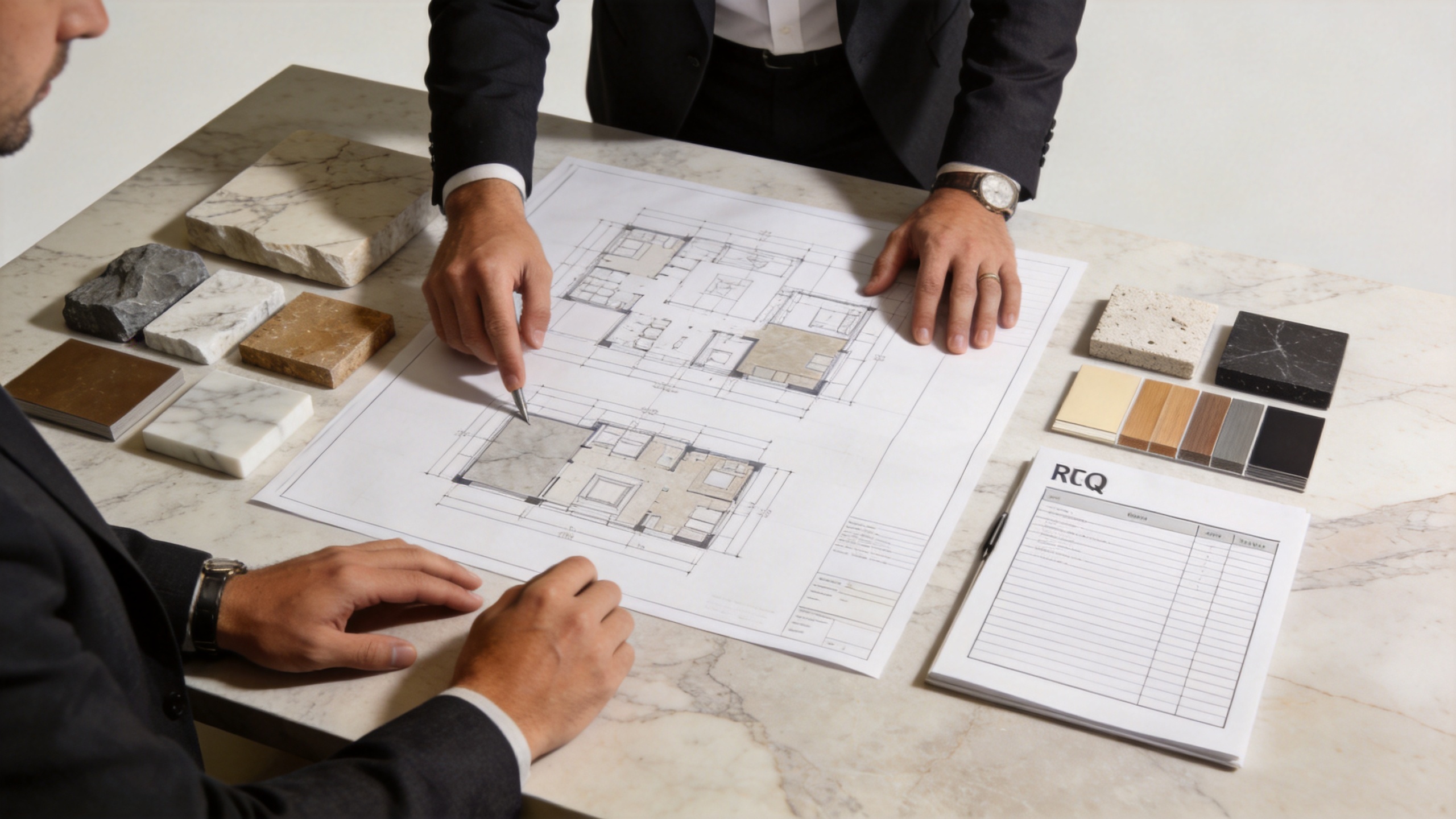
Open the RFQ with the hotel name or code, project location, issue date, purchasing contact, required quotation currency, and the planned decision and delivery milestones. State whether the request covers a mock-up, guest rooms, lobby, restaurant, suites, or another zone. For custom stone furniture, identify whether the supplier is expected to quote supply only, packing and export handling, site delivery, installation support, or a defined combination.
Include a bill of quantities with item codes and revision control. Each line should show quantity, intended location, required date, and whether the piece is a prototype, a typical room item, or a one-off feature. This seemingly simple project map prevents a supplier from pricing a decorative concept while the buyer expects a repeatable hotel-grade scope.
Define Every Item Instead of Describing a Look
For each item of custom stone furniture, attach dimensioned drawings, elevations, sections, and, where needed, details of joints and bases. Record overall length, width, height, nominal stone thickness, edge profile, underside treatment, cut-outs, penetrations, and the connection with metal, timber, glass, or lighting. If dimensions are still under design, mark them as provisional and ask the supplier to list the assumptions used for pricing.
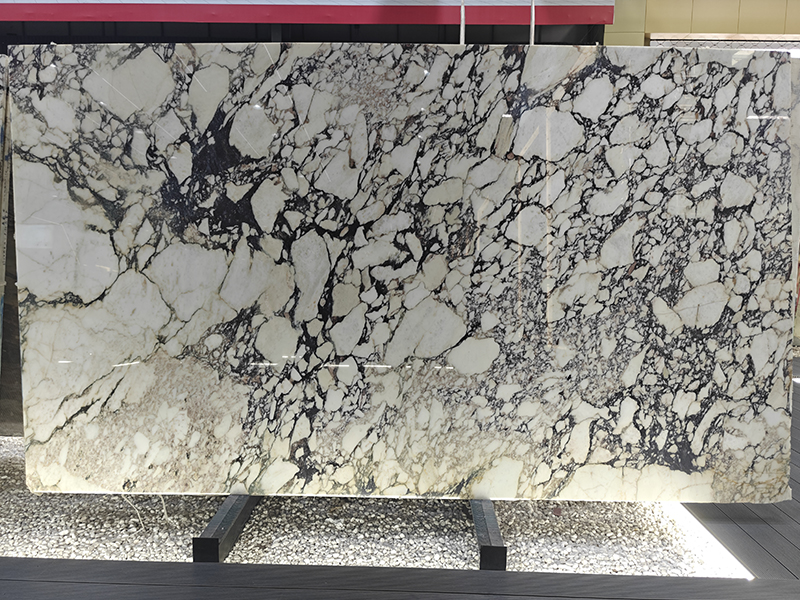
Also state the expected visual character: vein direction, book-matching requirements, acceptable color range, visible versus concealed faces, and the priority between natural movement and uniformity. Natural stone is not a printed finish. The RFQ should ask for a sample or slab-selection process rather than implying that every piece of custom stone furniture will match a rendering exactly.
| RFQ field | What to state | Why it matters |
|---|---|---|
| Material | Stone type, approved reference, finish, and color tolerance | Creates a comparable material basis |
| Geometry | Drawings, dimensions, profiles, and cut-outs | Clarifies fabrication scope |
| Construction | Support concept, joints, inserts, and connection points | Separates stone work from other trades |
| Quantity | Item count, alternates, mock-ups, and spares | Enables a clear commercial comparison |

Specify Material, Finish, and Approval Controls
Material information should be detailed enough for a supplier to identify the likely blocks or slabs, but it should leave room for honest discussion of availability. For custom stone furniture, name the preferred stone, finish, nominal thickness, edge condition, and required sealing or surface treatment where applicable. If the hotel team has a physical reference, photographs should be labelled as visual intent rather than treated as a full technical specification.
Set an approval sequence. A practical sequence can include material photos, sample confirmation, shop drawings, a first article or mock-up for critical items, and pre-shipment inspection images. Require the quote to identify what is included at each stage, how comments are incorporated, and which changes may affect cost or schedule. For a high-visibility lobby piece, slab approval before cutting can be more useful than resolving differences after fabrication.
Describe Structural and Connection Requirements
A stone top, pedestal, console, or reception element must be considered as an assembled object. The RFQ for custom stone furniture should show the support arrangement and state who supplies each component. Ask the supplier to comment on any item that needs concealed reinforcement, inserts, metal framing, brackets, levelling provisions, or installation templates. Do not assume a stone fabricator is responsible for adjacent work unless the scope says so.
For public areas, include the use zone and expected service conditions: indoor or sheltered exterior placement, contact with wet cleaning, proximity to food service, and the likely frequency of relocation. More precisely, these conditions guide the finish and maintenance discussion; they are not a reason to promise a universal performance result. Where a local code, a project engineer, or a hotel standard applies, attach it or identify who will issue the final requirement.
Request a Transparent Commercial Breakdown
Ask for an itemized quotation that separates material, fabrication, ancillary components, finishing, packing, freight terms, and any installation-related work. A transparent breakdown lets the buyer see whether a change in custom stone furniture affects stone selection, machining, structure, or delivery. It also makes alternates useful: a revised thickness, a simpler profile, or a different finish can be compared without losing track of the original design intent.
The quote should state quotation validity, lead time assumptions, payment terms, MOQ where relevant, Incoterms, port or delivery location, and exclusions. Request a list of deviations rather than allowing silent substitutions. If the project schedule is phased, ask for production and shipment timing by zone or item group.
Include Packing, Delivery, and Site Constraints
Heavy and finished pieces need logistics information early. For custom stone furniture, provide the destination, unloading constraints, lift or stair limits, site storage conditions, delivery windows, and any floor-protection or access rules. Ask how each item will be protected at edges, corners, faces, and contact points, and whether crates, pallets, or handling marks are included.
Packaging should be planned around the finished item, shipping conditions, and how the hotel will receive and install it. Require crate dimensions and estimated weights for items that affect container planning or site handling. If installation is excluded, specify the handover condition and the information the installation team will need.
Use a Supplier Comparison Checklist Before Award
Before selecting a supplier, compare responses line by line: material assumptions, sample process, drawings, construction scope, unit rates, packing, lead time, exclusions, and change-control method. This is where a complete custom stone furniture RFQ turns into a decision tool rather than a collection of prices.
For a relevant design reference, review the Calacatta Viola Marble Dining Table with Fluted Round Marble Legs alongside the RFQ requirements. Its presence in a project brief should not replace drawings, material approval, or a stated fabrication scope; it simply helps the team identify the aesthetic direction and item category being discussed.
Finally, invite the supplier to flag unclear handoff points before quoting. When architects, contractors, designers, and procurement teams agree on the inputs, custom stone furniture can be evaluated on a clearer and more workable basis. That gives the hotel team a stronger starting point for sample review, shop-drawing coordination, and delivery planning.